

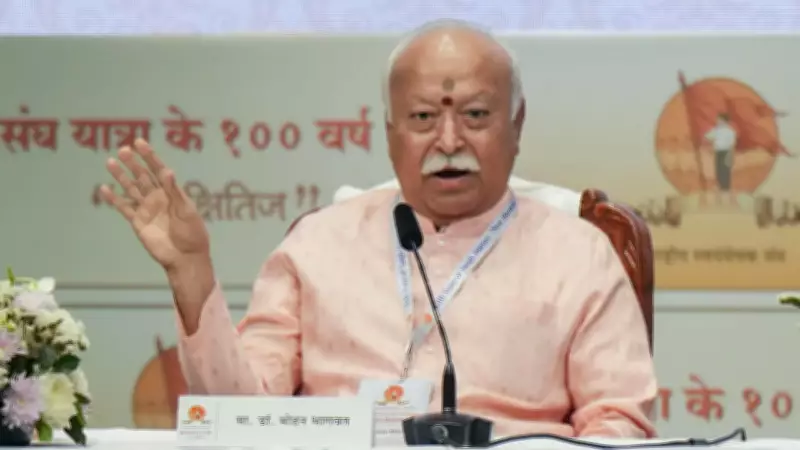
RSS Chief Mohan Bhagwat to Continue Leading Organization Despite Reaching 75 Years of Age
In a significant announcement during the Rashtriya Swayamsevak Sangh's centenary event, RSS chief Mohan Bhagwat revealed that the organization has asked him to continue serving as Sarsanghchalak despite him completing 75 years of age. Bhagwat made these remarks during an interactive session, clarifying that he would step down from the position whenever the Sangh directs him to do so.
No Elections for RSS Chief Position
Bhagwat explained the unique selection process for the RSS leadership role. "There is no election to the post of RSS chief. Regional and divisional heads appoint the chief," he stated. The RSS chief noted that while it is generally said that after turning 75, one should work without holding any post, he received different instructions from the organization.
"I have completed 75 years and informed the RSS, but the organization asked me to continue working. Whenever the RSS asks me to step down, I will do so, but retirement from work will never happen," Bhagwat emphasized, highlighting his commitment to the Sangh's mission regardless of formal positions.

Qualifications for RSS Leadership
The RSS chief provided important insights into the qualifications for leading the organization. He asserted that the RSS does not follow community-based representation and that volunteers rise through the ranks based on their work and dedication.
"The RSS chief will always be a Hindu, irrespective of caste, and the post goes to the best available candidate," Bhagwat declared. He elaborated that if he were to choose a chief, he would follow the 'best available candidate' criterion exclusively.
Bhagwat made it clear that belonging to Scheduled Caste or Scheduled Tribe communities is not a disqualification, just as being a Brahmin is not an automatic qualification for the position. This statement reinforces the organization's focus on merit and capability over caste considerations.
Focus on Values Over Campaigning
The RSS chief articulated the organization's philosophical approach to its work. He stated that the RSS focuses on inculcating "sanskar" or values rather than engaging in excessive campaigning.
"Excessive campaigning leads to publicity and then arrogance," Bhagwat cautioned, adding that publicity should be measured and timely to maintain the organization's integrity and purpose.
In a lighter moment, Bhagwat remarked that the Sangh "extracts work till the last drop of blood from its volunteer" and noted that there has never been a situation where someone had to be retired from the organization, suggesting the lifelong commitment expected from members.
Language Policy and Organizational Approach
Bhagwat addressed the language used within the RSS, stating clearly that English would never be the primary medium of communication for RSS functioning as it is not an Indian language. However, he acknowledged that English is used where necessary for practical purposes.
The RSS chief explained that the organization works geographically and does not target any specific caste or community in its operations, emphasizing its inclusive approach to national service.
Anti-Corruption Stance and Social Issues
On the critical issue of corruption, Bhagwat stated that the RSS supports anyone fighting against corrupt practices. "Our volunteers are told to support those who fight corruption," he affirmed, adding an important perspective that corruption lies in people's minds rather than being inherent to any system.
Bhagwat also addressed several contemporary social issues during the session:
- He urged citizens to detect and report illegal infiltrators to the appropriate authorities
- He stated that caste-based reservations should continue "as long as needed"
- He stressed the importance of social unity for national progress
The RSS chief's comprehensive remarks during the centenary event provide significant insights into the organization's leadership structure, values, and approach to contemporary issues facing the nation.






