

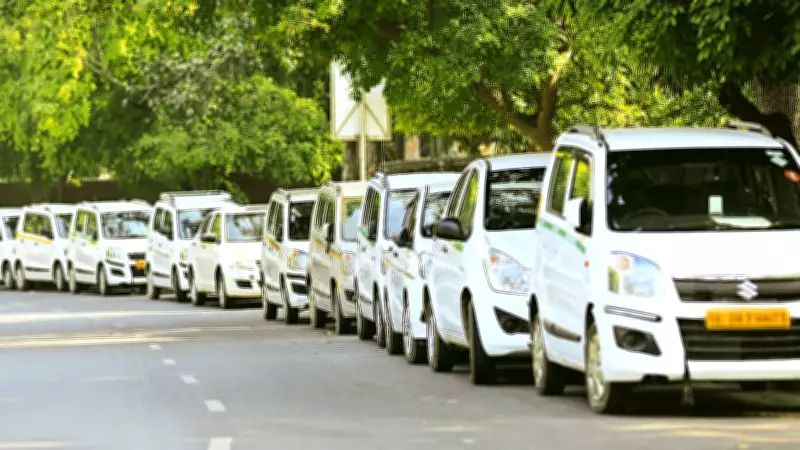
Mumbai Commute Grinds to a Halt as Nationwide Cab and Auto Strike Paralyzes City
A nationwide one-day strike by app-based cab and auto-rickshaw drivers on Saturday brought Mumbai's daily commute to a standstill, creating widespread chaos and inconvenience for thousands of residents. The protest, organized by driver unions, left passengers—particularly those traveling long distances and heading to the airport—struggling to secure rides or facing exorbitant surge pricing on available services.
Airport-Bound Travelers Face Maximum Disruption and Uncertainty
Airport-bound passengers emerged as the worst-affected group, with many reporting agonizing waits and last-minute scrambles to avoid missing flights. Madhav Ja, a 35-year-old shipping industry professional, recounted his frustrating experience trying to book a cab from Andheri East railway station to Terminal 2.
"I was completely unaware of the strike and spent nearly thirty minutes attempting to secure a ride," Ja explained. "Even after increasing the fare on Rapido in hopes of attracting drivers, nothing worked. I ultimately had to resort to a regular rickshaw to ensure I wouldn't miss my flight."

Vineeth Nambiyar, a 38-year-old business owner traveling from Andheri West to Terminal 2 for a Chennai-bound flight, faced similar challenges. After being turned down by meter rickshaw drivers, he found app-based services equally unresponsive.
"For twenty straight minutes, Uber and Rapido only displayed 'searching for drivers nearby,'" Nambiyar said. "Heading to the airport with this level of uncertainty created significant stress and anxiety."
Inter-Suburban Travel Severely Impacted by Limited App-Based Services
While regular meter auto-rickshaws remained available across most parts of Mumbai, commuters reported that the limited availability of app-based services particularly disrupted inter-suburban travel. On these longer routes, aggregator fares typically offer more predictable and economical options compared to meter-based rates.
Suchitra Londhe, a 54-year-old teacher traveling with her daughter from Sion to Goregaon, described the day-long disruption in vivid detail. "We walked nearly a kilometer from our house while checking all three apps repeatedly, but couldn't book either a cab or an auto," she recounted. "When we attempted to return to Sion later, the apps displayed fares around ₹800 for a trip that normally costs ₹400 to ₹450. Even our willingness to pay that inflated amount couldn't secure us a single ride."
Mukesh Kumar, a 28-year-old commuter traveling from Andheri East to Powai, highlighted the financial impact on regular users of app-based services. "I normally prefer Uber or Rapido for longer rides because they're cheaper—usually ₹150 to ₹180 compared to ₹220 to ₹250 for meter rickshaws," he said. "Today, the app fare itself showed around ₹220, which is highly unusual. With prices nearly equalized, I ultimately chose a regular rickshaw."
Driver Unions Protest Illegal Bike Taxis and Unfair Fare Policies
The strike was called by driver unions protesting against multiple grievances, primarily the continued operation of illegal bike taxi services and what they describe as arbitrary fare policies followed by app-based aggregators including Ola, Uber, and Rapido. Unions have also accused the Transport Department of failing to enforce government-approved regulations despite issuing repeated directives.
Wasim Khan, an auto-rickshaw driver from Goregaon, emphasized the drivers' frustration with regulatory inaction. "We are protesting because white number plate bike taxis continue operating illegally," Khan stated. "Aggregator companies must immediately halt bike taxi services and ensure that fares are properly regulated to be fair for both drivers and passengers."
Regulatory Inaction and Financial Burdens Fuel Protest Movement
Dr. Keshav Nana Kshirsagar, president of the Maharashtra Kamgar Sabha and the Indian Gig Workers Forum, explained that the protest resulted from prolonged regulatory failures and mounting economic pressures on drivers.

"We fully understand that commuters are affected, especially on longer routes where app-based fares typically offer cheaper and more efficient options," Kshirsagar acknowledged. "However, drivers are being pushed into an economically unsustainable system. Current fare structures don't reflect rising fuel, maintenance, and permit costs, while aggregator commissions remain disproportionately high."
Kshirsagar further highlighted safety concerns, noting that illegal bike taxi services operate without proper safety norms, insurance coverage, or accountability measures, potentially endangering both drivers and passengers. He also pointed to contradictory regulations creating financial hardship.
"Although 140 panic button device providers are approved by the Central government, nearly 70 percent have been declared unauthorized by the state," he revealed. "Drivers who installed approved devices are now forced to replace them at costs around ₹12,000. For daily wage earners, this represents a severe financial burden that compounds existing economic pressures."
With app-based services remaining limited throughout the day, commuters were compelled to rely on meter auto-rickshaws, often paying higher costs for longer journeys. There was no immediate response from Ola, Uber, or Rapido regarding the strike and the issues raised by driver unions.





