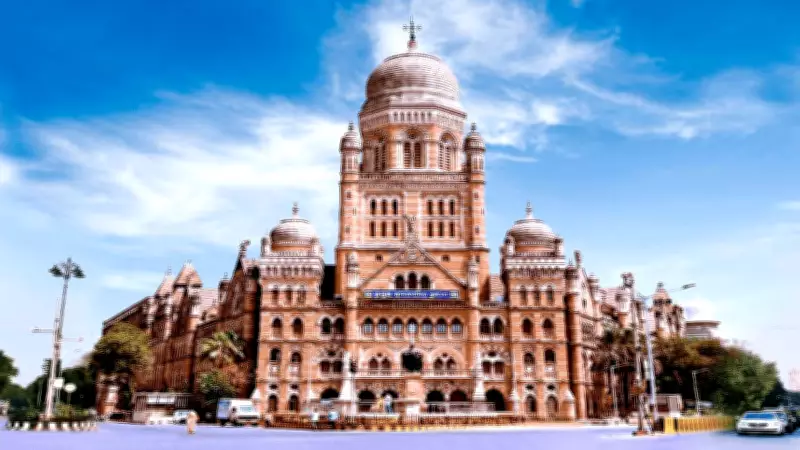
From Colonial Elites to Elected Nagarsevaks: The Evolution of Mumbai's Corporators
Mumbai's Municipal Corporation, established in 1872 under the Bombay Act, has undergone a profound transformation over a century and a half. Initially dominated by colonial elites with restricted voting rights, the civic body has evolved into a fully elected institution where corporators serve as mass representatives with significant roles in governance. This journey reflects broader shifts in democracy, political mobilisation, and urban development in India's financial capital.
Birth of the Corporation and Restricted Voting Rights
The Bombay Municipal Corporation came into existence in 1872, headquartered initially at the Army Navy Building. In its early years, the corporation comprised 64 councillors, all nominated by the British government or High Court judges. This system soon changed, with 50% of councillors—32 out of 64—being elected by citizens, while the other half remained nominated. However, voting rights were highly restricted, limited only to tax-paying citizens known as rate payers who paid a minimum annual tax of Rs 50.
A survey by the assessment department identified 3,893 eligible voters, representing a mere 0.6% of Mumbai's population, which stood at 6.44 lakh according to the 1872 census. The electorate included 1,621 Hindus, 1,074 Parsis, 896 Muslims, 165 Europeans, 108 Portuguese, and 29 Jews. In the first elections held on July 26, 1875, only 1,255 voters, about 35% of those eligible, participated. The 32 elected councillors comprised 14 Parsis, 10 Hindus, five Muslims, and three Europeans.
Subsequently, judges elected 16 councillors, including six Parsis and five each from European and Hindu communities, while the government nominated another 16 members, with 13 Europeans, one Hindu, one Muslim, and one Parsi. Overall, the first elected civic body consisted of 21 Europeans, 21 Parsis, 16 Hindus, and six Muslims. Prominent figures such as Dadabhai Naoroji, Byramjee Jeejebhoy, Cursetjee Nusserwanjee Cama, Kharshedji Rustomji Cama, Pherozeshah Mehta, and Vishwanath Narayan Mandlik were among the early members.
Expansion of Suffrage and Democratic Reforms
This elitist system persisted into the early 20th century, but gradual reforms began to democratise the corporation. In 1922, voting rights were extended to rent payers—tenants residing in registered properties where municipal taxes were levied. A significant milestone came in 1931 when the post of President was renamed Mayor, lending a more democratic structure, though the role remained largely ceremonial.
After India's independence, the corporation underwent further changes. In 1952, it became fully elected with the removal of nominated councillors, marking a shift towards greater representation. Four years later, Mumbai welcomed its first woman Mayor, Sulochana Modi, highlighting progress in inclusivity. As Kaevan Umrigar, head of research at Khaki Tours, noted, during the colonial era, councillors had only titular roles with little administrative power. Advocate Pherozeshah Mehta pushed for civic councils to represent citizens, gradually empowering councillors over time.
Inception of a Democratised System and Political Mobilisation
In 1968, local body elections in the BMC were held under the supervision of an election commission for the first time, leading to municipal councillors being officially termed Nagarsevaks. This period coincided with socio-economic unrest and political mobilisation across India, with Mumbai emerging as a hub of activism.
According to political researcher Surendra Jondhale, the 1960s and 1970s saw large-scale working-class movements, including atrocities in textile mills, fostering political ethos driven by communist and socialist parties. This spurred aspirations among the middle class to acquire political offices, leading to broader participation in electoral politics. In 1989, the strength of the civic standing committee was increased to 20 members, granting elected representatives greater control over the corporation's finances.
Retired IAS officer D M Sukthankar observed that the political demography in BMC changed dramatically post-1970s, as members from higher economic strata no longer dominated municipal politics. Instead, representation of common citizens became more fairly distributed through elected municipal councillors. While Congress held the highest number of councillors until the late 1980s, parties like Shiv Sena, Bharatiya Janata Party (BJP), and Jan Sangh also gained fair presence, reflecting a more democratic system.
Reservations, Executive Powers, and Modern Roles
In 1990, 30% of BMC seats were reserved for women, a quota increased to one-third in 1994, with an additional 27% reserved for marginalised communities. A significant development occurred in 1998 with the introduction of the Mayor-in-council system, which granted executive powers to the Mayor and councillors. However, this system was scrapped within a year due to concerns over power abuse and lack of accountability, as BMC is a statutory, self-governing body.
A civic official explained that the Mayor-in-council system aimed to empower the Mayor and councillors by centralising administrative power, but it created imbalances and was quickly reversed. Since then, the Mayor's role has remained ceremonial, while elected corporators coordinate with the BMC on civic works and serve on statutory committees that shape policy and development decisions. Each corporator now receives an annual constituency allocation of Rs 1.6 crore and a monthly honorarium of Rs 25,000.
Conclusion: A Transformed Civic Landscape
Today, Mumbai's civic landscape stands in stark contrast to its colonial origins. Last month, 227 Nagarsevaks were elected to the Brihanmumbai Municipal Corporation, underscoring how corporators have evolved from elite, ceremonial figures into mass-elected representatives with service-oriented roles. From restricted voting rights and nominated councillors to expanded suffrage, political mobilisation, and inclusive reservations, the journey of Mumbai's corporators mirrors India's broader democratic evolution, highlighting the ongoing challenges and triumphs in urban governance.