

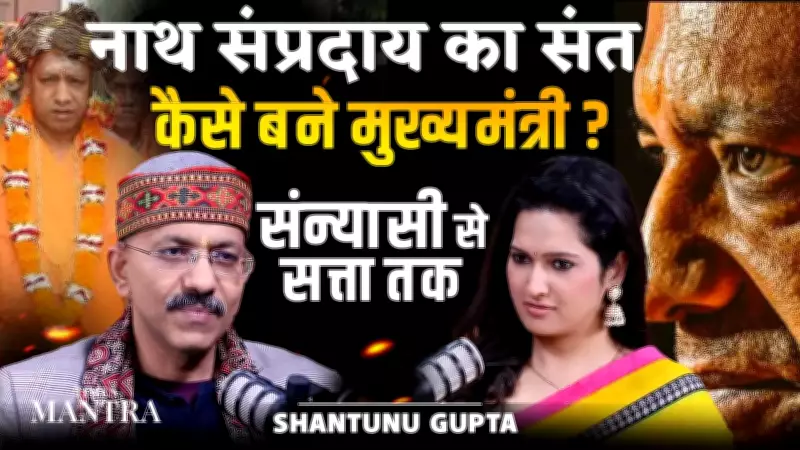
From Monastery to Mantralaya: The Historic Rise of a Nath Monk to Chief Minister
The Nath Sampradaya stands as one of India's most ancient and revered spiritual traditions, deeply rooted in principles of rigorous penance, unwavering discipline, and selfless public service. This yogic lineage, tracing its origins through centuries, has historically emphasized asceticism and spiritual mastery. In a remarkable and rare development, a monk from this venerable tradition has ascended to the powerful position of Chief Minister, creating an unprecedented confluence of deep spirituality and high-stakes political leadership.
A Journey Symbolizing a Broader Ideological Shift
This individual's transformative path from the contemplative silence of monastery life to the dynamic authority of administrative governance is not merely a personal achievement. It represents a significant symbolic shift in the ideological landscape, where spiritual values are increasingly intersecting with secular power structures. The transition underscores the enduring social influence, profound grassroots connectivity, and inherent leadership depth cultivated within the Nath tradition over generations.
Embracing governance as an ultimate form of duty and seva (selfless service), this figure has redefined the role of a renunciant. The compelling narrative of moving from a life of worldly renunciation to one of worldly rulership is both historic and instructive, challenging conventional boundaries between the sacred and the political.

Decoding a Multifaceted Narrative
Analyst Shantanu Gupta provides a nuanced decoding of this extraordinary journey through a tripartite lens:
- Historical Context: Examining how the Nath Sampradaya's legacy of community engagement and moral authority laid a foundational ethos for such public leadership.
- Political Insight: Analyzing the strategic and societal factors that enabled this spiritual figure to navigate and succeed within the complex arena of electoral politics.
- Spiritual Perspective: Interpreting the ascension as a modern manifestation of the tradition's core principle: that true leadership is an expression of disciplined service and higher duty.
This synthesis makes the narrative deeply engaging, offering a unique case study in how ancient Indian spiritual traditions can inform and transform contemporary governance models. The event prompts a broader reflection on the evolving nature of leadership, where spiritual integrity and political pragmatism are no longer seen as mutually exclusive but as potentially complementary forces in public life.






