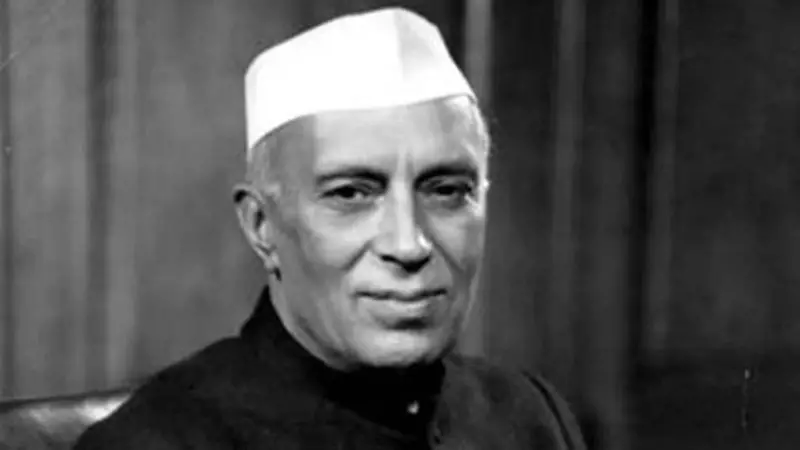
Newly accessed documents from the Nehru Archives have shed light on the firm principles of India's first Prime Minister, Jawaharlal Nehru, regarding the secular and apolitical character of the armed forces. A significant revelation is his direct objection to the construction of a memorial for the 1857 rebel sepoy Mangal Pandey on land belonging to the military.
Nehru's Objection to the Mangal Pandey Memorial Proposal
In 1957, a decade after independence, the West Bengal Government approached the Union Ministry of Defence with a specific request. The state sought a plot of land in the historic town of Barrackpore to establish a memorial for Mangal Pandey, the sepoy whose act of mutiny on March 29, 1857, is widely seen as the spark that ignited the First War of Independence.
This proposal reached the desk of Prime Minister Jawaharlal Nehru. On August 3, 1957, Nehru wrote a detailed letter to the then Chief Minister of West Bengal, Dr. Bidhan Chandra Roy, expressing his strong reservations. The letter, now part of the public record, outlines Nehru's core concern: insulating the Indian Army from influences that could compromise its discipline and impartiality.

Nehru acknowledged that Defence Minister V.K. Krishna Menon had informed him of the request. However, he argued that using defence land for such a purpose was inadvisable. "Whatever we may think of Mangal Pandey's act, it is not a good example to set to the men in our Army," Nehru wrote emphatically. He believed that placing a memorial on military land would draw undue and specific attention to an act of mutiny, which could set a problematic precedent for serving soldiers.
While not dismissing the idea of remembrance entirely, Nehru suggested a compromise. He proposed that a simple plaque would suffice, and if a larger memorial was essential, it should be constructed "somewhere else, and not on land belonging to our military." This stance underscored his commitment to preserving the armed forces' estates for strictly professional purposes.
A Broader Principle: The Army and Religious Functions
The archives reveal that Nehru's views on keeping the Army insulated extended beyond historical memorials to the sphere of religion as well. In a separate note written in February 1953, he articulated a clear policy against the formal participation of Army units in religious events.
Nehru stated that the principle of keeping military units away from formally participating in religious or similar functions was a sound one. His reasoning was rooted in the secular fabric of the new nation and the composite nature of Army units. "If they are allowed to take such part, then naturally we shall have to extend this to every religion. Any other course would be discrimination," he explained.
He further pointed out that since the old princely state forces had been integrated into the unified Indian Army, the sentimental traditions of their participation in local religious festivals were no longer broadly applicable. Nehru advocated for a gradual end to this practice, noting that efforts to reduce its scope had been ongoing for three years prior to his note.
This policy was communicated in response to a telegram from the Maharaja of Travancore, who wished to continue the old practice. Nehru instructed that a letter be sent to the Maharaja, explaining the national policy and the difficulties that would arise from making exceptions. He clarified that the orders applied only to formal unit participation, and there was no ban on individual soldiers attending such events in their personal capacity when not on duty.
The Lasting Impact of Nehru's Directives
These archival findings highlight the foundational thinking that shaped the Indian Army's modern ethos. Nehru's interventions in the Mangal Pandey memorial case and the policy on religious events were not isolated incidents but part of a consistent effort to build a professional, secular, and apolitical defence force.

By refusing to allow defence land to be used for a memorial that glorified an act of insubordination, Nehru prioritized contemporary military discipline over historical symbolism. Similarly, his stance on religious functions was aimed at preventing the Army from being perceived as aligned with any particular faith, thereby strengthening its role as a unifying national institution.
These decisions, taken in the nascent years of the republic, continue to influence the protocols and traditions observed by the Indian Armed Forces today, reinforcing their position as an institution standing above political and sectarian interests.