

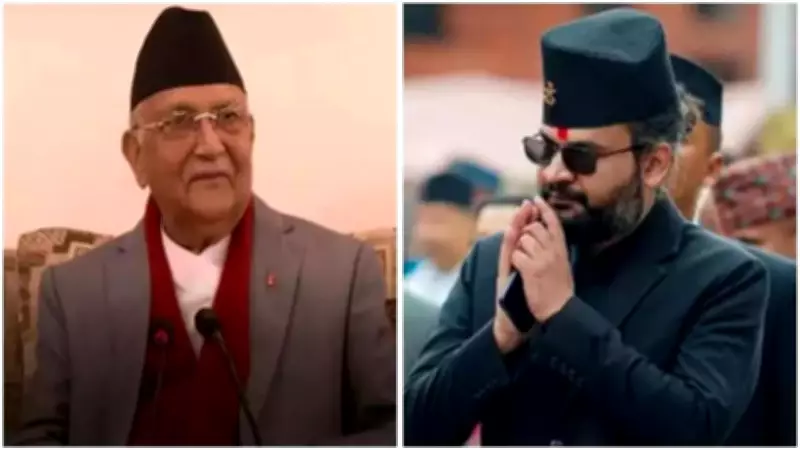
Nepal's Generational Shift: Gen Z Challenges Veteran KP Sharma Oli in Jhapa-5
As Nepal heads to the polls on Thursday, a profound generational transformation is reshaping the political landscape of the Himalayan nation. In urban centers like Kathmandu, a wave of young, impatient Gen Z voters—the same cohort that previously toppled the KP Sharma Oli government and propelled youthful figures such as the 35-year-old Balen into prominence—is now directly challenging the country's traditional leadership structures.
The Enduring Legacy of KP Sharma Oli
Despite this shifting mood, KP Sharma Oli remains one of Nepal's most enduring political figures. His stronghold is Jhapa-5, a constituency along eastern Nepal's border with India that has anchored his national career for decades. This election cycle, however, marks a significant departure as Balen has chosen to challenge Oli in a direct contest, symbolizing a broader generational confrontation.
Born in 1952, Oli's political journey began during Nepal's Panchayat era, a period when political parties were banned. As a teenage communist activist in 1970, he opposed the monarchy's partyless system, leading to his arrest in October 1973 for involvement in the Jhapa rebellion and anti-monarchy activities. He endured 14 years in prison, including four in solitary confinement, experiences that forged his resilient political instincts.

"Leaders who emerged from Panchayat-era prisons developed a hardened perspective on politics," a political analyst noted in a 2018 interview with a Nepali daily. "They believed power must be exercised decisively, having witnessed firsthand how easily it could be suppressed."
From Dissident to Power Broker
Following the 1990 People's Movement, which restored multiparty democracy, Oli entered open politics through the Communist Party of Nepal (Unified Marxist-Leninist). In parliament, he quickly gained a reputation for his blunt rhetoric and biting humor. A 2014 Kathmandu newspaper article described his approach to debate as "a contest of endurance and wit rather than quiet compromise," often employing sarcasm to unsettle opponents.
Oli's national breakthrough occurred in 2015, coinciding with Nepal's adoption of a new constitution and a sharp deterioration in relations with India. Protests along the southern border disrupted the flow of fuel, medicines, and essential supplies into the landlocked nation, creating months of shortages widely perceived in Nepal as an unofficial Indian blockade. Oli framed this crisis as a matter of sovereignty and national dignity, a message that resonated deeply and fueled nationalist sentiment.
This wave of nationalism helped a left alliance sweep the 2017 elections, returning Oli to office with a rare parliamentary majority. However, the stability he promised proved fleeting. Facing internal party dissent, Oli dissolved parliament in December 2020, a move overturned by Nepal's Supreme Court. In May 2021, he dissolved it again, triggering another constitutional confrontation that ultimately forced him out of office at that time.
"A leader who once spent years in prison resisting state authority was now accused of pushing constitutional limits to retain power," a constitutional scholar wrote in 2021, highlighting the irony of Oli's trajectory.
Resilience in the Face of Change
Oli returned to office in 2024 as part of a coalition government and served as Prime Minister during the deadly Gen Z protests in September. Many observers believed his resignation following these protests would mark the end of his political career. Instead, Oli has once again returned to the ballot from Jhapa-5, demonstrating the remarkable resilience that has defined his five-decade-long career.
This election represents a critical juncture for Nepal's political future. Oli, a leader who survived imprisonment, political upheaval, and repeated challenges to his authority, now faces a new generation of voters. Their decision will determine whether the rebel who became the establishment still has a role to play in Nepal's evolving democracy, or if the time has come for a younger, more impatient cohort to take the reins.






