

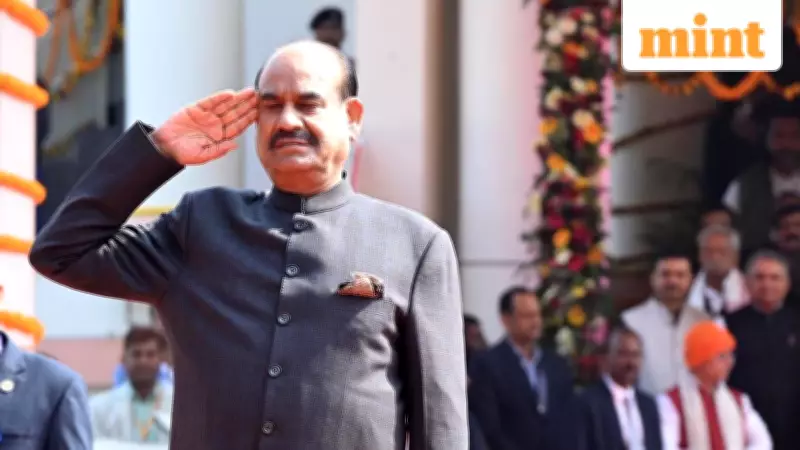
Opposition Considers No-Confidence Motion Against Lok Sabha Speaker Om Birla
In a dramatic escalation of parliamentary tensions, opposition parties are reportedly planning to move a no-confidence motion against Lok Sabha Speaker Om Birla. This development comes amid a tumultuous Budget Session, where legislative business has been repeatedly disrupted by protests and sloganeering.
Parliamentary Proceedings Grind to a Halt
The Lok Sabha saw no legislative work conducted on Monday as Speaker Om Birla adjourned the House just seven minutes after it commenced. The adjournment came in response to persistent opposition sloganeering demanding a discussion on the India-US interim trade framework, which completely disrupted the question hour.
Prior to the disruption, Speaker Birla took a moment to congratulate the Indian Under-19 cricket team for their historic World Cup victory against England. "The House congratulates the team for this historic win," Birla stated. "Throughout the tournament, they have given an exemplary performance and shown firm determination and skill."

Speaker's Plea for Decorum Falls on Deaf Ears
As question hour began, opposition MPs continued their protests, demanding that their concerns be addressed. Speaker Birla urged members to maintain parliamentary decorum, emphasizing that all MPs would have opportunities to speak. "Do you want to adjourn the house? Do you not want to work?" Birla questioned the protesting members. "The House is for debate and discussion. Please talk about issues, raise them. Everyone will get a chance to speak; no one will be barred from speaking."
Despite these appeals, the sloganeering persisted, forcing Birla to adjourn proceedings until 12 PM. This marked another chapter in what has become a pattern of disruptions during the crucial Budget Session.
Budget Discussions Overshadowed by Political Theater
Both Houses of Parliament were scheduled to continue discussions on the Union Budget 2026-27 on Monday. Finance Minister Nirmala Sitharaman presented this budget on February 1, marking her ninth consecutive budget presentation. The budget emphasizes "Yuvashakti" (youth power) and is based on "three kartavyas" (three duties), proposing significant infrastructure developments including seven high-speed rail corridors, new dedicated freight corridors, and the operationalization of 20 national waterways over the next five years.
Earlier on Monday, INDIA bloc parties decided to participate in budget discussions in both the Lok Sabha and Rajya Sabha. This decision emerged from a meeting of opposition floor leaders held at the office of Congress President Mallikarjun Kharge, who serves as Leader of Opposition in the Rajya Sabha. Lok Sabha Opposition Leader Rahul Gandhi also attended this crucial meeting.
Escalating Tensions and Broader Protests
The Budget Session has witnessed increasing disruptions in recent days, with opposition parties pressing for debates on multiple issues. Before arriving at Parliament, Mallikarjun Kharge responded to questions about whether proceedings would function normally by asking, "Who says the House will not function today?"
On Friday, Lok Sabha proceedings were disrupted by strong opposition protests during the general discussion on the Union Budget 2026-27, leading to an adjournment until Monday. Opposition MPs also protested the India-US trade agreement at the Parliament's Makar Dwar, holding banners calling it a "trap deal." Congress leader Priyanka Gandhi Vadra joined these protests, where MPs raised slogans including "Jo uchit samjho vahi karo" (Do whatever you think is right) and "tanashahi nahi chalegi" (dictatorship will not be accepted), directly criticizing the central government.

Key Implications of the Parliamentary Standoff
- The opposition's consideration of a no-confidence motion against Speaker Om Birla represents a significant escalation in parliamentary tensions, potentially challenging the presiding officer's authority during critical budget discussions.
- Repeated adjournments are delaying essential legislative business, particularly the detailed examination and discussion of the Union Budget 2026-27, which contains major policy proposals affecting the nation's economic direction.
- Speaker Birla's emphasis on decorum and dialogue highlights the growing concern about parliamentary norms being undermined by continuous disruptions, raising questions about the institution's functioning during this crucial session.
- The opposition's coordinated strategy through the INDIA bloc suggests a unified approach to challenging government policies, particularly regarding international trade agreements and budget priorities.
The ongoing parliamentary showdown reflects deeper political divisions that threaten to overshadow substantive policy discussions during one of the most important sessions of the parliamentary calendar.





