

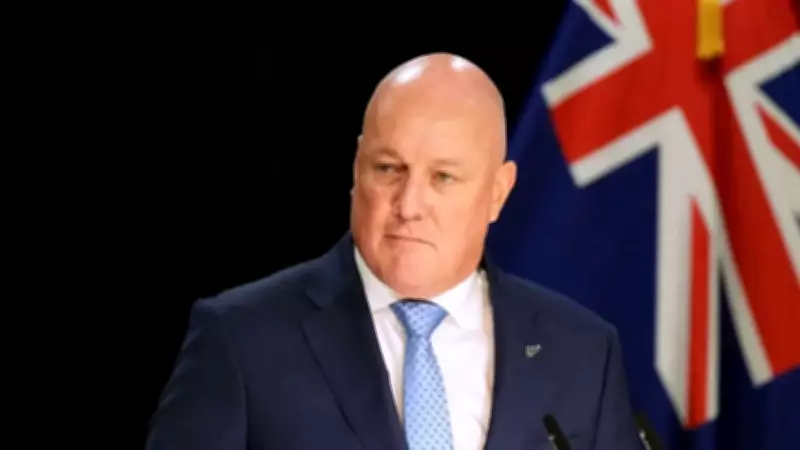
New Zealand Prime Minister Christopher Luxon Survives Leadership Confidence Vote
In a significant political development, New Zealand Prime Minister Christopher Luxon has successfully navigated a crucial leadership vote within his centre-right National Party. The vote was called on Tuesday amidst growing concerns over the party's declining performance in opinion polls, which had sparked intense speculation about Luxon's future as leader.
Call for Confidence Amidst Polling Challenges
Prime Minister Luxon initiated the formal motion of confidence in his own leadership during a nearly three-hour meeting with his party caucus. This move came as his government continues to languish in opinion surveys ahead of the critical November general election. The National Party has recently dipped below 30 percent in polling numbers, creating an atmosphere of uncertainty within political circles.
Following the lengthy caucus session, Luxon announced that the confidence motion had been passed, effectively confirming his continued leadership. "I moved a formal motion of confidence in my leadership," Luxon stated. "That motion was passed confirming what I have been saying -- I have the support of my caucus as their leader."

Secret Voting Process and Attendance Challenges
The voting process itself was conducted under unusual circumstances. While Luxon claimed unanimous support from his Members of Parliament, the actual vote count was kept strictly confidential—not even revealed to the Prime Minister himself. Only party members physically present at the caucus meeting were permitted to cast votes, creating logistical challenges due to severe weather conditions that disrupted travel to the capital Wellington.
Several National Party members were unable to attend the crucial meeting in person because adverse weather had cancelled numerous flights into Wellington. This attendance limitation added another layer of complexity to an already tense political situation.
Mounting Leadership Questions and Internal Dynamics
Questions about Luxon's leadership capabilities have been accumulating over recent months, paralleling the party's declining poll numbers. The Prime Minister's personal approval ratings have also experienced a significant downturn, further fueling speculation about potential leadership challenges.
Media reports from the previous week had suggested that several members of Luxon's caucus were dissatisfied with his leadership approach. Some lawmakers were reportedly unlikely to return to parliament based on current polling projections, adding pressure on the leadership situation.
Luxon dismissed the ongoing speculation about his political future as what he termed a "media soap opera." He emphasized his refusal to engage with what he characterized as rumor-driven narratives, stating: "If the media want to keep focusing on speculation and rumour, I am not going to engage."
Key Party Figures Respond to Leadership Vote
Transport Minister Chris Bishop, who had been rumored to have considered challenging Luxon for leadership late last year, confirmed his support for the Prime Minister following what he described as a "good, honest, robust" discussion within the caucus. Bishop emphasized unity moving forward, declaring: "Now we move forward together, united as a team."
Finance Minister and Deputy National Leader Nicola Willis acknowledged that the "caucus sent an emphatic message" through the confidence vote, though she admitted she remained unaware of the final vote tally due to the secretive nature of the process.
In a contrasting perspective, Foreign Minister Winston Peters, who leads the populist New Zealand First party, offered a critical assessment of the entire confidence vote exercise, dismissing it as "egotistical rubbish." His comments highlight the broader political tensions surrounding the leadership question within New Zealand's coalition government structure.
The leadership vote outcome provides temporary stability for Luxon's government as it prepares for the upcoming general election campaign. However, the underlying challenges of improving poll numbers and maintaining party unity remain significant hurdles for the National Party leadership in the months ahead.






