

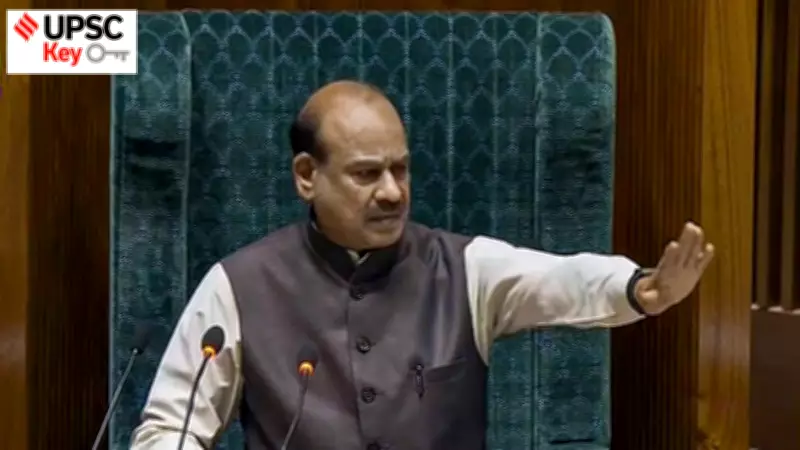
Opposition Moves No-Confidence Motion Against Lok Sabha Speaker Om Birla Amidst Constitutional Concerns
In a significant political development, opposition parties have formally submitted a no-confidence motion against Lok Sabha Speaker Om Birla. This action follows repeated clashes and disruptions within the House, highlighting a growing rift between political factions. Historically, such motions have been rare but not unprecedented; in recent years, similar notices were filed against Rajya Sabha Chairman Jagdeep Dhankhar and Deputy Chairman Harivansh Narayan Singh, both of which were rejected by constitutional authorities without reaching debate stages.
Immediate Operational Crisis: The Vacant Deputy Speaker Office
The Constitution of India meticulously outlines provisions to ensure continuity in high constitutional offices, preventing any vacuum in leadership. For instance, when President Zakir Hussain passed away, Vice President V V Giri assumed presidential duties until elections could be conducted. Similarly, the Deputy Chairman of Rajya Sabha took over responsibilities upon Vice President Dhankhar's resignation. In the Lok Sabha, the Speaker's office is safeguarded by rules that allow the Speaker to remain in position even after the dissolution of the House, with a Speaker pro-tem appointed at the start of a new term to maintain continuity.
However, a critical flaw has emerged: the Lok Sabha has been without a Deputy Speaker since 2019. This vacancy persisted throughout the entire five-year term of the 17th Lok Sabha (2019-2024) and continues into the current term that began in June 2024. The absence of a Deputy Speaker creates a constitutional conundrum, as this role is essential for temporarily performing the Speaker's duties in case of a vacancy or when decisions on motions like no-confidence are required. When a no-confidence motion was moved against Rajya Sabha Chairman Dhankhar, it was the Deputy Chairman who ruled to reject it. In the Lok Sabha, with no Deputy Speaker, there is a clear vacuum regarding who should adjudicate on the Opposition's motion against Om Birla.

The Constitution explicitly mandates that Lok Sabha MPs elect a Deputy Speaker "as soon as may be," indicating that prolonged vacancies were never intended. This issue is not isolated to the national level; multiple state legislative assemblies also have vacant Deputy Speaker positions, underscoring a systemic neglect of constitutional offices designed to uphold institutional integrity.
Institutional Degradation: Escalating Political Discord in Parliament
Beyond the immediate operational crisis, the no-confidence motion against Speaker Om Birla raises profound institutional questions about the health of India's deliberative democracy. Parliament is intended as a forum for constructive debate and collaboration, guiding the nation through laws and policies. However, recent trends show a sharp decline in bipartisan cooperation, with debates becoming increasingly personal and adversarial.
The shrillness of parliamentary discourse has contributed to frequent disruptions, severely impacting legislative productivity. Data from the Lok Sabha's working sessions between June 2024 and 2025 reveals that on approximately one-third of total working days, the House functioned for less than an hour due to disruptions. This inefficiency carries a massive opportunity cost for a country of 140 crore people, where Parliament shoulders the immense responsibility of lawmaking, budget approval, and holding the government accountable.
The framers of the Constitution envisioned that elected representatives would rise above political differences to work for the national good. Yet, current parliamentary procedures, largely inherited from colonial times, were designed with a mindset that viewed the legislature as an impediment to be tolerated rather than a collaborative body. There is an urgent need for procedural reforms to foster more bipartisanship and cooperation among members.

Conclusion: A Call for Constitutional Adherence and Collaborative Governance
The no-confidence motion against Speaker Om Birla serves as a stark reminder of the deeper constitutional and political issues plaguing India's parliamentary system. The prolonged vacancy of the Deputy Speaker office not only violates constitutional mandates but also jeopardizes the smooth functioning of the Lok Sabha. Simultaneously, the escalating political discord threatens the very essence of deliberative democracy, undermining Parliament's ability to fulfill its duties effectively.
As the nation watches, there is a pressing hope that our Parliament and its members will not betray the trust placed in them. Overhauling outdated procedures and ensuring adherence to constitutional provisions, such as promptly filling the Deputy Speaker position, are crucial steps toward restoring institutional integrity and fostering a more collaborative political environment for the benefit of all citizens.





