

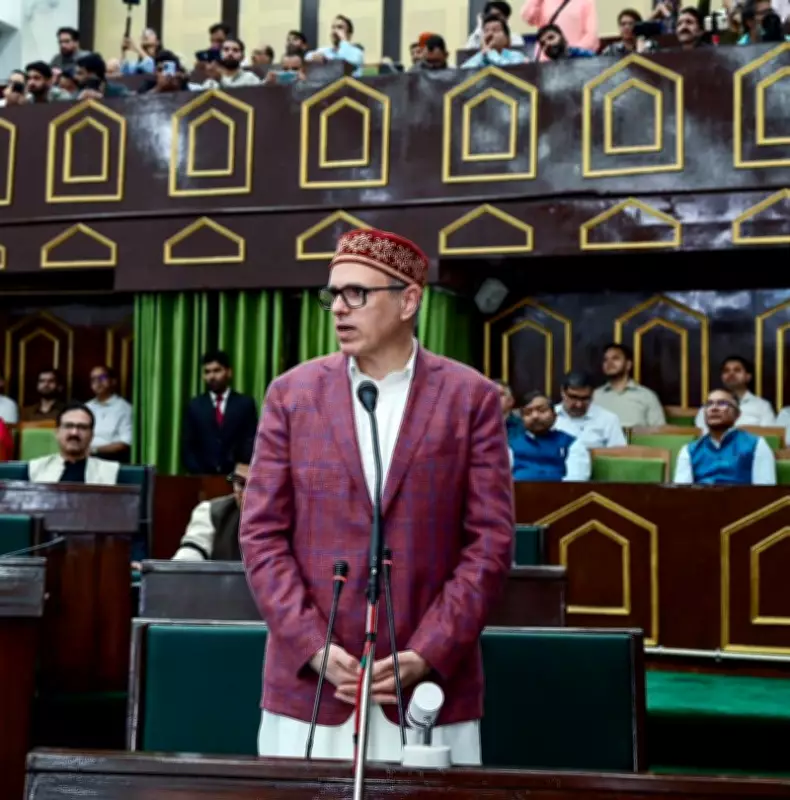
Omar Abdullah Appeals to PM Modi for Diplomatic Role in West Asia Conflict
In a significant political development, former Jammu and Kashmir Chief Minister and National Conference leader Omar Abdullah has publicly urged Prime Minister Narendra Modi to intervene in the ongoing West Asia conflict. Abdullah emphasized that India, under Modi's leadership, should leverage its diplomatic influence to help de-escalate tensions and promote peace in the volatile region.
Call for India's Global Leadership
Abdullah highlighted India's growing stature on the world stage, noting that the country's neutral and principled foreign policy positions it uniquely to mediate in international disputes. He argued that Prime Minister Modi's proactive engagement could play a crucial role in facilitating dialogue between conflicting parties in West Asia, potentially preventing further humanitarian crises and regional instability.
The National Conference leader stressed that India's historical ties and economic interests in West Asia make it imperative for New Delhi to take a more active diplomatic stance. He pointed out that the conflict not only affects global geopolitics but also has direct implications for India's energy security and the welfare of its large diaspora in the region.

Context of the Appeal
This appeal comes amid heightened tensions in West Asia, where ongoing conflicts have led to widespread violence and displacement. Abdullah's statement reflects a broader concern among Indian political circles about the spillover effects of such instability, including potential impacts on domestic security and international relations.
Abdullah, a prominent figure in Jammu and Kashmir politics, has often advocated for peaceful resolutions to conflicts, both domestically and internationally. His call to PM Modi underscores a bipartisan recognition of India's potential as a peacemaker, transcending usual political divides.
Potential Implications for Indian Foreign Policy
If heeded, this appeal could signal a shift in India's diplomatic approach, with New Delhi taking a more hands-on role in conflict mediation. Experts suggest that such a move would align with India's aspirations for a permanent seat on the United Nations Security Council and its "Vishwaguru" (world teacher) ambitions.
- Enhanced diplomatic engagement in West Asia
- Strengthened bilateral ties with key regional players
- Increased global recognition of India's soft power
- Potential risks of entanglement in complex geopolitical rivalries
Abdullah's intervention adds to the chorus of voices calling for international efforts to resolve the West Asia conflict, with many hoping that India's unique position can bridge divides and foster lasting peace.






