

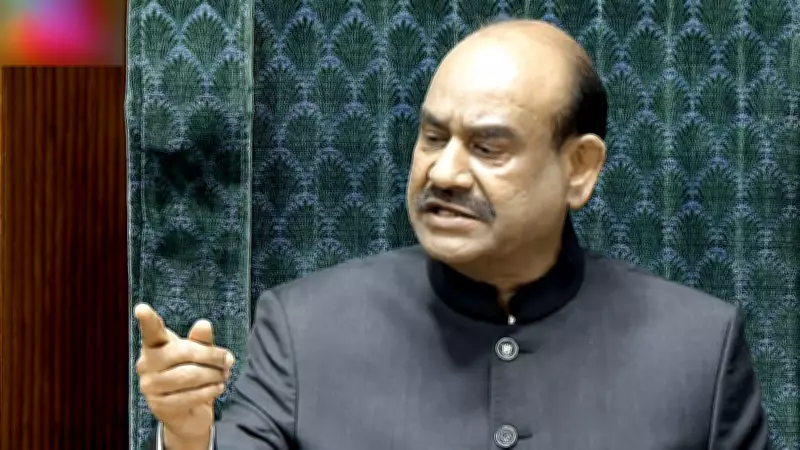
Opposition to Move No-Confidence Motion Against Lok Sabha Speaker Om Birla
In a significant escalation of parliamentary tensions, the Opposition has announced its intention to move a no-confidence motion against Lok Sabha Speaker Om Birla. This decision follows a series of heated exchanges and procedural disputes that have marred the recent sessions of Parliament, highlighting a deepening rift between the ruling party and the Opposition benches.
Clashes Over Unpublished Memoir Spark Crisis
The immediate trigger for this dramatic move was a contentious incident last week involving Leader of Opposition Rahul Gandhi. Speaker Birla repeatedly prevented Gandhi from quoting or speaking about excerpts from former Indian Army Chief General M M Naravane's unpublished memoir, Four Stars of Destiny. The memoir, which discusses sensitive national security matters including the 2020 military face-off with China in eastern Ladakh, was referenced in a recent essay published by The Caravan magazine.
Gandhi attempted to raise these issues on the floor of the House, arguing they pertained to national security. However, the Speaker cut short his speech, citing a breach of parliamentary decorum and directions. In protest, Opposition MPs entered the Well of the House and threw papers at the Speaker's podium, leading to the suspension of eight Lok Sabha members. The Opposition subsequently boycotted proceedings, accusing Birla of stifling democratic debate.

Charges Outlined in the Motion
Sources within the Opposition have revealed that the no-confidence motion will include several specific charges against Speaker Birla. These allegations were discussed during a meeting of Opposition leaders and are expected to form the core of their formal complaint.
- First, the motion will contend that Birla unfairly denied Rahul Gandhi the opportunity to speak while allowing other members, such as Nishikant Dubey, to make what the Opposition describes as vile remarks in the House.
- Second, it will highlight Birla's statement in Parliament that he had received information about a potential attack on Prime Minister Narendra Modi and had advised the PM not to attend the House. The Opposition questions the basis and timing of this announcement.
- Third, the motion will address Birla's comments regarding female MPs allegedly planning an attack on the Prime Minister within the House, which the Opposition views as unsubstantiated and inflammatory.
Overall, the Opposition accuses Birla of failing to provide adequate space for dissenting voices and undermining the principles of fair parliamentary conduct.
Broad Opposition Support and Procedural Fallout
The decision to move the no-confidence motion was finalized at a meeting of the INDIA bloc floor leaders on Monday, attended by key figures including Rahul Gandhi and Rajya Sabha Leader of Opposition Mallikarjun Kharge. All parties within the INDIA alliance, including the Trinamool Congress (TMC), have reportedly united behind this plan, signaling a coordinated effort to challenge the Speaker's authority.
In the aftermath of the suspensions, Rahul Gandhi wrote a formal letter to Speaker Birla, arguing that he had adhered to parliamentary conventions by authenticating the magazine report but was still prevented from speaking. Gandhi emphasized that quoting from authenticated documents is a long-standing practice in the House, and Birla's actions violated this tradition.
Speaker's Defense and Parliamentary Disruptions
Speaker Om Birla has defended his actions, stating that he cannot run such a House amid continuous disruptions. Last Friday, he noted that due to frequent adjournments and protests during the current Budget Session, a staggering 19 hours and 13 minutes of parliamentary time had been wasted. Birla emphasized that members are elected to raise public issues constructively, not to engage in slogan-shouting and chaos, and expressed his desire for the House to function smoothly.

This no-confidence motion marks a rare and serious challenge to a Lok Sabha Speaker, reflecting the heightened political tensions in India's parliamentary democracy. As the motion proceeds, it is likely to spark further debates on the balance between parliamentary discipline and the right to free expression within the legislature.





