

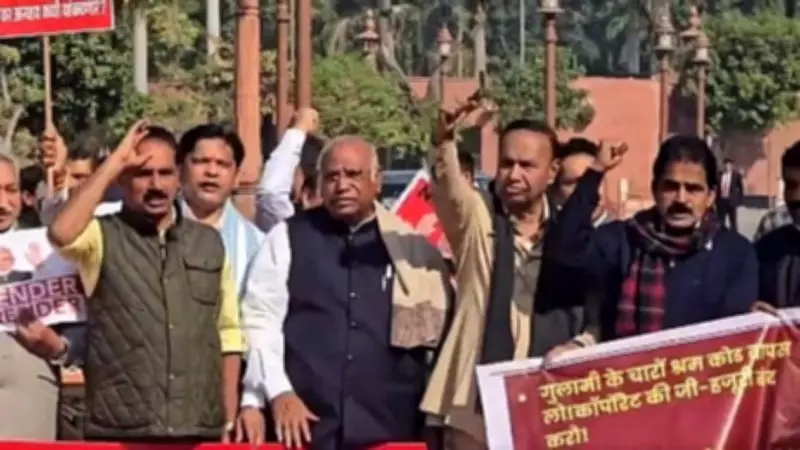
Opposition MPs Stage Parliament Protest Against India-US 'Trap Deal'
In a significant political development, opposition Members of Parliament (MPs) organized a protest within the Parliament complex on February 12, 2026, vehemently opposing the recently negotiated India-US interim trade agreement. The demonstration, which drew attention from across the political spectrum, centered on allegations that the deal represents a 'trap deal' detrimental to India's national interests.
Gandhi's Allegations of 'Wholesale Surrender'
The protest was fueled by sharp criticism from the Leader of the Opposition, who launched a scathing attack on the government just a day prior. On February 11, 2026, the opposition leader alleged that the India-US interim trade agreement constitutes a 'wholesale surrender' of India's sovereignty in key sectors. Specifically, the accusations highlighted two major concerns:
- Energy Security Compromised: The opposition claims that the agreement hands over control of India's energy resources to the United States, potentially undermining the country's long-term energy independence and strategic autonomy.
- Farmers' Interests at Risk: Critics argue that the trade deal compromises the interests of Indian farmers, possibly through unfavorable terms on agricultural imports or intellectual property rights that could affect local farming communities.
These allegations have sparked widespread debate, with opposition MPs using the Parliament protest as a platform to demand transparency and renegotiation of the agreement.

Political Fallout and Government Response
The protest underscores deepening political tensions over foreign trade policies. Opposition MPs, gathered in the Parliament complex, chanted slogans and held placards denouncing the deal as a betrayal of national interests. This move is seen as part of a broader strategy to pressure the government into addressing concerns before finalizing any permanent trade pact.
While the government has yet to issue an official response to the protest, sources indicate that officials are reviewing the allegations. The interim trade agreement, aimed at boosting bilateral trade between India and the US, has been under negotiation for months, with both sides seeking to enhance economic cooperation.
However, the opposition's stance suggests that domestic political considerations could complicate its implementation. The protest highlights a growing divide on how India should balance international trade commitments with safeguarding domestic sectors like energy and agriculture.
Implications for India-US Relations
This incident raises questions about the future of India-US trade relations. If the opposition's concerns are not addressed, it could lead to delays or revisions in the agreement, affecting bilateral economic ties. The protest also reflects a larger trend of increasing scrutiny over trade deals in Indian politics, where issues of national security and farmer welfare are becoming central to public discourse.
As the situation unfolds, stakeholders are closely watching for further developments. The opposition has vowed to continue its campaign against what it terms a 'trap deal', signaling potential ongoing confrontations in Parliament and beyond.






