AIMIM Chief Asaduddin Owaisi Condemns Assam CM Over Controversial Video, Announces Police Complaint
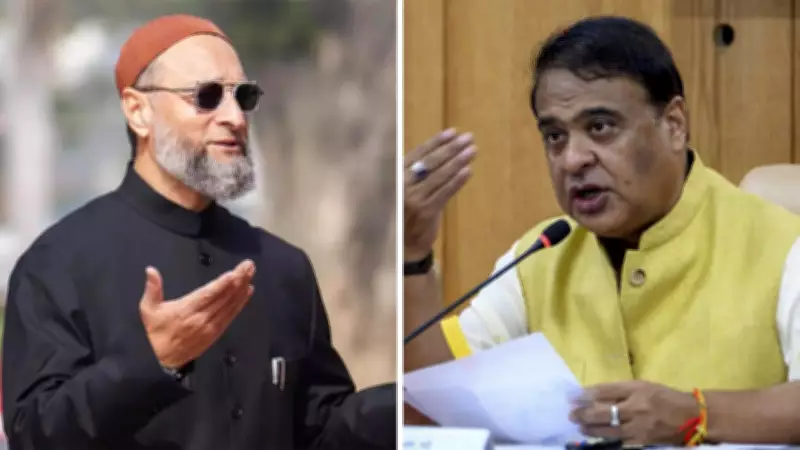
In a fiery address at a rally in Zaheerabad, Telangana, All India Majlis-e-Ittehadul Muslimeen (AIMIM) president Asaduddin Owaisi launched a scathing attack on Assam Chief Minister Himanta Biswa Sarma. The criticism centered on a video posted by the Bharatiya Janata Party's Assam unit on social media platform X, which depicted Sarma taking a "point-blank shot" with a rifle at two individuals identified as minorities—one wearing a skull cap and another with a beard.
Owaisi Accuses Sarma of Spreading Communal Hatred
Owaisi vehemently condemned the video, asserting that it exemplifies the persistent "poison of communalism" in Indian politics. "If you think that communalism has ended, remember, no matter who comes to power, the poison of communalism persists," he declared during his speech. He emphasized that the antidote to this divisiveness is the electoral success of AIMIM representatives.
The AIMIM leader described the video in detail, noting, "You see that in the country, the chief minister of Assam makes a video where he has a gun in his hand. And he fires a bullet. The bullet hits a person wearing a beard and a cap." Owaisi accused Sarma and the BJP of deliberately working to "spread religious hatred against Muslims" through such content.

Planned Legal Action and Broader Allegations
In response to the video, which was later deleted following public backlash, Owaisi announced that AIMIM intends to file a formal police complaint. "Majlis-e-Ittehadul Muslimeen strongly condemns that video. And Majlis-e-Ittehadul Muslimeen, God willing, will also file a complaint with the police against it, so that a case can be registered against the chief minister of Assam," he stated.
This incident is not an isolated one. Owaisi also referenced Sarma's previous controversial remarks regarding "Miya Muslims" in Assam, which he labeled as unconstitutional and divisive. Mocking the chief minister, Owaisi said, "I want to give you Rs 2 as alms," and accused him of reducing constitutional governance to prejudice and intimidation.
Constitutional Principles and Political Context
Owaisi underscored the foundational principles of India's Constitution, highlighting guarantees of equality and non-discrimination. "The Constitution says all are equal. No discrimination should be done, whether it is a chief minister or anyone else," he asserted. He alleged that Bengali-speaking Muslims in Assam are being unfairly scapegoated for various issues, from migration to economic problems like rising vegetable prices.
"If vegetable prices increase in Assam, Miya Muslims are blamed. If someone wants to vote, they are told to go to Bangladesh," Owaisi claimed, arguing that such rhetoric targets a community for political gain. This follows Sarma's statements encouraging action against "Miya Muslims," where he said, "Trouble the Miya Muslims by any means. If they face trouble, they will go from Assam... We are directly against the Miya Muslims. We are not hiding anything."
Political Fallout and Electoral Implications
The controversy has ignited a political storm in Assam, a state gearing up for elections. Opposition parties have accused the BJP of resorting to communal polarization to consolidate votes. In contrast, the BJP has consistently maintained that its focus in Assam is on addressing illegal immigration and protecting indigenous rights. The issue of Bengali-speaking Muslims being labeled as "illegal infiltrators" remains a central and contentious theme in the state's electoral discourse.
Owaisi's remarks reflect deepening tensions over identity politics and minority rights in Assam, setting the stage for heightened political confrontations as election campaigns intensify. The planned police complaint adds a legal dimension to this ongoing dispute, potentially escalating the conflict beyond mere political rhetoric.