

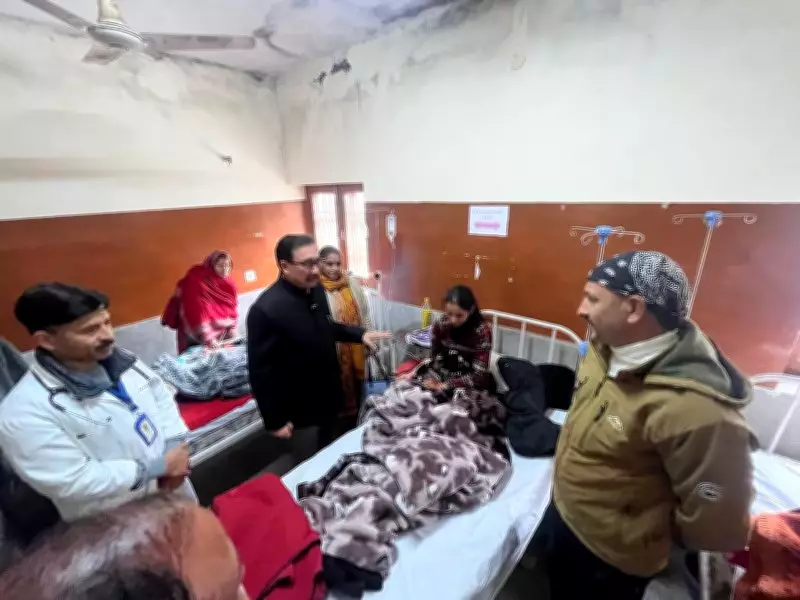
Congress Leader Parmar Visits Diarrhoea Patients in Himachal, Slams Government Over Incomplete Hospital
In a significant development highlighting public health concerns in Himachal Pradesh, senior Congress leader Sukhvinder Singh Sukhu Parmar recently visited patients suffering from a diarrhoea outbreak at a local hospital. During his visit, Parmar launched a sharp critique against the state government, accusing it of negligence for inaugurating a hospital that remains incomplete and ill-equipped to handle medical emergencies.
Parmar's Hospital Visit and Patient Interactions
Parmar, a prominent figure in Himachal Pradesh politics, made an unannounced visit to the hospital where numerous diarrhoea patients are currently receiving treatment. He spent considerable time interacting with the affected individuals and their families, listening to their grievances and assessing the conditions on the ground. Patients reportedly expressed frustration over inadequate facilities and delayed medical attention, which Parmar documented to bolster his criticism.
Criticism of Government's Incomplete Hospital Inauguration
The core of Parmar's condemnation centers on the state government's decision to open a hospital that is still under construction and lacks essential infrastructure. According to Parmar, this move demonstrates a blatant disregard for public welfare, especially during a health crisis like the diarrhoea outbreak. He argued that inaugurating an incomplete facility not only compromises patient care but also wastes public resources, as the hospital cannot function at full capacity.

Parmar emphasized, "The government's haste to showcase progress has backfired, leaving citizens vulnerable. A hospital should be fully operational before opening, not a half-built structure that fails to serve its purpose."
Impact of the Diarrhoea Outbreak on Local Communities
The diarrhoea outbreak has affected multiple areas in Himachal Pradesh, leading to hospitalizations and raising alarms about sanitation and healthcare preparedness. Local residents have reported symptoms such as dehydration and abdominal pain, with children and the elderly being particularly susceptible. The situation has strained existing medical resources, highlighting the urgent need for functional healthcare facilities.
- Increased patient load in hospitals due to the outbreak.
- Reports of insufficient medical supplies and staff shortages.
- Community concerns over water contamination and hygiene issues.
Political and Public Health Implications
Parmar's visit and subsequent statements have ignited a political debate in Himachal Pradesh, with opposition parties rallying behind his calls for accountability. The incident underscores broader issues in the state's healthcare system, including infrastructure gaps and emergency response capabilities. Public health experts warn that such outbreaks could become more frequent without timely interventions and proper facility management.
The government has yet to issue an official response to Parmar's allegations, but the controversy is expected to influence upcoming political discussions and policy reviews. Stakeholders are urging immediate action to complete the hospital and address the diarrhoea outbreak through improved sanitation and medical support.
Looking Ahead: Demands for Government Action
In light of these events, Parmar and other critics are demanding that the state government take swift measures to rectify the situation. Key demands include:
- Expediting the completion of the incomplete hospital with all necessary amenities.
- Enhancing medical resources and staff training to handle health crises effectively.
- Implementing robust sanitation drives to prevent future outbreaks.
- Conducting a transparent inquiry into the decision to open the hospital prematurely.
As the diarrhoea outbreak continues to challenge Himachal Pradesh, the focus remains on ensuring patient safety and holding authorities accountable for healthcare lapses. Parmar's advocacy has brought national attention to these issues, prompting calls for systemic reforms in the state's public health infrastructure.






