

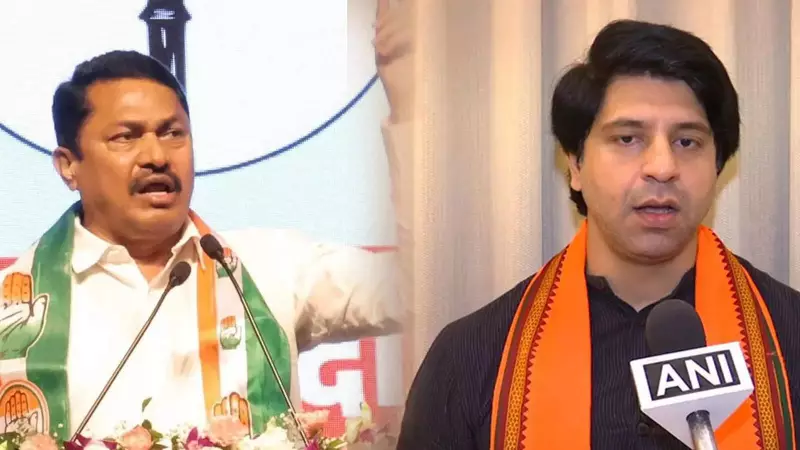
A fresh political controversy erupted after Congress leader Nana Patole drew a parallel between the political work of Rahul Gandhi and the ideals embodied by Lord Ram. The comparison, made on January 2, 2026, has intensified the ongoing war of words between the Congress and the Bharatiya Janata Party (BJP), leading to accusations of religious insensitivity and political opportunism.
The Controversial Statement and Immediate Backlash
Nana Patole, a prominent Congress figure, stated that Lord Ram symbolises justice, compassion, and service to the oppressed. He added that Rahul Gandhi was working across the nation in the same spirit. Patole also mentioned that Rahul Gandhi would offer prayers whenever he visits Ayodhya, a city central to the Ram temple movement. The remarks were swiftly condemned by the BJP, which accused the Congress of insulting Hindu sentiments and questioning Rahul Gandhi's commitment to Hindu traditions.
Clarifications and Political Defence
Facing severe backlash, Nana Patole later clarified his position. He asserted that his comments were being deliberately misinterpreted and that he would not engage with those who reacted without understanding the full context of his statement. Congress leaders rallied to defend him, arguing that the reference was intended to highlight universal values like empathy, sacrifice, and social justice, rather than making a literal, personal comparison. They countered by accusing the BJP of politicising faith for electoral gains and diverting attention from substantive issues.

Escalating Rhetoric and the Bigger Picture
The incident has further polarised the political discourse in the country. The BJP's sharp reaction frames the Congress as a party disrespectful to Hindu faith, a potent charge in the contemporary political landscape. Conversely, the Congress's defence positions the BJP as a party that exploits religion for political ends. This row underscores the sensitive intersection of religion and politics in India, especially in the context of key symbolic sites like Ayodhya. The exchange highlights how political narratives are built and contested around figures and ideals deeply embedded in the cultural consciousness.
As of January 2, 2026, the controversy shows no signs of abating, with both sides digging in their heels. The episode is likely to fuel further political sparring in the lead-up to future electoral battles, keeping the debate on secularism, faith, and political symbolism at the forefront of national conversation.






