

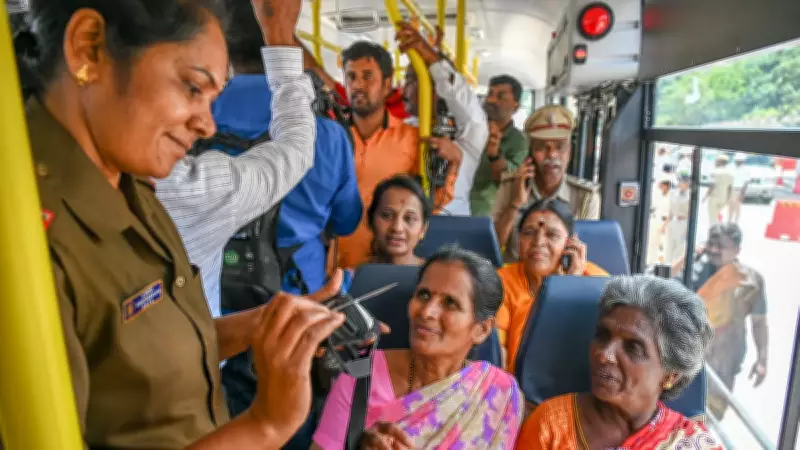
The Politics of Freebies: A Clash Between Ethics and Economics
In the realm of modern politics, the distribution of freebies has emerged as a contentious issue, sparking debates that intertwine ethical aspirations with hard economic realities. While political leaders often champion such measures as tools for social welfare and equity, economic reasoning imposes a different set of constraints that challenge their feasibility and long-term sustainability.
Ethical Aspirations in Political Discourse
Freebies, ranging from subsidized utilities to direct cash transfers, are frequently promoted as ethical imperatives aimed at uplifting marginalized communities and reducing inequality. Proponents argue that these initiatives reflect a commitment to social justice, ensuring that basic needs are met for all citizens, regardless of economic status. This perspective is rooted in a vision of governance that prioritizes human dignity and collective well-being over purely fiscal considerations.
The Economic Constraints of Freebie Policies
However, economic reasoning operates under a framework that emphasizes empirical feasibility and resource allocation. Key constraints include:

- Fiscal Sustainability: Large-scale freebie programs can strain government budgets, leading to increased public debt and potential inflationary pressures.
- Market Distortions: Subsidies and giveaways may disrupt market mechanisms, discouraging productivity and innovation in the long run.
- Opportunity Costs: Funds allocated to freebies might be diverted from critical investments in infrastructure, education, or healthcare, which could yield higher societal returns.
These factors highlight a fundamental divergence between ethical goals and practical economic outcomes, raising questions about the viability of such policies.
The Gap Between Aspiration and Feasibility
Empirical evidence often reveals that ethical aspirations and economic feasibility do not always converge. For instance, while freebies may provide immediate relief, they can inadvertently create dependency or fail to address underlying structural issues like unemployment or poor governance. This gap underscores the need for a balanced approach that integrates moral considerations with rigorous economic analysis to design policies that are both compassionate and sustainable.
Implications for Governance and Public Policy
The politics of freebies thus presents a complex challenge for policymakers. It calls for:
- Transparent Evaluation: Assessing the long-term impacts of freebie schemes through data-driven studies to ensure they align with broader economic goals.
- Stakeholder Engagement: Involving economists, ethicists, and citizens in dialogues to bridge the divide between idealism and practicality.
- Innovative Solutions: Exploring alternative models, such as conditional transfers or targeted interventions, that achieve ethical aims without compromising fiscal health.
By navigating these dynamics, governments can strive for policies that honor ethical commitments while respecting the constraints of economic reasoning, ultimately fostering a more equitable and resilient society.






