

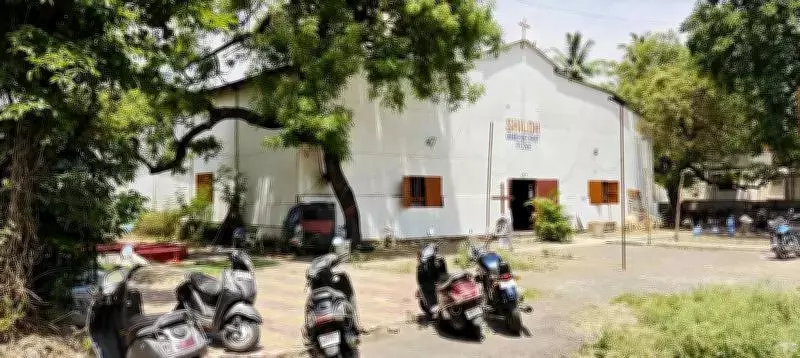
Pune Cantonment Board Orders Church to Regularize Unauthorized Prayer Hall Structure
The Pune Cantonment Board (PCB) has issued a directive to the pastor of Shiloh Church of Christ, requiring the regularization of its prayer hall located in the Dhobi Ghat area. This action comes after authorities determined that the structure was constructed more than two decades ago without obtaining the necessary permissions from the cantonment board.
Demolition Drive Halted After Church Protest
Following the issuance of a demolition notice, cantonment officials, accompanied by police personnel, arrived at the church site on April 17 with an earth mover to demolish the unauthorized construction. However, the demolition drive was halted when church members staged a protest at the location. Subsequently, church representatives were instructed to present their case before the board on Monday.
"The church pastor has been told to initiate the statutory procedure of regularizing the construction in the coming weeks," stated Vidyadhar Pawar, PCB chief executive officer, in an interview with TOI. Church representatives submitted a memorandum to the board during the meeting, outlining their position and requesting regularization.

Long History of Notices and Legal Challenges
PCB officials revealed that notices regarding the unauthorized construction have been issued to the church since 2006. "We informed them that notices have been issued since 2006, and based on that, we have now initiated the action," Pawar explained. In 2014, church members challenged one such notice before the Local Military Authority (LMA). A survey conducted at that time concluded that the structure was indeed built without proper permission, directing the church to follow due process for regularization.
According to PCB officials, the prayer hall stands on land classified as B-1, which is property of the central government, under survey number 545. An inspection revealed that the structure covers approximately 10,000 square feet. "The church falls within our limits. Hence, we are authorized to initiate action as per the rules. We also received complaints regarding the structure," a PCB official stated.
Regularization Process and Requirements
Pastor Robin Mahadkar responded to the directive by stating, "We have submitted a memorandum to PCB and agreed to regularize the property as per the rules. We are also willing to remove any excess construction if required." PCB officials noted that this marks the first instance of a request to regularize a structure on B-1 land within their jurisdiction.
The regularization process will require the church to submit a detailed building plan to the cantonment board. The engineering department will then conduct a ground survey to assess the exact area occupied by the structure. Based on this assessment, the board will levy property tax on the church going forward.
"The report will be placed before the board and then forwarded to the Principal Directorate, Defence Estates, Southern Command, for legal advice," a PCB official explained regarding the next steps in the regularization procedure.
Allegations of Political Pressure and Denials
Some church members have questioned the timing of the PCB's action, alleging possible political pressure behind the move. "The board should not succumb to such pressure and should allow us to regularize the property," one church member stated. However, cantonment authorities have firmly denied these allegations, asserting that there is no political interference in their decision-making process regarding the unauthorized construction.
The situation highlights the ongoing challenges of unauthorized constructions on government land and the regulatory processes involved in regularizing such structures after they have been built without proper approvals.






