

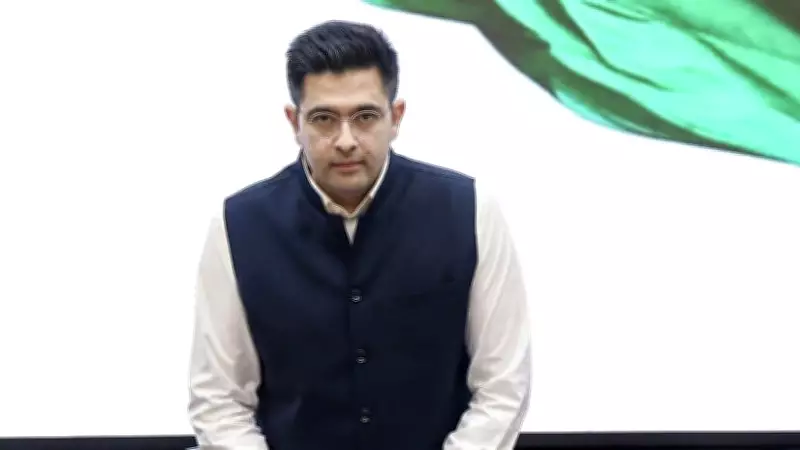
Within 24 hours of announcing his exit from the Aam Aadmi Party (AAP) and joining the Bharatiya Janata Party (BJP), Rajya Sabha MP Raghav Chadha has seen a sharp decline in his Instagram following, losing over 1 million followers. Once regarded as a Gen Z political icon, Chadha's follower count dropped from 14.6 million to 13.3 million. This significant dip underscores the central role his digital presence played in shaping his public image, particularly among young, urban voters.
From Gen Z Favorite to Follower Fall: Digital Backlash After BJP Move
The sudden dip in followers reflects growing discontent among a section of his online base. Chadha, who built a strong youth connect through social media, has been at the center of criticism since his political switch. The backlash has been visible across Instagram, where users flooded his posts with critical remarks. Comments such as 'We saw a future PM in you... you backstabbed your admirers' and 'Let's keep unfollowing him' gained traction, while others expressed feelings of disappointment and betrayal over his decision to join the BJP.
'Systematic Reshaping': Row Over Deleted Posts and Political Shift
AAP Delhi unit chief Saurabh Bharadwaj alleged in a post on X that Chadha had deleted social media posts critical of Prime Minister Narendra Modi and the BJP. Bharadwaj claimed that keyword searches for 'Modi' and 'BJP' no longer brought up Chadha's earlier critical remarks. 'Only a few posts remain, and they are those praising the Prime Minister,' he alleged, calling it a 'systematic reshaping of his public persona' and a 'polished version like one put through a washing machine.' Chadha has rejected these allegations, calling them 'lies' and part of a 'coordinated campaign' to discredit him amid the political split.

Why Youth Followed Raghav Chadha So Closely
Chadha's appeal among young voters stemmed from his focus on everyday governance issues rather than aggressive political rhetoric. He frequently raised concerns such as high food prices at airports, taxation on the middle class, working conditions of delivery workers, telecom recharge costs, and consumer issues often ignored in mainstream political debate. His style of calm, data-driven intervention in Parliament helped him build a reputation as a 'problem-solver MP' rather than a confrontational politician. He often positioned himself as someone raising real-world issues affecting first-time voters, urban youth, and middle-class households. Defending his approach earlier, he had said, 'I went to Parliament to raise people's issues and not create ruckus,' a statement that resonated strongly with his digital audience.
Inside AAP Rift: 'Soft PR' Charges and Leadership Clash
The current political churn follows a widening rift within the Aam Aadmi Party. Chadha was removed as the party's deputy leader earlier this month in the Rajya Sabha amid allegations of 'soft PR' and not strongly opposing the Centre. Senior leaders including Bhagwant Mann and Sanjay Singh accused him of deviating from the party line and avoiding key political positions in Parliament. Chadha, however, hit back, calling the allegations part of a 'scripted campaign' and insisting his parliamentary record reflected consistent issue-based politics.
Split, Switch and Fallout: BJP Gains as AAP Fractures
The situation escalated further when Chadha announced that more than two-thirds of AAP's Rajya Sabha MPs had backed a merger with the BJP, formally triggering a major split within the party. He also said he chose to exit rather than 'be part of actions he did not agree with,' adding that he could not remain associated with what he termed as 'sins' of the party leadership. For many supporters, the reaction has gone beyond politics and into personal disappointment. The sharp unfollow trend and emotional comments reflect a broader disconnect between Chadha's earlier digital persona and his current political alignment.






