

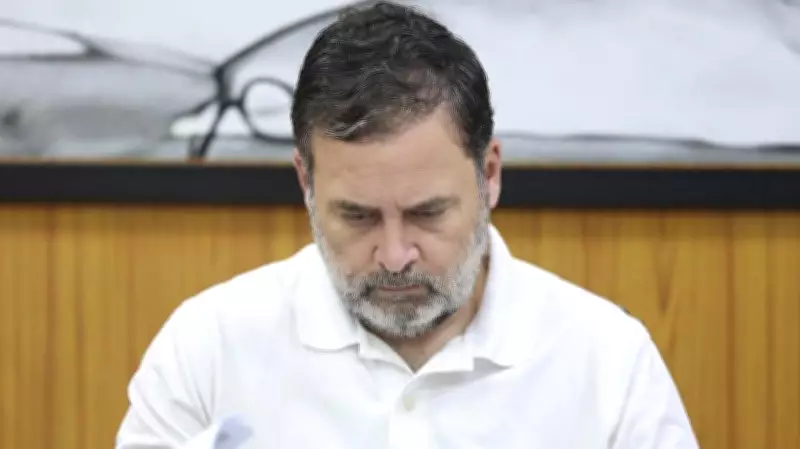
Rahul Gandhi Appears in Bhiwandi Court for RSS Defamation Case Proceedings
Congress leader Rahul Gandhi made a court appearance in Bhiwandi, Maharashtra, on Friday, February 21, 2026, in connection with a defamation case filed against him by the Rashtriya Swayamsevak Sangh (RSS). The Bhiwandi magistrate's court had summoned Gandhi to present a fresh surety, a legal requirement in the ongoing case.
Court Mandates New Surety After Death of Former Guarantor
The court's directive came after former Union Home Minister Shivraj Patil, who had initially stood as Gandhi's surety or guarantor in the case, passed away in December last year. Under Indian legal procedures, the death of a surety necessitates the submission of a new one to ensure the continuation of court proceedings. Gandhi complied with this order by appearing in person to address the matter.
This development highlights the procedural aspects of the defamation case, which has been a point of political and legal scrutiny. The RSS had filed the case against Gandhi over alleged defamatory remarks, and the proceedings have been ongoing with periodic court hearings.

Background and Implications of the Case
The defamation case stems from statements made by Rahul Gandhi that were deemed offensive by the RSS, leading to legal action. Such cases are not uncommon in Indian politics, where defamation suits often become tools for political maneuvering and public discourse.
Gandhi's appearance in Bhiwandi underscores his adherence to legal protocols, despite the political tensions surrounding the case. It also brings attention to the role of sureties in Indian judiciary processes, where they act as guarantees for the accused's compliance with court orders.
As the case progresses, it is expected to involve further hearings and legal arguments. The requirement for a new surety marks a procedural step, but the core issues of the defamation allegations remain central to the litigation.
This event adds to the ongoing narrative of legal challenges faced by political figures in India, reflecting the intersection of law and politics in the country's democratic framework.






