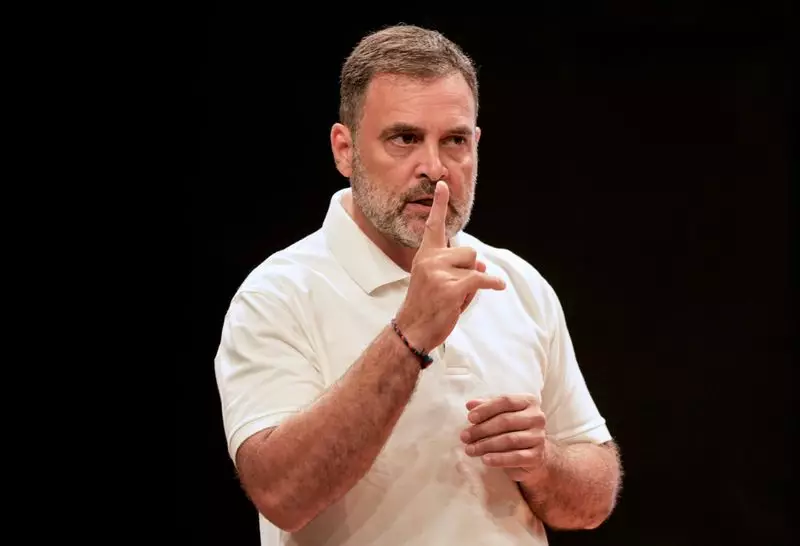
Congress leader Rahul Gandhi has launched a sharp political counterattack, leveraging former US President Donald Trump's recent praise for former Prime Minister Indira Gandhi. The move came just a day after Trump's remarks, with Gandhi sharing a video on social media that starkly contrasts the leadership styles of Indira Gandhi and current Prime Minister Narendra Modi.
The Provocation: Trump's Remarks on Indira Gandhi
The sequence of events began on Wednesday when Donald Trump, during a conversation with Prime Minister Narendra Modi, recalled his meeting with the late Indira Gandhi. Trump stated he had told PM Modi, "She was a tough lady." This offhand comment from the former US President, known for his blunt assessments, provided immediate fodder in the heated political climate of India's ongoing general elections.
Rahul Gandhi, the prominent face of the Congress campaign, swiftly seized upon this statement. By Thursday, he had crafted and deployed a response that shifted the narrative from mere praise to a direct comparison.

'Farq Samjho': The Video That Draws a Line
The core of Gandhi's rebuttal was a video posted on his social media handles. The clip is edited to present a side-by-side evaluation of the two leaders' tenures. Its title, "Farq Samjho" (Understand the Difference), leaves little to the imagination regarding its intent.
The video juxtaposes what it portrays as the key achievements and characteristics of Indira Gandhi against those of PM Modi. It aims to highlight a contrast in legacy and governance approach. This visual polemic is designed to resonate with voters by framing the election as a choice between two distinct political philosophies and historical records.
While the specific edits in the video are pointed, the broader strategy is clear: to use an international figure's acknowledgment to bolster the Congress's historical narrative and question the current administration's accomplishments.
Political Timing and Electoral Strategy
The release of this video is no accident of timing. India is in the midst of a critical national election, and every statement, endorsement, or critique is amplified for maximum political impact. Rahul Gandhi's direct response to Trump's comment serves multiple strategic purposes.
Firstly, it reclaims a moment of external validation for the Congress party's legacy. Secondly, it attempts to set the agenda for public discourse, moving it to a comparative analysis of leadership. Finally, it demonstrates agility in political communication, using a real-time event to fuel its campaign messaging.
The episode underscores how international comments, especially from figures like Donald Trump, can be rapidly internalized into domestic political battles. For the Congress, it is an opportunity to remind voters of the party's long history and former prime ministers while casting doubt on the BJP's claims of unparalleled success.
For the BJP and PM Modi, the challenge is to deflect this comparative framing and keep the public focus on their campaign promises and record of the last decade. The political discourse is now set for a debate on legacy versus contemporary governance, with historical figures being invoked as benchmarks.
As the election progresses, such moments of viral communication are likely to become more frequent. Rahul Gandhi's "Farq Samjho" video is a testament to the modern, digital-first nature of political campaigning, where a global remark can be localized, repackaged, and weaponized within a 24-hour news cycle to influence millions of voters.