

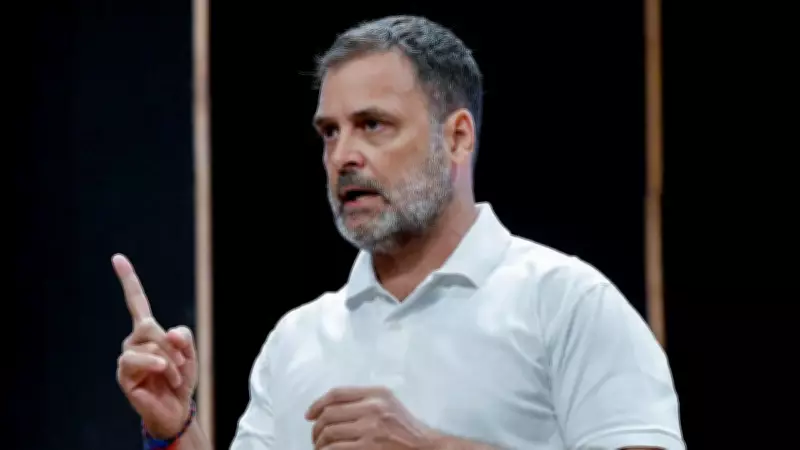
Rahul Gandhi Abstains from Signing No-Confidence Motion Against Lok Sabha Speaker Om Birla
In a significant development, Congress MP and Leader of the Opposition in the Lok Sabha, Rahul Gandhi, has not signed the notice for the no-confidence motion moved by Opposition parties against Lok Sabha Speaker Om Birla, according to party sources on Tuesday. This decision underscores the escalating tensions between the government and the Opposition, with accusations of partisan conduct in House proceedings.
Parliamentary Propriety Cited as Reason
Congress sources explained that it is not considered proper in a parliamentary democracy for the Leader of the Opposition to sign a petition seeking the removal of the Speaker. This stance highlights the adherence to traditional parliamentary norms, even amid political strife. The motion was formally submitted earlier by Opposition parties under Article 94(c) of the Constitution, with Congress MP Gaurav Gogoi noting it was filed at 1:14 pm under Rule 94C of the Rules of Procedure and Conduct of Business in the Lok Sabha.
Details of the No-Confidence Motion
The notice alleges that Speaker Om Birla has consistently denied Opposition MPs the opportunity to raise issues of public importance. Specific grievances include:

- Refusal to allow Rahul Gandhi to speak during the debate on the Motion of Thanks to the President’s Address.
- Suspension of Opposition MPs.
- Inaction against BJP MP Nishikant Dubey for his remarks against former Prime Ministers.
Congress stated that a total of 118 MPs have signed the notice, with support from parties such as the Samajwadi Party and the Dravida Munnetra Kazhagam (DMK). However, the Trinamool Congress (TMC) has not signed so far, suggesting a formal appeal to the Speaker should precede such a motion.
Opposition and Government Reactions
Senior Congress leader KC Venugopal had previously signaled imminent action, accusing the Speaker of bias and noting that Rahul Gandhi was not being allowed to speak despite parliamentary conventions. On the other hand, TMC MP Abhishek Banerjee indicated his party might support the motion if the Speaker fails to act on an appeal within two to three days.
The government, however, downplayed the Opposition’s move. Parliamentary Affairs Minister Kiren Rijiju asserted that the Opposition lacks the numbers required to pass the resolution and accused them of disrupting proceedings. Union Minister Chirag Paswan criticized the motion as "condemnable" and blamed Opposition disruptions for the ongoing logjam in the House.
Constitutional and Procedural Context
Under Article 94(c) of the Constitution, a Speaker can be removed by a resolution passed by the Lok Sabha after a mandatory 14-day notice period. This move occurs against the backdrop of repeated adjournments and protests during the Budget Session, with both sides blaming each other for the impasse. The situation reflects deepening political divisions and challenges in maintaining parliamentary decorum.






