

Tavleen Singh Writes: How Entitlement Undermines Valid Opposition in Indian Politics
In a scathing critique, columnist Tavleen Singh has highlighted what she perceives as a critical flaw in the current opposition leadership, focusing on Rahul Gandhi's approach. Singh argues that a deep-seated sense of entitlement is preventing the Congress leader from mounting an effective and credible challenge to the government, ultimately harming democratic discourse.
The Burden of Dynasty and Personal Attacks
Singh begins by contextualizing Rahul Gandhi's political standing, noting his lineage as the great-grandson, grandson, and son of prime ministers, with his mother serving as a de facto prime minister. She suggests that this background makes it difficult for him to accept the role of Leader of the Opposition, especially after failing to secure enough seats in two consecutive general elections. According to Singh, this has fostered a loathing towards Prime Minister Narendra Modi, whom Gandhi views as a usurper of his perceived inheritance.
The columnist expresses shock at Gandhi's recent allegation outside Parliament House, where he claimed the Prime Minister was 'compromised,' leading to a trade deal with the United States. Singh emphasizes that such serious accusations require concrete proof, yet Gandhi often reduces political debates to personal attacks on Modi. She points out that this strategy ignores Modi's electoral successes, including two full-majority wins and a third with a reduced majority, as well as polls indicating his growing popularity.

Delusions and Parliamentary Disruptions
Singh criticizes the Congress Party for not conducting a thorough analysis of its electoral decline, which has reduced it to near-regional status. She argues that this has allowed Rahul Gandhi to persist in delusions, such as blaming 'vote theft' or the death of Indian democracy for his losses. This mindset, she claims, manifests in parliamentary sessions where Gandhi and his MPs spend more time protesting in the gardens than engaging in legislative debates.
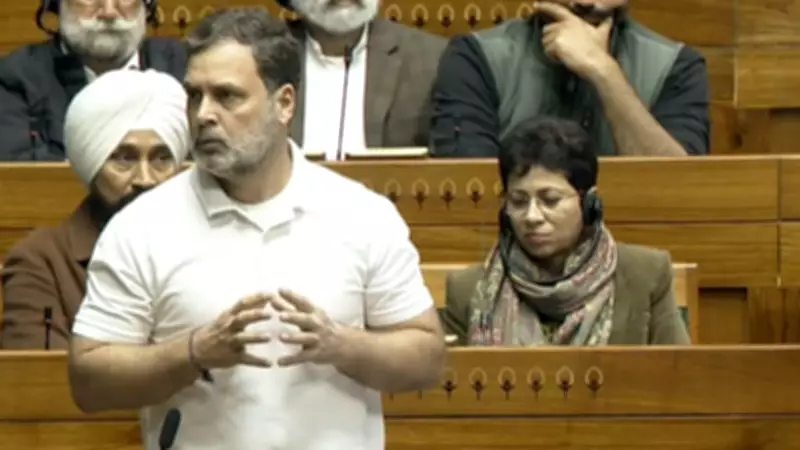
When questioned about this, Gandhi has defended his actions by stating he is not allowed to speak in the Lok Sabha, forcing him into 'street fighting tactics.' Singh believes it would have been prudent for the Speaker to permit him to speak, as denying him has inadvertently brought attention to controversial claims, like those in a former army chief's book. In a brief Lok Sabha address, Gandhi aimed to tarnish Modi's image by questioning his nationalism and leadership during the Ladakh border clash with China—a move Singh deems irrelevant to the day's discussion on the President's speech.
Missed Opportunities and Family Dynamics
The columnist offers advice to the Gandhi family, urging them to allow Parliament to function so they can raise important issues within the House rather than outside. She cites an example where Sonia Gandhi and her daughter discussed Delhi's air pollution with TV reporters but did not demand a Rajya Sabha debate on the same day the Prime Minister was responding to discussions. Priyanka Gandhi justified this by linking the Leader of the Opposition's speaking rights to the Prime Minister's, leading to theatrical disruptions that left no time to debate the US trade deal.
Singh praises the trade deal as a significant achievement where India stood firm against US pressure under Donald Trump, crediting Modi's dignified tactics for securing major concessions. However, she notes that acknowledging this would require the Gandhi family to concede Modi's competence—something their entitlement prevents. This entitlement, she argues, blinds them to the reasons for Modi's initial victory: public desire for a real leader over an imperious royal family perceived as drunk on power.

Modi's Legacy and Historical Context
Singh concludes by reflecting on Modi's prolonged tenure, attributing it to tangible improvements in ordinary Indians' lives through welfare schemes that have alleviated poverty and instilled hope in rural areas. She contrasts this with the 'bleak times' of socialist feudalism under previous Congress governments led by Gandhi's family, asserting that current progress underscores why Modi remains popular. Ultimately, Singh's piece serves as a stark warning that without shedding its entitled mindset, the opposition risks further irrelevance in India's political landscape.





