

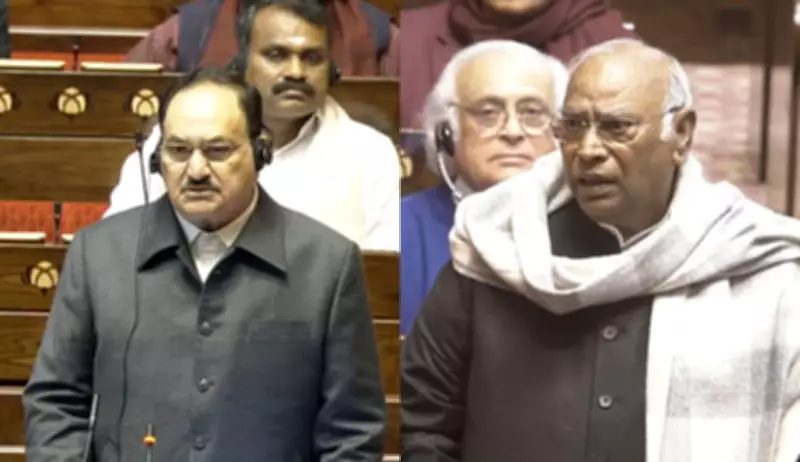
Rajya Sabha Descends into Chaos as Kharge and Nadda Engage in Heated Exchange
The upper house of Parliament, the Rajya Sabha, was thrown into disarray on Tuesday as a fiery confrontation erupted between Congress President Mallikarjun Kharge and BJP National President J.P. Nadda. This dramatic clash unfolded merely a day after Prime Minister Narendra Modi's scheduled speech in the Lok Sabha was abruptly halted, underscoring the escalating political friction that has gripped the legislative body.
Background: A Day After Lok Sabha Disruption
The tensions in Parliament have been simmering for days, reaching a boiling point on Monday when Prime Minister Modi's address to the Lok Sabha was interrupted and ultimately suspended amid protests from opposition members. This incident set the stage for the subsequent turmoil in the Rajya Sabha, where the opposition and treasury benches have been locked in a bitter standoff over various national issues.
The Heated Confrontation Unfolds
During the Rajya Sabha session, Mallikarjun Kharge, the Leader of the Opposition, rose to speak, launching a sharp critique of the government's policies and handling of parliamentary proceedings. In response, J.P. Nadda, representing the ruling Bharatiya Janata Party, countered with pointed remarks, defending the administration's stance and accusing the opposition of obstructing legislative work.

The exchange quickly escalated into a shouting match, with both leaders trading barbs and allegations. Other members from both sides joined in, leading to a chaotic scene where the Chairman struggled to maintain order. Proceedings were temporarily halted as marshals were called in to restore decorum, highlighting the intense partisan divide.
Key Points of Contention
The clash centered on several critical issues that have dominated recent parliamentary debates:
- Governance and Policy Implementation: Kharge accused the government of failing to address key economic and social challenges, while Nadda emphasized the administration's achievements and reform initiatives.
- Parliamentary Conduct: Both sides traded charges over the disruption of proceedings, with each blaming the other for undermining democratic norms and hindering productive discussions.
- Political Strategy: Analysts suggest that the confrontation reflects broader political maneuvering ahead of upcoming electoral cycles, with both parties seeking to galvanize their support bases.
Implications for Parliamentary Functioning
This latest episode of discord in the Rajya Sabha raises concerns about the effective functioning of Parliament. The repeated disruptions and heated exchanges threaten to delay important legislative business, including the passage of bills and debates on national issues. Observers note that such incidents could erode public trust in the institution and hinder collaborative governance.
In the aftermath, there have been calls from various quarters for dialogue and consensus-building to ensure that Parliament can fulfill its constitutional duties without constant interruptions. However, with political temperatures running high, the path to reconciliation appears challenging.
Looking Ahead: Potential Resolutions
As the dust settles, attention turns to how the government and opposition will navigate this impasse. Possible steps include:
- Formal Discussions: Initiating behind-the-scenes talks between party leaders to de-escalate tensions and agree on a code of conduct for parliamentary sessions.
- Focus on Agenda: Prioritizing key legislative items to demonstrate a commitment to governance over political grandstanding.
- Public Engagement: Leveraging media and public forums to communicate the importance of parliamentary decorum and bipartisan cooperation.
The clash between Kharge and Nadda serves as a stark reminder of the volatile nature of Indian politics, where ideological differences often spill over into parliamentary proceedings. As the nation watches, the ability of its leaders to uphold democratic principles while engaging in robust debate will be crucial for the health of the republic.






