Rijiju Issues Stark Warning to Kharge Over Women's Reservation Bill Timeline
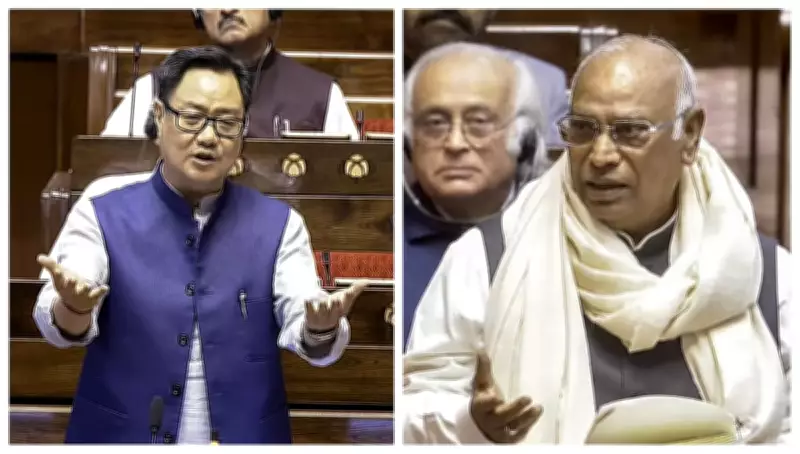
Law Minister Kiren Rijiju has delivered a pointed caution to Congress President Mallikarjun Kharge, indicating that any further delay in advancing the women's reservation bill could critically jeopardize its scheduled rollout for the year 2029. This high-stakes communication underscores the escalating urgency surrounding the landmark legislation aimed at ensuring greater political representation for women across India.
Extensive Cross-Party Consultations Reveal Widespread Backing
In his detailed correspondence, Rijiju emphasized that the government has proactively engaged in a series of telephonic discussions with leaders from a diverse array of political parties between March 23 and April 2. These conversations were part of a concerted effort to build consensus and secure commitments ahead of the bill's progression through parliamentary procedures.
The list of parties contacted includes prominent national and regional players:

- Aam Aadmi Party (AAP)
- Rashtriya Janata Dal (RJD)
- Communist Party of India (Marxist) or CPI(M)
- Indian Union Muslim League (IUML)
- Jharkhand Mukti Morcha (JMM)
- Bharat Rashtra Samithi (BRS)
Rijiju reported that numerous leaders from these and several other political entities have already conveyed their explicit support for the women's reservation initiative. This broad-based endorsement is seen as a crucial step toward facilitating smoother legislative passage and implementation.
Implications of Delay on the 2029 Deadline
The minister's warning highlights a critical path dependency: any postponement in the current parliamentary session could cascade into significant logistical and administrative challenges, potentially derailing the entire timeline set for 2029. The bill, which seeks to reserve one-third of seats in the Lok Sabha and state legislative assemblies for women, requires not only parliamentary approval but also subsequent delimitation exercises and electoral adjustments.
"The window for action is narrowing," Rijiju's message implicitly conveyed, stressing that timely legislative action is imperative to meet the constitutional and procedural milestones necessary for the 2029 rollout. The communication serves as both a reminder of the government's commitment and a call to opposition parties, particularly the Congress led by Kharge, to expedite discussions and avoid procedural bottlenecks.
Political Context and Next Steps
This development occurs against a backdrop of ongoing political negotiations and public anticipation for gender parity in India's democratic institutions. The women's reservation bill has been a long-standing demand, and its potential delay could reignite debates on political will and prioritization.
As the dialogue between Rijiju and Kharge unfolds, stakeholders are closely monitoring whether bipartisan cooperation can be secured to advance the bill without further adjournments. The government's outreach to multiple parties suggests a strategic push to isolate any resistance and build a formidable coalition in favor of the legislation.
The coming weeks are expected to be pivotal, with parliamentary maneuvers and behind-the-scenes diplomacy likely to determine the fate of this transformative policy initiative.