

RSS Chief Mohan Bhagwat Highlights Three Key Factors Driving Population Imbalance in India
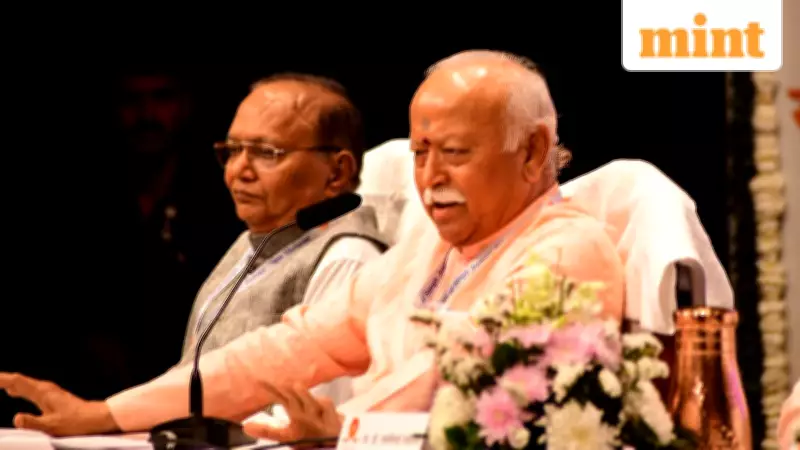
Rashtriya Swayamsevak Sangh (RSS) chief Mohan Bhagwat, during an interactive session in Mumbai marking the organization's centenary, outlined three major factors contributing to population imbalance in India. He pointed to religious conversion, infiltration, and declining birth rates as the primary concerns, while also discussing family planning, employment, and national unity.
Religious Conversion and Freedom of Faith
Addressing the issue of religious conversion, Bhagwat stated that while freedom of faith is constitutionally guaranteed, the use of force, inducement, or deception to convert individuals and artificially inflate the numbers of a particular sect is "totally condemnable." He cited the example of poet Narayan Vaman Tilak to underscore the importance of belief freedom, but asserted that "ghar wapasi" (return to one's original religion) should be facilitated for those wishing to revert.
"Those who want to come back, we pave the way for them," Bhagwat emphasized, highlighting the RSS's stance on voluntary religious returns without coercion.

Infiltration and Employment Priorities
On the topic of infiltration, the RSS chief noted that government efforts to detect and deport unauthorized individuals have begun slowly and are expected to accelerate. He referenced the Special Intensive Revision (SIR) exercise, which has led to the identification and removal of non-citizens from electoral rolls.
Bhagwat revealed that RSS workers actively assist in this process by identifying suspected infiltrators through linguistic cues and reporting them to authorities. He stressed that while Indian citizens, including Muslims, should be prioritized for employment, foreigners must not take up jobs meant for locals.
"We do not want to take away anyone's jobs, but our people should get jobs first," he said, advocating for vigilance to prevent infiltrators from filling menial roles that Hindu society has increasingly vacated in pursuit of higher-paying opportunities.
Low Birth Rate and Family Planning Recommendations
Bhagwat identified low birth rates as the third critical factor behind population imbalance. He warned that population scientists consider a fertility rate below 2.3 as threatening, with a country deemed to be in decline at that level. India's current rate is falling below 2.1, sustained only by states like Bihar, according to him.
He advocated for families to have three children, aligning with India's prescribed fertility ratio of 2.1 when rounded off. "All kinds of scientific research now indicate that we should have three children in a family," Bhagwat stated, citing advice from doctors that marriages between ages 19 and 25 and having three children benefit parental and child health.
Psychologists, he added, believe that three children help manage sibling ego issues and ensure long-term family stability. However, he clarified that this remains a personal choice for individuals and families, not a mandate.
Broader Social and Economic Perspectives
Bhagwat touched on various socio-economic issues during the session. He emphasized that marriage is an institution meant to create families and contribute to society, not merely a physical relationship, and should involve taking responsibilities.
On employment and technology, he called for "production by the masses" rather than mass production, supporting technologies like artificial intelligence only if they generate jobs. He linked unemployment to social unrest, including Naxalism, urban violence, and crimes against women.
Critiquing GDP as an imperfect economic indicator, he noted that it fails to account for unpaid work like household chores performed by women. Bhagwat expressed confidence in the rupee's strength against the US dollar, regardless of GDP figures.
National Unity and Future Vision
Discussing regional dynamics, Bhagwat praised Hindus in Bangladesh for uniting to resist rather than flee, promising RSS support within its capacity. He asserted that forces attempting to break India would themselves disintegrate, and the country would not fall prey to such tactics.

When asked about the division of the country by 2047, he urged people to envision an "Akhand Bharat" (undivided India) by then, reinforcing a message of unity and resilience.
Bhagwat's remarks, delivered at the RSS centenary event in Mumbai, blend demographic concerns with calls for social responsibility and national integrity, reflecting the organization's broader ideological framework.





