

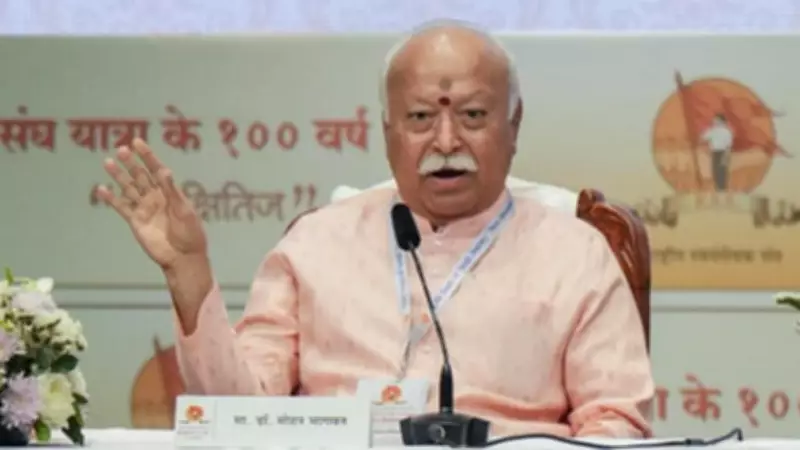
RSS Chief Mohan Bhagwat Champions Indian Products in Global Trade
In a significant statement, Rashtriya Swayamsevak Sangh (RSS) chief Mohan Bhagwat has asserted that some Indian products are superior to their foreign counterparts. Speaking recently, Bhagwat highlighted the need for India to engage in international trade on its own terms and conditions, rather than merely focusing on tariffs.
Emphasis on Self-Reliance and Strategic Trade
Bhagwat pointed out that while India cannot remain isolated at the policy level in global trade, it is crucial to ensure that trade agreements are structured to benefit the nation. "At the policy level, in international trade we can't be isolated... but the trade should be in our terms and conditions, not looking at the tariff," he stated. This remark underscores a push for self-reliance and strategic economic policies that prioritize domestic interests.
The RSS chief's comments come amid ongoing discussions about India's position in the global market and efforts to boost local manufacturing under initiatives like 'Make in India'. Bhagwat's advocacy for Indian products aligns with broader nationalist sentiments, encouraging consumers and policymakers to support homegrown goods.

Context and Implications
This statement was made in Maharashtra, reflecting regional support for such economic views. It adds to the discourse on how India can leverage its strengths in various sectors, from technology to traditional industries, to compete internationally. Bhagwat's emphasis on terms and conditions over tariffs suggests a nuanced approach to trade, focusing on quality, sustainability, and long-term benefits rather than short-term cost savings.
As India continues to navigate complex global trade dynamics, voices like Bhagwat's highlight the importance of balancing openness with protection of domestic interests. This perspective may influence future policy decisions and public opinion on economic matters.






