

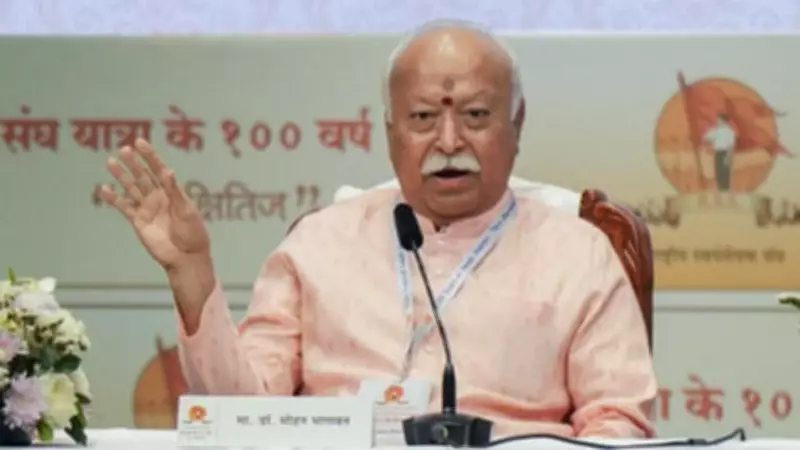
RSS Chief Mohan Bhagwat Declares Readiness to Step Down if Sangh Requests
In a significant statement, Rashtriya Swayamsevak Sangh (RSS) Sarsanghchalak Mohan Bhagwat has expressed his willingness to relinquish his leadership role if the Sangh's governing body asks him to do so. This announcement underscores the organization's commitment to collective decision-making and internal democracy.
Bhagwat's Statement on Leadership and Organizational Protocol
Mohan Bhagwat, who has served as the RSS chief since 2009, made these remarks during a recent address, highlighting the Sangh's structured hierarchy and consultative processes. He emphasized that his position is not one of personal authority but is subject to the will of the Sangh's leadership cadre. Bhagwat stated, "I am ready to step down if the Sangh asks me to do so," reflecting a deep-seated respect for the organization's protocols and the principle of selfless service.
Context and Implications for RSS and Broader Politics
This declaration comes at a time when the RSS, as the ideological mentor of the ruling Bharatiya Janata Party (BJP), plays a pivotal role in shaping national discourse. Bhagwat's openness to stepping down signals stability within the Sangh's ranks and reinforces its image as an organization that prioritizes collective wisdom over individual leadership. Analysts note that such statements could influence perceptions of succession planning and internal cohesion within the RSS, potentially impacting its strategic directions and political alliances.

The RSS, founded in 1925, operates through a network of volunteers and adheres to a philosophy of Hindutva and national rejuvenation. Bhagwat's tenure has seen the organization expand its influence across various sectors, including education, social service, and politics. His readiness to resign if requested aligns with the Sangh's ethos of discipline and organizational loyalty, which are central to its functioning.
Reactions and Future Outlook
Political observers have interpreted Bhagwat's statement as a reaffirmation of the RSS's democratic internal mechanisms, contrasting with perceptions of rigid hierarchies in other organizations. It may also serve to quell any speculation about leadership disputes or power struggles within the Sangh. As the RSS continues to navigate India's socio-political landscape, Bhagwat's stance could bolster its credibility among supporters and critics alike, emphasizing adaptability and responsiveness to internal feedback.
Looking ahead, this development highlights the evolving dynamics within one of India's most influential socio-cultural organizations. Whether or not the Sangh leadership will act on Bhagwat's offer remains to be seen, but his statement has undoubtedly sparked discussions on leadership transitions and organizational governance in the context of Indian civil society.






