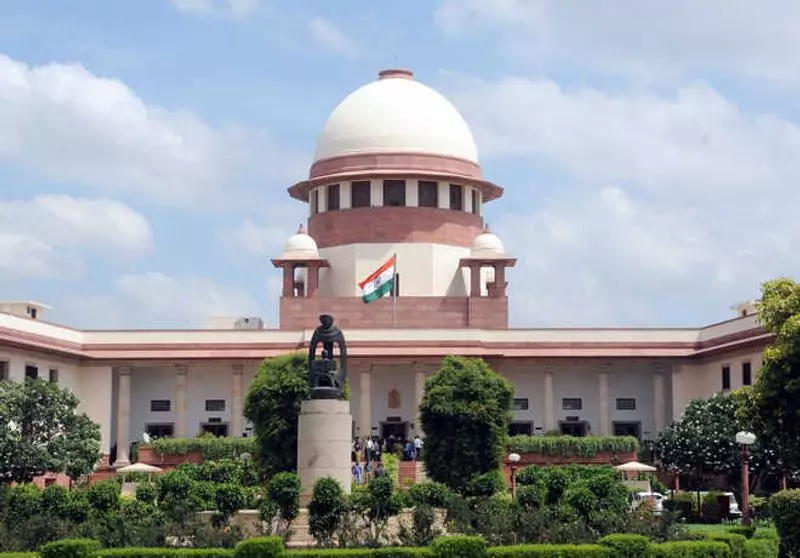
The Supreme Court of India has taken a significant step toward addressing gender representation in the country's highest legislative bodies by seeking the central government's response to a public interest litigation demanding the implementation of women's reservation in Parliament.
Judicial Intervention for Gender Equality
A bench comprising Chief Justice D Y Chandrachud and Justice P S Narasimha issued notice to the Union government, requiring them to formally respond to the PIL filed by advocate Jaya Sukin. The petition specifically challenges the government's failure to implement The Constitution (One Hundred and Twenty-Eighth Amendment) Bill, 2023, commonly known as the Nari Shakti Vandan Adhiniyam.
The court proceedings revealed that the petitioner is seeking immediate enforcement of the women's reservation legislation that has been pending implementation. The bench has scheduled the matter for further hearing in July 2024, giving the government adequate time to prepare its response to the constitutional challenge.

The Legislative Background
The women's reservation bill represents one of the most significant gender equality initiatives in Indian political history. The legislation proposes to reserve 33 percent of seats in both the Lok Sabha and state legislative assemblies for women candidates. This revolutionary measure aims to correct the historical underrepresentation of women in India's legislative bodies.
Despite receiving parliamentary approval, the implementation of this landmark legislation has been stalled due to specific conditions outlined in the bill itself. The legislation contains a crucial clause stating that the reservation will come into effect only after the completion of the next delimitation exercise. This requirement has effectively postponed the actual implementation of women's quota in parliamentary and assembly constituencies.
Constitutional Implications and Public Interest
The PIL filed before the Supreme Court raises fundamental questions about gender justice and equal representation in Indian democracy. The petitioner argues that delaying the implementation of women's reservation contradicts the constitutional principles of equality and non-discrimination.
This legal challenge comes at a crucial time when women's political participation has become a central topic in national discourse. The Supreme Court's intervention highlights the judiciary's role in ensuring that legislative measures aimed at social justice are implemented in a timely manner.
The case has significant implications for the future of women's political empowerment in India. A favorable decision could accelerate the process of ensuring greater gender diversity in legislative bodies, potentially transforming the political landscape of the world's largest democracy.
Legal experts are closely watching this development, as the outcome could set important precedents for the implementation of social justice legislation in India. The government's response, expected by July, will reveal its stance on the timeline for implementing this long-awaited reform.