Supreme Court Proposes Compulsory Voting Mechanism to Strengthen Democracy
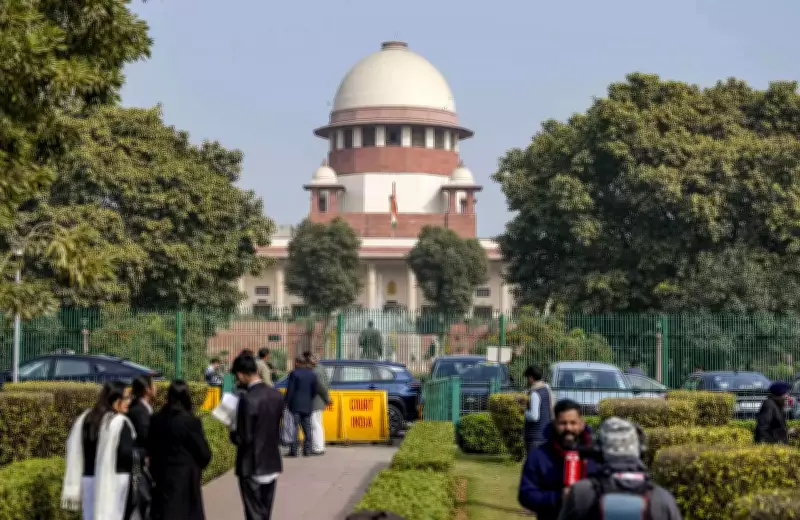
The Supreme Court of India, on Tuesday, emphasized the need to devise a mechanism to make voting compulsory, aiming to strengthen democracy by encouraging greater participation from eligible citizens. This move is intended to attract more candidates to contest elections and potentially render the "None of the Above" (NOTA) option redundant.
Bench Observations on NOTA and Voter Participation
A bench comprising Chief Justice of India Surya Kant and Justice Joymalya Bagchi noted that the NOTA option was originally introduced to draw better candidates into the electoral fray and motivate voters to exercise their franchise. However, the bench pointed out that over the past decade, only a minuscule percentage of voters have actually utilized the NOTA option, indicating its limited impact.
The bench highlighted a concerning trend where educated and well-off individuals often abstain from voting in large numbers. In contrast, rural areas treat voting day as a festive occasion, with widespread participation. This disparity underscores the need for measures to boost voter turnout across all demographics.

PIL Hearing and Legal Arguments
These observations emerged during a hearing of a Public Interest Litigation (PIL) filed by the Vidhi Centre for Legal Policy. The PIL argued for treating NOTA as a candidate in constituencies where only one candidate is contesting, to assess whether the lone contestant enjoys the confidence of voters.
Senior advocate Arvind Datar supported this proposal, suggesting that listing NOTA as a candidate on the ballot could deter candidates with money and muscle power from coercing opponents to withdraw from the contest. He argued that this would promote fairer elections.
Constitutional and Legislative Hurdles
However, the bench acknowledged that implementing such a change would require an amendment to the Representation of the People Act, a matter that falls within the purview of Parliament. Attorney General R Venktaramani raised constitutional concerns, questioning the maintainability of the PIL under Article 32, which allows direct approach to the Supreme Court for violations of fundamental rights. He noted that voting is not a fundamental right, and thus, the PIL might not be legally sustainable.
The Attorney General emphasized that it is Parliament's role to decide on statutory amendments, stating, "Let judiciary not decide what amendments are to be carried out in the RP Act. It is for Parliament to decide if any deficiency is required to be remedied or any amendment is to be carried out in a statute."
Government's Opposition to the PIL
In its affidavit, the government opposed the PIL, arguing that NOTA is merely an expression or option and does not qualify as a candidate under the Representation of the People Act, 1951. The government stated, "Nota option is not a person which has been duly nominated at any election, hence cannot be held to be a candidate under Representation of People Act, 1951. 'Nota' ought not to be given an artificial personality. 'Nota' is merely an option or an expression and does not fit within definition of 'candidate'."
Proposed Solutions and Future Implications
The Supreme Court's suggestion for a compulsory voting mechanism, which need not be punitive, aims to address low voter turnout and enhance democratic engagement. By making voting mandatory, the court believes more people might be incentivized to participate in elections, leading to a more robust democratic process. This could also reduce reliance on NOTA, as increased voter participation might naturally improve candidate quality and election outcomes.
The discussion highlights ongoing debates about electoral reforms in India, balancing judicial suggestions with legislative authority. As the matter progresses, it will be crucial to consider how such mechanisms can be implemented effectively without infringing on individual freedoms, while fostering a healthier democratic environment.