

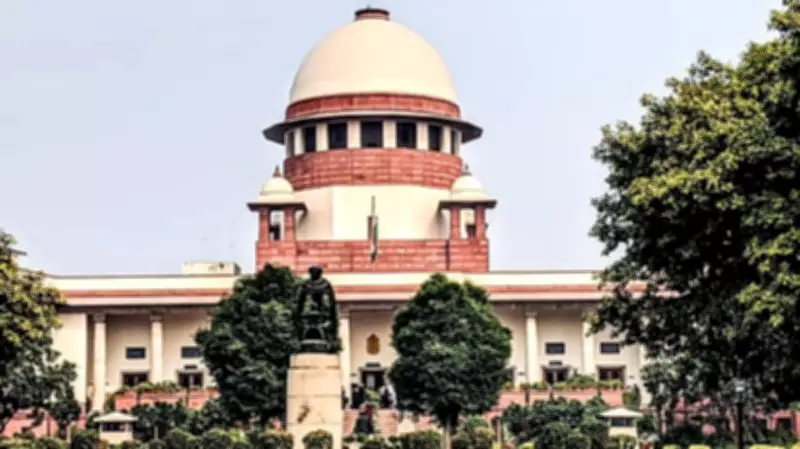
Supreme Court Declines Plea for Census Enumeration of Denotified Nomadic Tribes
The Supreme Court of India has firmly refused to entertain a plea that sought the enumeration of denotified nomadic tribes in the national census. The bench, led by Justice Ashish Tripathi, delivered its verdict on March 24, 2026, highlighting significant concerns about the potential implications of such a move on societal structure.
Court's Emphasis on a Casteless Society
During the proceedings, the bench articulated a powerful perspective on India's social fabric. The court stated that India is a uniquely diverse nation, but instead of progressing towards a casteless society, there is a tendency to foster more divisions. "We want to create more and more classifications," the bench remarked, underscoring the irony in efforts that might inadvertently reinforce caste-based identities rather than dismantle them.
This observation points to a broader philosophical debate within Indian jurisprudence regarding the balance between recognizing marginalized groups and promoting social unity. The court's stance suggests a cautious approach to avoid exacerbating existing societal fractures through additional bureaucratic categorizations.

Background on Denotified Nomadic Tribes
Denotified nomadic tribes represent a historically marginalized community in India, often facing discrimination and socio-economic challenges. These groups were originally classified as "criminal tribes" under colonial-era laws, which were later repealed, leading to their denotification. Despite this, many continue to struggle for recognition and inclusion in mainstream society.
The plea in question aimed to secure official enumeration in the census, which advocates argue could facilitate better policy-making, resource allocation, and protection of rights for these tribes. Proponents believe that accurate data is crucial for addressing their unique needs and ensuring equitable development.
Implications of the Supreme Court's Decision
The refusal to consider the plea has several potential implications:
- Policy Impact: Without formal census enumeration, it may become more challenging for government agencies to design targeted welfare schemes for denotified nomadic tribes.
- Social Dynamics: The court's emphasis on avoiding further classifications could influence future legal and political discussions on caste and tribe-based reservations.
- Community Response: Activists and community leaders might express disappointment, viewing this as a setback in their fight for recognition and justice.
This decision aligns with ongoing debates in India about the role of identity in governance and the pursuit of a more egalitarian society. It reflects the judiciary's role in navigating complex social issues while considering long-term societal cohesion.
Looking Ahead
While the Supreme Court has declined this specific plea, the issue of denotified nomadic tribes' rights remains a pressing concern. Alternative avenues for advocacy, such as legislative action or administrative measures, might be explored by stakeholders. The court's remarks serve as a reminder of the delicate balance between acknowledging historical injustices and fostering a unified national identity.
As India continues to evolve, discussions around caste, tribe, and social classification are likely to persist, with this ruling adding a significant voice to the conversation. The focus may shift towards finding innovative solutions that address marginalization without deepening societal divides.






