Supreme Court Firm on Voter Roll Revision, Extends Deadline Amid Concerns
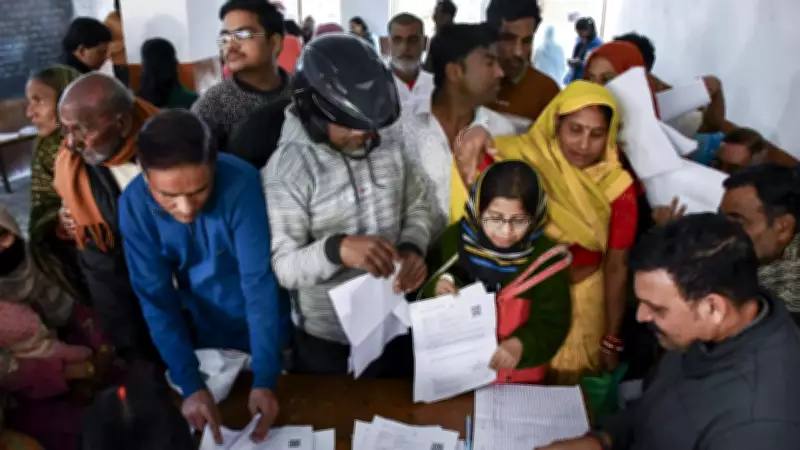
The Supreme Court of India made it unequivocally clear on Monday that it would not permit any obstruction to the special intensive revision (SIR) of voter rolls currently underway in twelve states. However, the apex court demonstrated flexibility by extending the deadline for document submission and expressing openness to suggestions aimed at safeguarding the rights of legitimate voters.
Court Extends Deadline and Seeks Affidavit from Bengal DGP
In a significant development, the bench led by Chief Justice Surya Kant, alongside Justices Joymalya Bagchi and N V Anjaria, granted a one-week extension to the February 7 deadline. This extension applies to voters who have received notices from the Election Commission, including a substantial 1.36 crore individuals categorized under 'logical discrepancy'. The court also mandated a personal affidavit from the West Bengal Director General of Police (DGP) regarding the EC's serious allegations that Trinamool Congress functionaries are attempting to derail the SIR process. The bench issued a stern reminder, stating, "We hope the state remembers the laws of the land."
West Bengal Government's Swift Compliance After Court's Displeasure
The bench, which had previously heard West Bengal Chief Minister Mamata Banerjee's passionate plea to discontinue the SIR, expressed clear dissatisfaction with the state government's failure to provide the Election Commission with a list of 8,500 Group B cadre officials. These officials are crucial for assisting Electoral Revision Officers (EROs) and Assistant EROs in the massive document verification workload. This judicial displeasure had an immediate and dramatic effect, prompting the West Bengal government to submit the required list to the EC within minutes, right in the courtroom. The state government further committed to verifying the suitability of these officials for the task.
Court Dismisses Speculative Fears of Mass Voter Exclusion
The Supreme Court also addressed and dismissed concerns raised by Chief Minister Banerjee's counsel, Shyam Divan. Divan had argued that the EC's process could lead to the mass exclusion of voters, citing that approximately 50% of the 'logical discrepancy' cases stem from simple misspellings or translation errors in names. The bench labeled this a "speculative apprehension" and provided reassurance. It clarified that suitable officials, to be inducted by the EC from the pool of 8,500 officers provided by the state, would specifically assist EROs and AEROs in cases where notices were issued solely due to spelling errors, thereby facilitating the inclusion of these voters in the final lists.
Micro-Observers and Final Authority of EROs Upheld
Despite vehement opposition from the West Bengal government, represented by a team of senior advocates, against the engagement of micro-observers drawn from central public sector undertakings and the Union government, the bench upheld their role. The court stated that these micro-observers, along with the additional personnel provided by the state, would aid the EROs and AEROs. It emphasized, however, that the final decision on the inclusion or deletion of any voter from the electoral roll rests solely with the Electoral Revision Officers.
Revised Timeline and Allegations of Anonymous Complaints
With the one-week extension for document submission, scrutiny, and hearings, the scheduled publication of the final voter list, originally set for February 14, is now likely to be postponed by an additional week, potentially to February 21. During the proceedings, advocate Kalyan Banerjee raised an issue regarding thousands of anonymous complaints against voter inclusions being entertained by the EC, contrary to rules that require complainants to be present during hearings. The bench responded firmly, stating, "We are not going to regulate the internal mechanism of EC in dealing with such issues."
Allegations of Violence and Organizational Locus Standi
Senior advocate V Giri, representing the organization Sanatani Sangsad, brought forth alarming allegations of widespread violence and open threats against Election Commission officials aimed at disrupting the SIR work. Giri claimed that "thousands of objections to names in voter lists were burnt" and requested permission for filing fresh objections during the extended deadline period. In response, for the state of West Bengal, advocate Menaka Guruswamy questioned the locus standi of Sanatani Sangsad, a temple management organization, in filing such an application, highlighting the legal complexities surrounding the parties involved in the case.