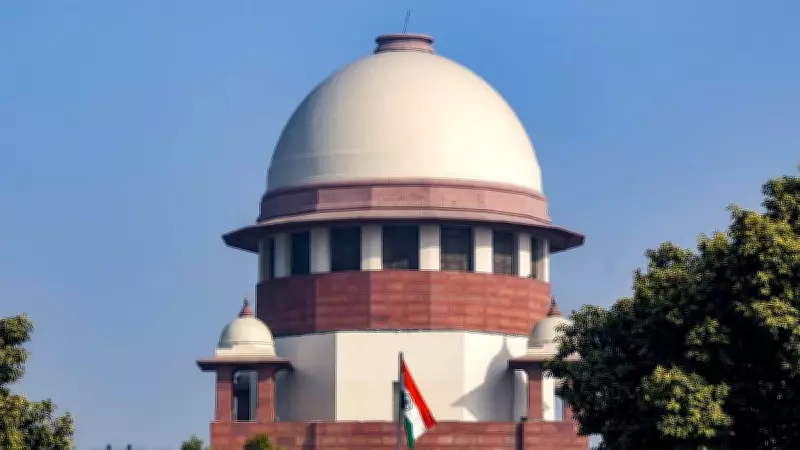
The Supreme Court on Friday sought the Centre's response on a plea filed by the Gujarat unit of the Aam Aadmi Party (AAP) challenging the suspension of its social media accounts. The plea argues that the blocking of these accounts violates the fundamental right to freedom of speech and expression under Article 19(1)(a) of the Constitution.
Details of the Plea
The petition, filed by the Gujarat AAP, contends that the suspension of its official social media handles on platforms like X (formerly Twitter) and Facebook was arbitrary and without due process of law. It seeks a declaration that all consequential directions, rules, and notifications issued under the relevant provision—specifically Section 69A of the Information Technology Act—are void to the extent they relate to the blocking of information. The plea further demands the immediate restoration of the accounts, which were suspended in April 2026 ahead of the Gujarat municipal elections.
Legal Grounds
The AAP argues that the government's action infringes upon the party's right to communicate with the electorate and disseminate its views. The plea cites the Supreme Court's earlier rulings in the Shreya Singhal case (2015), which struck down Section 66A of the IT Act as unconstitutional, emphasizing that any restriction on free speech must be reasonable and proportionate. The party also alleges that the suspension was politically motivated, aimed at stifling opposition voices during the election campaign.

Supreme Court's Response
A bench comprising Chief Justice of India D.Y. Chandrachud and Justice J.B. Pardiwala issued notice to the Union Ministry of Electronics and Information Technology, the Ministry of Home Affairs, and the social media platforms, seeking their replies within four weeks. The court listed the matter for further hearing in July 2026. Senior advocate Abhishek Singhvi, appearing for the Gujarat AAP, argued that the blocking order was passed without giving the party an opportunity to be heard, violating principles of natural justice.
Government's Stand
The Centre has yet to file its response. However, earlier submissions in similar cases have defended the blocking orders under Section 69A, citing national security and public order concerns. The government is expected to argue that the suspension was necessary to prevent the spread of misinformation and incitement to violence during the elections.
Broader Implications
This case could have significant implications for the regulation of social media in India, particularly concerning political speech during elections. The Supreme Court's decision may clarify the scope of Section 69A and the procedural safeguards required before blocking content or accounts. Civil liberties groups have closely watched the proceedings, with many arguing that the current framework lacks transparency and accountability.
The next hearing is scheduled for July 2026, where the court will consider the Centre's response and the platforms' compliance. Meanwhile, the Gujarat AAP has urged the court to expedite the matter, citing the impending civic polls.