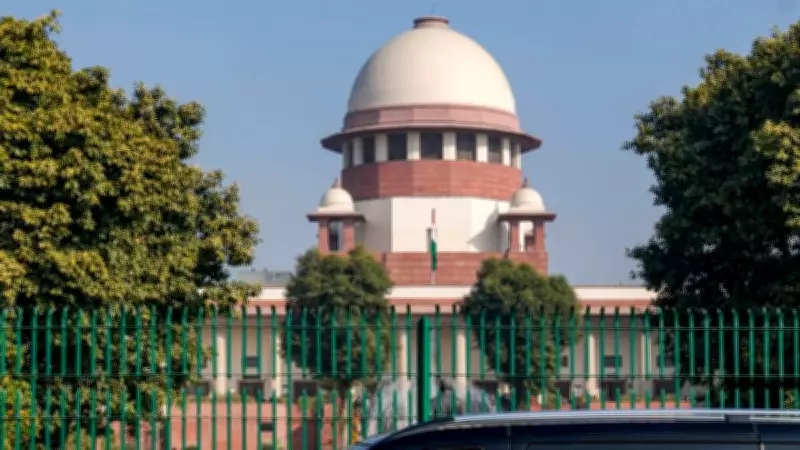
Supreme Court Issues Stern Warning on Election Freebies
The Supreme Court of India has delivered a sharp rebuke to political parties, lashing out at the rampant practice of offering freebies and relying heavily on populist schemes during election campaigns. In a significant observation, the apex court emphasized that such tactics not only distort the electoral process but also pose serious risks to the nation's fiscal health and long-term economic stability.
Court's Concerns Over Fiscal Irresponsibility
The bench, comprising senior justices, expressed deep concern over how political parties increasingly depend on promises of free goods and services to sway voters. The court noted that this trend has escalated in recent years, with parties across the spectrum engaging in competitive populism. This approach, the justices argued, often leads to unsustainable financial commitments that burden state exchequers and future generations.
Highlighting the broader implications, the Supreme Court pointed out that freebies and schemes announced during polls can create a cycle of dependency and undermine the principles of responsible governance. The court warned that such practices divert resources from essential public services like healthcare, education, and infrastructure development.

Call for Accountability and Transparency
In its remarks, the Supreme Court called upon political parties to adopt a more transparent and accountable approach in their election manifestos. The justices suggested that parties should clearly outline the financial implications of their promises and demonstrate how they plan to fund these initiatives without compromising fiscal discipline.
The court's intervention comes amid growing debates over the role of freebies in Indian politics, with critics arguing that they often serve as short-term vote-catching tools rather than sustainable development strategies. The Supreme Court's stance is seen as a push towards fostering a more issue-based and policy-oriented electoral discourse.
Potential Impact on Future Elections
This judicial scrutiny could have far-reaching consequences for how political campaigns are conducted in India. Parties may now face increased pressure to justify their electoral promises and avoid making unrealistic commitments. The Supreme Court's observations are expected to influence public discourse and potentially lead to calls for regulatory frameworks to curb excessive populism in elections.
As the nation moves towards future electoral cycles, the Supreme Court's warning serves as a critical reminder of the need for political parties to prioritize long-term national interests over short-term electoral gains. The court's emphasis on fiscal responsibility and democratic integrity underscores the importance of maintaining a balance between welfare measures and economic prudence in governance.