

Supreme Court Dismisses Jan Suraaj Party's Plea to Annul Bihar Assembly Elections
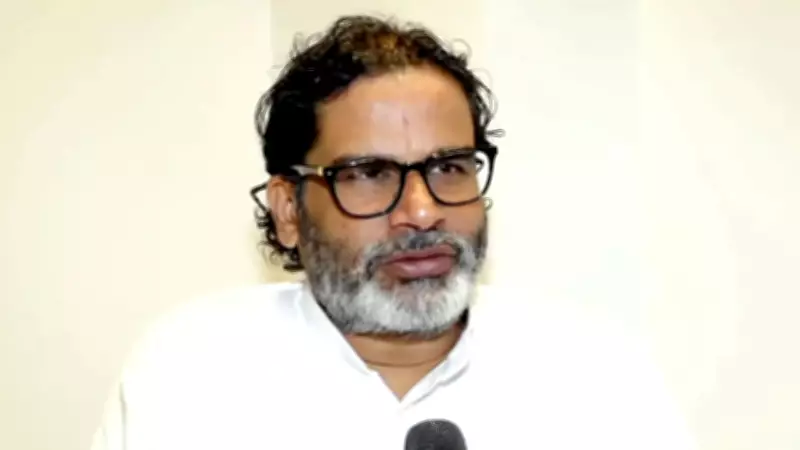
The Supreme Court of India delivered a sharp rebuke to the Jan Suraaj Party (JSP), led by political strategist Prashant Kishor, on Friday. The court criticized the party for filing a writ petition seeking the annulment of the recently concluded Bihar assembly elections. The JSP had argued that the pre-election distribution of Rs 10,000 to women under the Mukhyamantri Mahila Rojgar Yojna constituted a corrupt practice that unfairly altered the electoral playing field.
Court Questions Party's Motives and Electoral Performance
A bench comprising Chief Justice Surya Kant and Justice Joymalya Bagchi did not mince words in its response. "How many votes did your party get? People rejected you in the elections. Now you want to use the judicial platform to garner popularity," the bench remarked. The JSP contested 238 seats in the Bihar elections but failed to secure a single victory, garnering a mere 3.4% of the total votes. In a telling statistic, the party received fewer votes than NOTA (None of the Above) in 68 constituencies.
Legal Arguments and Fiscal Concerns Raised by JSP
Representing the Jan Suraaj Party, counsel C U Singh contended that the distribution of Rs 10,000 to women, totaling approximately Rs 15,600 crore, during the model code of conduct period amounted to a corrupt practice. Singh labeled the doles as "freebies" and highlighted Bihar's fiscal position, noting it is among the top five states with high fiscal deficits. He argued that such substantial expenditure without proper economic planning could further deteriorate the state's financial health.

Supreme Court Distinguishes Legal from Fiscal Issues
The bench, however, drew a clear distinction between legal-constitutional questions and matters of fiscal policy. "There is a difference between legal and constitutional questions and fiscal policy. If a governing political party is causing harm to the state through its economic policy, then it is for the people to vote it out. We cannot entertain such petitions," the court stated. It characterized the JSP's petition as an "omnibus election petition" seeking to invalidate the entire election, which it deemed inappropriate.
The court advised the party to file individual election petitions for each constituency if it wished to challenge specific outcomes. "You file an election petition for each constituency and prove that because of the corrupt practice the candidate has won. Otherwise, if a candidate has won by a margin of 10,000 votes and there were only 1,000 women who got the dole, why should his election be set aside?" the bench questioned.
Court's Stance on Election-Eve Freebies and Future Scrutiny
When Singh persisted in urging the court to examine the legality and constitutionality of election-eve freebies, the bench indicated it would address the issue in pending petitions but not at the behest of a political party that performed poorly in the polls. "All political parties indulge in the same freebies game once they come to power," the bench observed, questioning why the JSP did not challenge the announcement when it was initially made by the government.
Direction to Approach Patna High Court
Ultimately, the Supreme Court directed the Jan Suraaj Party to withdraw its petition and instead approach the Patna High Court. "You withdraw the petition and file a petition in the HC. We will have the benefit of HC's view," the bench stated. Following this directive, the JSP withdrew its petition, concluding the proceedings in the Supreme Court.
This case underscores the judiciary's cautious approach in intervening in electoral matters, emphasizing the role of the electorate in holding governments accountable for fiscal policies. It also highlights the challenges faced by smaller political parties in navigating legal avenues after electoral setbacks.






