

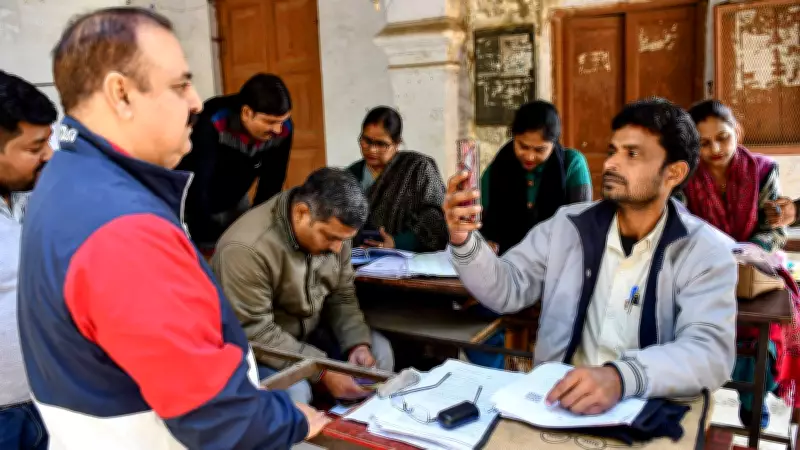
Supreme Court Issues Firm Directive to States on Electoral Roll Revision
In a decisive move, the Supreme Court of India delivered a clear message to all state governments on Monday, emphasizing that it will not permit any obstruction to the completion of the Special Intensive Revision (SIR) of electoral rolls. The bench, led by Chief Justice Surya Kant, underscored the importance of this electoral process while granting a one-week extension for the scrutiny of documents in West Bengal.
Court's Unambiguous Stance on SIR Completion
Chief Justice Surya Kant, presiding over a three-judge bench that included Justices Joymalya Bagchi and N V Anjaria, stated unequivocally, "We will not allow anyone to create any impediment in the completion of the SIR. It must be very clearly understood by all the States and the State authorities." This statement came during hearings on petitions related to the SIR in West Bengal, including one filed by Chief Minister Mamata Banerjee.
The court's directive aims to ensure that the electoral roll revision proceeds smoothly across the country, without delays or interference from state entities.

Extension Granted for West Bengal Scrutiny
Recognizing logistical challenges, the Supreme Court extended the deadline for scrutiny of documents in West Bengal by one week beyond February 14, 2026. This decision allows Electoral Registration Officers (EROs) and Assistant Electoral Registration Officers (AEROs) additional time to review submissions from affected individuals.
The court clarified that individuals who received notices can rely on all documents mentioned in the SIR notice, and these must be considered by EROs in their final decisions.
Addressing Allegations and Ensuring Assistance
Following complaints from the Election Commission of India (ECI) about reluctance among local police to register FIRs based on grievances from Booth Level Officers, the court demanded a personal affidavit from the West Bengal Director General of Police. This step highlights concerns over law and order during the SIR exercise.
In response to state objections regarding micro-observers appointed by the ECI, the Supreme Court affirmed their continued role. The West Bengal government provided a list of 8,505 Group B officers to assist with the SIR, including addressing name mismatches due to local dialects. The court ordered these officers to report for duty by 5 pm the following day and allowed the ECI to utilize them based on qualifications and suitability.
The bench emphasized that micro-observers and state officials will only assist EROs and AEROs, with final decisions resting solely with the statutory authorities. This clarification aims to dispel misconceptions about the authority of micro-observers.
ECI's Allegations and State's Response
The ECI filed affidavits alleging systematic attempts by the West Bengal government and Trinamool Congress leadership to derail the SIR exercise. Accusations included threats to micro-observers, attacks on hearing centers, vandalism of government offices, and burning of statutory forms. The ECI contended that such obstructions are unique to West Bengal among states undergoing the revision.
Solicitor General Tushar Mehta, representing the Centre, urged the court to issue directions, stating, "A message must go that the Constitution of India applies to all states." In contrast, Senior Advocate Menaka Guruswamy, appearing for the West Bengal government, denied all allegations.
Court's Actions and Future Steps
The Supreme Court took note of the ECI's complaints and directed the DGP to file a personal affidavit responding to the allegations. It also empowered the ECI to replace officers found negligent in their duties, addressing concerns about erring officials being ignored by the state.
The next hearing is scheduled for February 20, 2026, where the court will further examine these issues and ensure the integrity of the electoral process.






