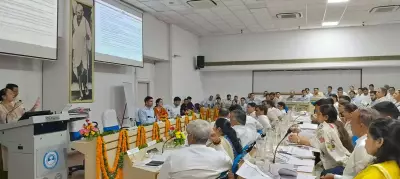
The All-India Shia Personal Law Board (AISPLB) issued a series of significant demands during its annual convention in Lucknow on Sunday, focusing on political representation, protection of religious heritage, and legal reforms. The event, held at the historic Bada Imambara, saw community leaders voice concerns over the perceived marginalization of Shia Muslims in India.
Core Demands for Political and Educational Rights
Maulana Agha Syed Abbas Rizvi, a prominent leader from Jammu & Kashmir, set the tone by highlighting a critical gap in representation. He stated that despite an estimated population of 7 to 8 crore, the Shia community lacks adequate representation in both central and state governments. Drawing a stark comparison, Rizvi remarked, "Shia Muslims are facing the same kind of treatment here as they do in Pakistan. Political representation of our community in Parliament and state assemblies is the need of the hour."
The board passed a formal resolution advocating for reserved constituencies for Shias, similar to the quotas existing for Dalits and women. This was positioned as a primary step towards ensuring their political voice. Furthermore, the AISPLB pressed for reservation in education and employment on economic and social grounds, and demanded the inclusion of lessons on Imam Hussain's legacy of justice and humanity in school curricula.

Heritage, Waqf, and Legal Reforms
A major focus was on preserving Shia religious and historical sites in Uttar Pradesh. The board urged the state government to grant independent waqf status to the Husainabad Waqf and to accelerate the restoration of heritage structures under the Husainabad Trust. On a national level, they demanded the withdrawal of the Waqf Amendment Act 2024 and the formation of a national Waqf protection commission to oversee such properties.
In the realm of legal and social reforms, the convention strongly condemned terrorism and called for the enactment of more stringent anti-mob lynching laws. The proposed Uniform Civil Code (UCC) was opposed, with the board seeking its review. They also urged a reconsideration of provisions in the National Register of Citizens (NRC).
Community Practices and Pilgrimage Concerns
The resolutions also addressed social and administrative issues affecting the community's religious practices. The AISPLB appealed to Shias to reject dowry practices and requested dedicated police protection for Muharram processions to ensure safety. They objected to film shoots being conducted inside religious premises under the Husainabad Waqf, citing the need to maintain sanctity.
Regarding the Haj pilgrimage, the board sought greater representation in the Central Haj Committee and pushed for the restoration of the earlier Haj subsidy, arguing it would facilitate travel for devout members of the community.
The wide-ranging demands presented at the Lucknow convention underscore the AISPLB's efforts to address both the socio-political and religious concerns of India's Shia Muslim population, seeking greater inclusion and protection under the law.