Shia Protests Sweep Kashmir, Ladakh, and Uttar Pradesh After Ayatollah Khamenei's Death
Widespread Shia protests erupted across the Kashmir valley, Ladakh, and several cities in Uttar Pradesh on Sunday, following the killing of Iran's Ayatollah Khamenei in a US-Israeli strike. The incident triggered street demonstrations, large-scale mourning gatherings, and sharp political reactions throughout these regions.
Kashmir Valley and Ladakh Witness Massive Mobilizations
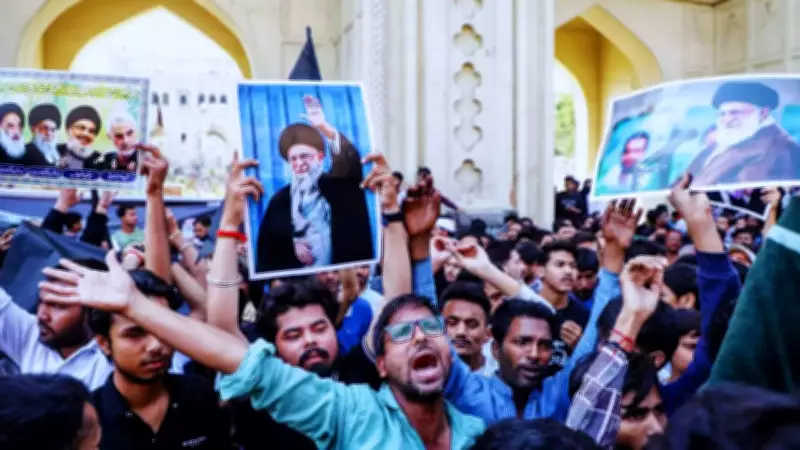
In Srinagar, thousands converged around the Clock Tower at Lal Chowk, shouting anti-US and anti-Israel slogans. Protesters raised black and red flags, beat their chests in grief, and displayed portraits of Khamenei and his predecessor Ayatollah Khomeini. This mobilization marked the largest in the Kashmir valley since Article 370 was scrapped in 2019.
Demonstrations quickly spread to Budgam, south Kashmir, and north Kashmir. In Ladakh's Kargil district, a Shia stronghold, thousands assembled in the main market to express their outrage and sorrow.

Political and Religious Leaders Respond
PDP legislators Aga Syed Muntazir Mehdi and Waheed Parra joined the protesters, showing solidarity with the Shia community. Kashmir's chief priest Mirwaiz Umar Farooq urged for a peaceful voluntary shutdown to maintain order.
Chief Minister Omar Abdullah stated that his government was coordinating with the Ministry of External Affairs to ensure the safety of Jammu and Kashmir residents, including students currently in Iran. Former Chief Minister Mehbooba Mufti described the day as one of mourning for the Muslim world, while People's Conference chief Sajad Lone called the murder deeply distressing.
As a precautionary measure, educational institutions in Jammu and Kashmir were shut for two days to prevent any escalation of tensions.
Uttar Pradesh Sees Widespread Demonstrations
In Lucknow, thousands of Shias marched through the streets as clerics denounced the strike. Maulana Kalbe Jawwad called Khamenei's death a tragedy for Islam and announced three days of mourning along with a candle march at Chhota Imambara.
Maulana Yasoob Abbas declared that effigies of US President Donald Trump and Israeli Prime Minister Benjamin Netanyahu would be burnt in protest. Islamic Centre of India chief Khalid Rasheed Farangi Mahali called for international intervention, alleging civilian casualties, while urging communal harmony to prevent any internal strife.
Protests Spread Across Western Uttar Pradesh
Across western Uttar Pradesh—including Agra, Aligarh, Muzaffarnagar, Amroha, Shamli, and Saharanpur—Shia mourners dressed in black staged marches. Some demonstrations saw participation from Sunni community members as well, showing broader solidarity.
In Muzaffarnagar, protesters marched from Kidwai Nagar imambara to Fakkar Shah Chowk and submitted a memorandum to local authorities demanding action. Agra witnessed slogans and prayers outside Shaheed-e-Salis Mosque, with participants calling for justice and peace.
National Condemnation and Concerns
In Mumbai, Shias and Iranian expatriates held a condolence meet at Masjid-e-Iranian in Dongri. Ali Namazi of the mosque committee expressed, "We pray for peace and normalcy in Iran and West Asia," highlighting concerns over weak internet links and the safety of relatives in the affected regions.
Kerala Chief Minister Pinarayi Vijayan strongly condemned Khamenei's killing, labeling the US and Israel as "rogue nations" with "insane" actions. In a letter to Prime Minister Narendra Modi, he urged the central government to ensure the protection of Indians abroad and prepare for potential evacuations if necessary.
The widespread protests underscore the deep emotional and political impact of Ayatollah Khamenei's death on Shia communities across India, particularly in regions with significant Shia populations. Authorities continue to monitor the situation closely to maintain law and order while addressing the community's grievances.