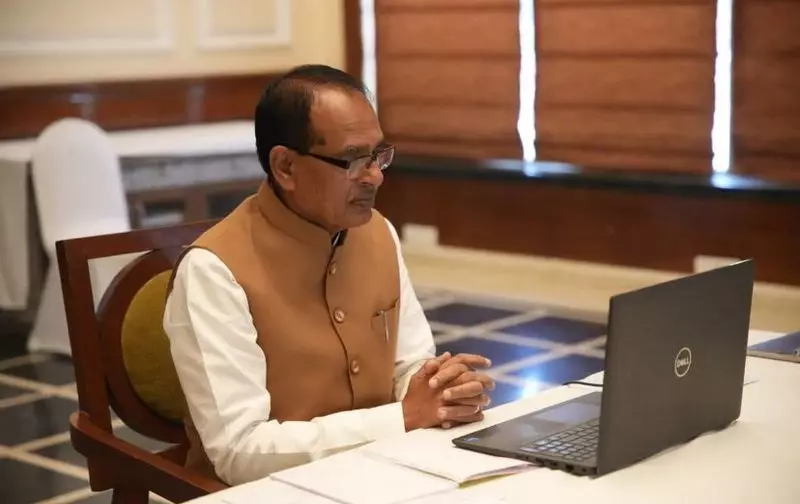
Senior Bharatiya Janata Party (BJP) leader and former Madhya Pradesh Chief Minister Shivraj Singh Chouhan launched a sharp attack on the Congress party on Tuesday. He accused the principal opposition party of orchestrating a 'Bhrashtachar Bachao Sangram' (Save Corruption Campaign) under the guise of its protests, rather than a genuine movement to protect the Mahatma Gandhi National Rural Employment Guarantee Act (MNREGA).
A Scathing Accusation Against Congress Motives
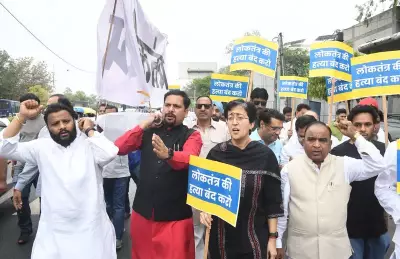
Chouhan's comments came as a direct rebuttal to the Congress's ongoing criticism of the Modi government's handling of the rural jobs scheme. The Congress has been alleging that the government is undermining MNREGA and has been protesting on the issue. However, Chouhan turned the tables by framing the Congress's agitation as a self-serving endeavor.
He asserted that the Congress is not truly concerned about saving MNREGA or the welfare of the poor. Instead, he claimed, their real objective is to shield their own leaders who are facing serious corruption charges. By using the term 'Bhrashtachar Bachao Sangram,' Chouhan painted the Congress protests as a desperate attempt to deflect attention from the legal troubles of its top figures.

Context of the Political Confrontation
The political atmosphere in India has been charged with allegations and counter-allegations of corruption. Several high-profile leaders from opposition parties, including the Congress, are under investigation or have been arrested by central agencies like the Enforcement Directorate (ED) and the Central Bureau of Investigation (CBI). The Congress has consistently labeled these actions as politically motivated vendettas by the ruling BJP.
In this context, Chouhan's statement is a clear escalation of rhetoric. It seeks to reframe the Congress's narrative from one of defending welfare schemes to one of defending the corrupt. This aligns with the BJP's long-standing campaign plank of positioning itself as a party with a 'zero-tolerance' policy towards corruption, while depicting the opposition as mired in scandals.
The former Madhya Pradesh CM did not mince words, directly linking the Congress's street protests to the legal predicaments of its leadership. He implied that the party is using public issues like MNREGA as a smokescreen for its primary mission of protecting its accused members from the consequences of the law.
Implications for Political Discourse and Upcoming Elections
This verbal offensive by a senior BJP stalwart like Shivraj Chouhan is significant for several reasons. Firstly, it aims to put the Congress on the defensive by questioning the sincerity of its pro-poor stance. By alleging that the 'MNREGA Bachao' cry is a facade, the BJP attempts to undermine the credibility of the opposition's critique of government policies.
Secondly, it keeps the spotlight firmly on the issue of corruption, a theme that has historically benefited the BJP in electoral battles. As the country moves closer to future state and national elections, such framing is crucial for shaping public perception. The BJP's strategy appears to be to conflate any opposition protest with an attempt to obstruct justice and safeguard corruption.
Thirdly, it demonstrates the continued role of Chouhan as a prominent voice in the BJP's national narrative-building, even after stepping down from the chief minister's post in Madhya Pradesh. His sharp, populist phrasing resonates with a certain section of the electorate and is designed for maximum media impact.
The Congress is yet to issue a detailed response to this specific allegation by Chouhan. However, this exchange is likely to intensify the war of words between the two national parties. It sets the stage for a polarized debate where every policy disagreement is portrayed as part of a larger moral battle between transparency and corruption. The effectiveness of this strategy will ultimately be tested at the ballot box.