

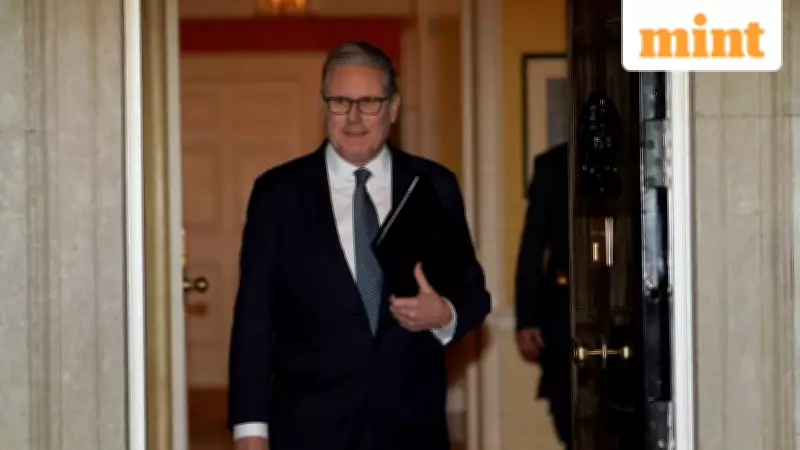
Sir Keir Starmer's Premiership Hangs in the Balance as Labour Faces Internal Rebellion
Sir Keir Starmer, the British Prime Minister, is grappling with a severe leadership crisis within the Labour Party, following a tumultuous period marked by high-profile resignations and growing dissent. Anas Sarwar, the leader of Scottish Labour, publicly demanded a change in Downing Street leadership on February 9th, becoming the most senior figure to call for Sir Keir's resignation. This comes after Morgan McSweeney, the prime minister's chief of staff, and Tim Allan, his director of communications, both stepped down, intensifying the political turmoil.
Cabinet Support and Internal Divisions
Despite Sarwar's call, cabinet ministers have issued statements of support for Sir Keir, albeit with varying levels of enthusiasm. Angela Rayner, his former deputy and a potential rival, tweeted her "full support." At a packed meeting of Labour MPs, Sir Keir defended his record, asserting he was "not prepared to walk away...or to plunge us into chaos." A northern critic described the meeting as "all right, really. Strong," indicating a temporary reprieve but not a resolution to the underlying issues.
Currently, none of Sir Keir's potential successors appear to have a viable plan to address Britain's deep-seated problems, such as sluggish economic growth and creaking public services. This lack of alternatives might allow him to remain in office, propped up by left-wing MPs, or he could be replaced by a more staunchly leftist leader. Either scenario suggests the Labour government will likely avoid confronting harsh realities, further alienating voters.

The Peter Mandelson Scandal and Its Fallout
Sir Keir's decision to appoint Lord Mandelson as Britain's ambassador to America has backfired spectacularly, exposing him to significant political risk. Recent revelations about Mandelson's friendship with convicted sex offender Jeffrey Epstein, including evidence that he shared confidential government information during the global financial crisis, have destabilized the prime minister's position. Although Sir Keir sacked Mandelson in September and apologized for believing his "lies," the damage has been done, contributing to McSweeney's resignation on February 8th.
This scandal compounds Sir Keir's challenges, as he has made little progress on key voter priorities, such as reducing channel crossings by migrants and managing tax policies. Under Chancellor Rachel Reeves, taxes are projected to rise to their highest levels since the 1940s, breaking a pledge not to increase taxes on "working people." This lack of realism has left the government without a mandate for tough decisions, despite its parliamentary majority.
Dysfunction in Downing Street and Voter Disillusionment
The prime minister's operation in Downing Street is widely criticized as dysfunctional, with MPs and ministers privately complaining about an overbearing and erratic team. In just 19 months, Sir Keir has lost two chiefs of staff, four directors of communications, and 11 ministers, highlighting the instability. With no coherent ideology to guide him, he has often outsourced strategy, leading to paralysis in the face of events.
Voters feel that nothing has changed since Sir Keir's 2024 pitch to "end the chaos" and "put the country first." Instead, disorder persists, with nearly half of Labour's 2024 voters now saying they would support another party. Reform UK, led by Nigel Farage, has led opinion polls since May 2025, and Labour MPs fear losing their seats, openly discussing the end of Sir Keir's premiership.
Potential Successors and Future Challenges
In the short term, Sir Keir might be sustained by the absence of an obvious successor. Prospective challengers like Angela Rayner, who is under tax investigation, or Wes Streeting, damaged by his ties to Mandelson, face significant hurdles. Andy Burnham, the grassroots favorite, cannot stand as he is not an MP. More likely, Sir Keir will double down on progressive policies to retain MP support, but this strategy is uncertain.

Local elections on May 7th could provide an opportunity for challengers to strike, and further revelations from documents related to Mandelson's appointment may emerge. With Labour avoiding hard problems like welfare spending control, the government risks continued drift and drama, disappointing voters who expected better. Sir Keir Starmer's leadership remains on the brink, with his future hinging on internal party dynamics and external pressures.





