Election Commission's SIR List Triggers Political Uproar in West Bengal
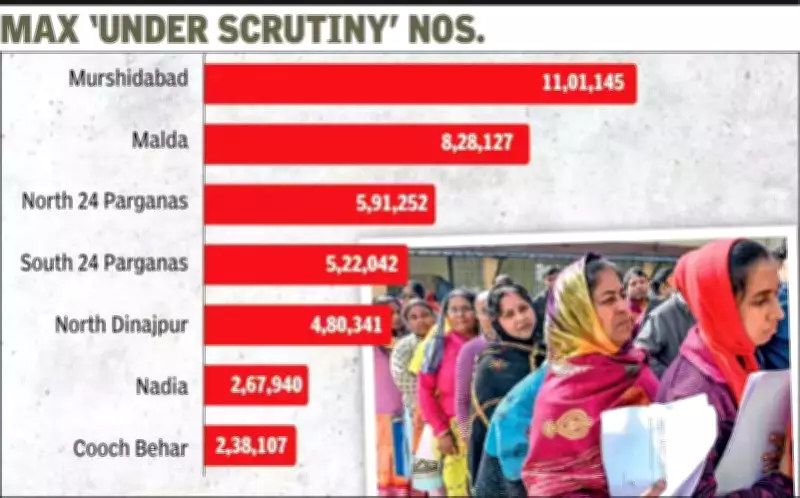
The Election Commission of India's recent publication of the Summary Revision (SIR) list has ignited a significant controversy in West Bengal, with nearly 40% of individuals placed under adjudication hailing from three key districts: North 24 Parganas, Malda, and Murshidabad. This development has raised concerns about voter inclusion and potential biases, drawing sharp reactions from political leaders and community representatives.
District-Wise Breakdown of Adjudications
In Malda and Murshidabad, which are minority-dominated districts, a staggering 19 lakh voters have been placed under adjudication. Meanwhile, North 24 Parganas, known as the Matua heartland, has approximately 6 lakh voters under scrutiny. The scale of these adjudications has led to widespread anxiety among the electorate, particularly in regions with significant minority populations.
Further exacerbating the situation, substantial deletions have been reported in other areas. For instance, Nadia district saw 60,000 names removed from the voter list, while the Bongaon subdivision in North 24 Parganas experienced over 40,000 deletions across its five assembly segments. Specific figures include 15,303 deletions in Bagda, 7,926 in Bongaon North, 6,902 in Bongaon South, 6,770 in Gaighata, and 2,924 in Swarupnagar.

Political Reactions and Allegations
Trinamool Congress (TMC) leaders have vehemently criticized the adjudication process. TMC Rajya Sabha MP Mamata Bala Thakur and Bagda MLA Madhuporna Thakur accused Union minister Shantanu Thakur and the Bharatiya Janata Party (BJP) of making "false assurances" to voters. Madhuporna Thakur expressed dismay, stating, "It is unfortunate that those who voted until 2024 were erased from the list in 2026."
In Malda, while 18,000 voters were deleted from the draft list, over 8 lakh names are now under judicial review. Murshidabad faces an even larger scrutiny, with more than 11 lakh voters under adjudication. Given that the district has around 55 lakh voters, this means over 20% of the electorate is being examined. Notably, assembly seats like Sujapur and Malatipur in Malda, where minorities constitute more than 80% of the population, reported approximately 1 lakh and 80,000 adjudicated names, respectively.
Specific Cases and Community Concerns
In Murshidabad, the adjudication list is led by Shamsherganj (1.2 lakh), Suti (1.1 lakh), and Raghunathganj (1.1 lakh), while Behrampore recorded the lowest at 12,754. Personal stories highlight the human impact of these adjudications. Ansar Sheikh, a 62-year-old hawker in Behrampore who has voted for four decades, found himself under adjudication due to a minor spelling mistake. Similarly, Malda resident Samiul Islam shared that his mother was in tears after being excluded from the list despite attending two hearings and submitting all required documents.
Itahar MLA Mosharaf Hossain alleged that "90% of those under judicial consideration belong to the Muslim community," accusing the BJP of using the Election Commission to exclude voters. Minister Firhad Hakim, who visited Murshidabad, criticized the EC, saying, "Sick, aged people, and even pregnant women were compelled to attend SIR hearings. Despite furnishing documents, the names of those from one particular community remain suspicious in the eyes of the EC."
BJP's Defense and Counterclaims
The BJP has refuted these allegations, with Malda district president Ajoy Ganguly stating there was nothing "unnatural" about the adjudications. He suggested that previous inclusions might have been made at the behest of the ruling party. Regarding deletions in the Matua belt, BJP MLA Subrata Thakur asserted that exclusions followed EC protocols, noting that recent arrivals from Bangladesh could face documentation issues. He added that citizenship applications under the Citizenship Amendment Act (CAA) would soon be processed via fast-track committees within days.

Community Leaders and Judicial Oversight
Nizamuddin Biswas, general Secretary of the All Bengal Imam Muazzim Association, expressed initial doubts about the EC's neutrality but maintained faith in judicial supervision. He stated, "We were doubtful of the EC's neutrality from the start. However, we have faith in the judiciary's supervision and believe no genuine citizen's name will be deleted." This sentiment underscores a broader hope for fair and transparent electoral processes amidst the ongoing controversy.
The adjudication process in West Bengal's SIR list continues to be a focal point of political debate, with implications for voter rights and democratic integrity in the region.