

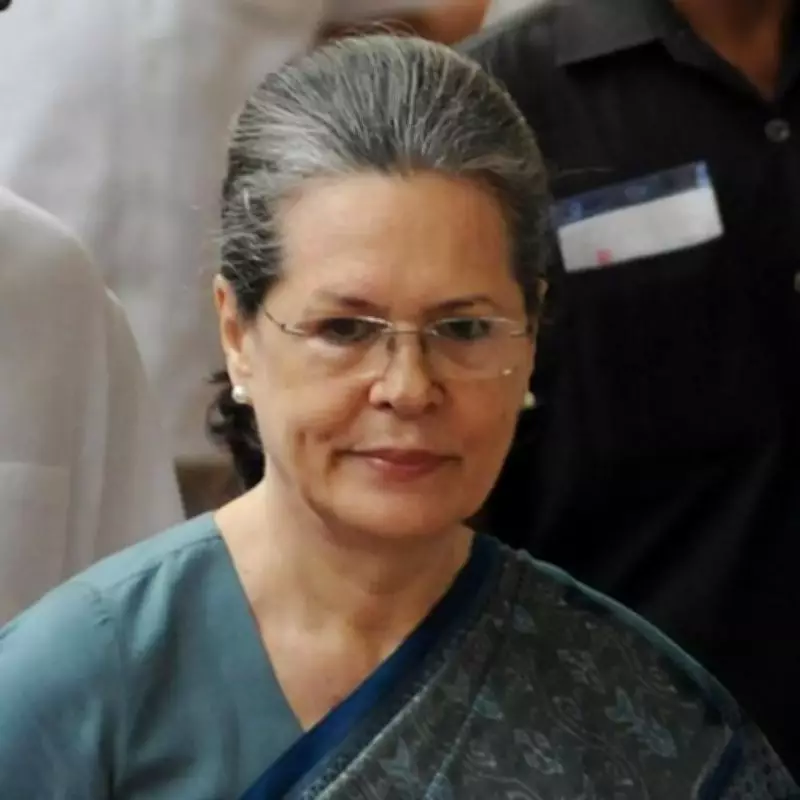
Sonia Gandhi's Legal Team Dismisses Citizenship Allegation as Politically Motivated
In a significant legal development, Congress leader Sonia Gandhi's counsel has strongly opposed a complaint regarding her inclusion in the electoral roll in 1980, labeling it as "politically motivated" and an abuse of the judicial process. The response was filed before Special Judge Vishal Gogne in a Delhi court, which is currently hearing a revision plea challenging a magistrate's order from September 11, 2025, that refused to investigate the allegation.
Court Proceedings and Allegations
The case revolves around a complaint filed by advocate Vikas Tripathi, vice-president of the Central Delhi Court Bar Association, who alleged that Sonia Gandhi's name was added to the voter list of the New Delhi constituency in January 1980, three years before she acquired Indian citizenship in 1983. Tripathi's counsel, senior advocate Pavan Narang, claimed that this involved "some forgery" and that a public authority was "cheated."
However, the magistrate's order dismissed the complaint, stating it was "fashioned with the object of clothing the court with jurisdiction through allegations which are legally untenable." Following Gandhi's response, the court has scheduled further proceedings for February 21.

Legal Arguments Presented by Sonia Gandhi's Counsel
Advocates Tarannum Cheema, Kanishka Singh, and Akash Singh, representing Sonia Gandhi, filed a detailed reply arguing that the complaint is "wholly misconceived, frivolous, and politically motivated." They emphasized that matters of citizenship fall exclusively under the Central government's domain, while electoral roll disputes are the sole prerogative of the Election Commission.
The reply contended that criminal courts cannot usurp these functions, as it would violate the doctrine of separation of powers and Article 329 of the Constitution, which prohibits judicial interference in the electoral process. They stated, "This is barred by the doctrine of separation of powers and would violate Article 329 of the Constitution."
Criticism of the Complaint's Basis
Gandhi's legal team criticized the complaint for lacking foundational documents and essential factual averments. They pointed out that there is no mention of the date, oath particulars, or contents of the alleged application for voter inclusion, and no copy of such an application was attached. The reply stated, "It is claimed that the answering respondent's application in 1980 led to the inclusion of her name in the electoral roll. However, there is no mention about the date, oath particulars, or contents of the application."
Furthermore, they argued that it is misleading to assume a person's name is included in the roll solely because they applied via Form 6. They also highlighted the impracticality of investigating allegations over 40 years old, stating that such stale claims violate Article 21 of the Constitution, which protects life and personal liberty.
Political Context and Implications
The reply described the complaint as an attempt to "recycle" a controversy from over 25 years ago for extraneous reasons. This case underscores the ongoing political tensions in India, where legal challenges are often intertwined with broader political narratives. The allegations against Sonia Gandhi, a prominent figure in Indian politics, reflect the high-stakes nature of electoral and citizenship disputes in the country.
As the court prepares for the next hearing, this legal battle highlights the delicate balance between judicial authority and electoral governance in India's democratic framework.






