

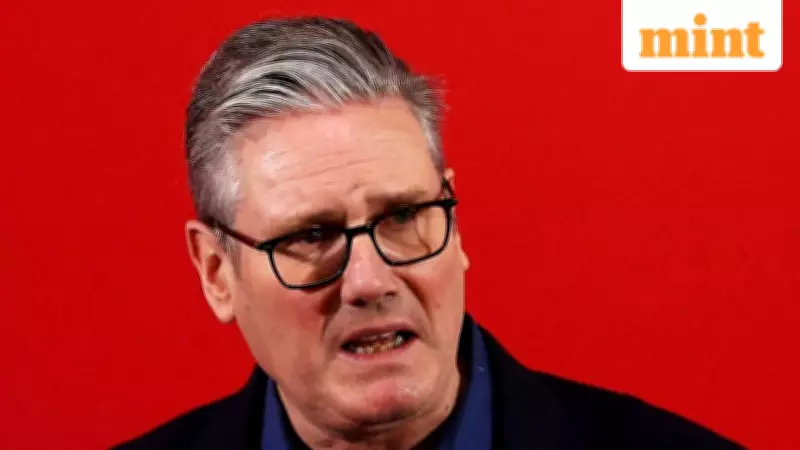
UK Prime Minister Battles Mounting Pressure Over Epstein-Linked Diplomat Appointment
The global fallout from the Jeffrey Epstein scandal has ignited a severe political crisis in the United Kingdom, placing Prime Minister Keir Starmer's leadership under unprecedented threat. The controversy centers on Starmer's decision to appoint Peter Mandelson, a longtime friend of the convicted sex offender, as Britain's ambassador to the United States.
Deepening Ties and Alleged Information Leaks
Newly released emails from the U.S. Justice Department have revealed that Mandelson's relationship with Epstein persisted far longer than previously disclosed. More alarmingly, these communications appear to show Mandelson sharing market-sensitive government documents and confidential information about a pending European debt bailout with Epstein in 2009. This information could have enabled Epstein to engage in insider trading, raising serious legal and ethical questions.
British authorities have confirmed they are investigating whether these email exchanges violated any laws. While Mandelson has not publicly addressed the specific allegations, he has issued apologies to Epstein's victims. The former ambassador was dismissed by Starmer last year when initial evidence of the relationship emerged, but the latest revelations have significantly intensified the political fallout.

Labour Party Rebellion Intensifies
A growing faction of dissatisfied Labour Party lawmakers has seized upon the scandal to challenge Starmer's leadership. The prime minister, whose popularity has plummeted to near-record lows since his 2024 election victory, now faces open rebellion within his own party. During a parliamentary session this week, Starmer admitted he appointed Mandelson despite knowing the party grandee maintained ties with Epstein after his 2008 conviction for sex offenses.
"None of us knew the depth and the darkness of that relationship," Starmer stated during a public address, acknowledging he had been repeatedly misled by Mandelson. The prime minister attempted to redirect attention to other pressing issues like the cost-of-living crisis, but his efforts failed to quell the growing discontent.
Financial Markets React to Political Uncertainty
The escalating crisis has begun to impact financial markets, with the British pound weakening against the U.S. dollar and government borrowing costs increasing. Investors are expressing concern about potential leadership changes that could bring a more left-wing Labour leader to power, potentially leading to increased government borrowing and spending.
Political analyst Luke Sullivan, who previously served as Starmer's political director, described the situation as "very grave," emphasizing that "you cannot underestimate what a big political crisis this is for the government."
Leadership Challenge Mechanics and Potential Successors
While speculation about Starmer's potential departure grows, the process of removing a Labour leader remains complex. The party's rules require support from 20% of its 400-plus lawmakers, along with backing from trade unions, to initiate a leadership challenge. No Labour leader has ever been deposed while in office, adding historical significance to the current crisis.
Several potential successors have emerged, though no clear front-runner has established dominance. Current Health Secretary Wes Streeting appears as the most likely candidate, while other possibilities include Angela Rayner, who faces her own challenges with a tax investigation, and Greater Manchester Mayor Andy Burnham, whose path to leadership has been complicated by recent party decisions.
Document Disclosure and Parliamentary Oversight
In response to mounting pressure, Starmer has promised to release documents demonstrating how Mandelson misled him about the Epstein relationship during the vetting process for the ambassadorial appointment. However, he has indicated that materials related to national security concerns will remain confidential.
The government was forced to alter its approach this week, with lawmakers successfully demanding that oversight of the document disclosures be transferred to an independent parliamentary committee. This development signals Starmer's diminishing control over his parliamentary party and represents a significant concession to rebel forces.

Upcoming Electoral Tests and Political Future
The crisis comes at a critical juncture for Starmer's administration, with several important electoral tests approaching. A special district election in late February will serve as an early indicator of Labour's standing with the British public, while May's local elections will function as a de facto midterm referendum on Starmer's leadership.
Polling data reveals the severity of Starmer's political challenges. According to YouGov, the prime minister currently shares the joint-lowest favorability rating of any British leader on record, surpassed only by Liz Truss's brief tenure. The Labour Party now trails behind the populist Reform UK party, with Survation polling indicating the ruling party's support has halved since the last election.
Labour lawmaker John McDonnell summarized the growing sentiment within the party, stating, "I believe Keir is a responsible person & will want to consider whether in the interest of the country he should continue as prime minister." As speculation intensifies in Westminster corridors, the question appears to be shifting from whether Starmer will be replaced to when this transition might occur.





