

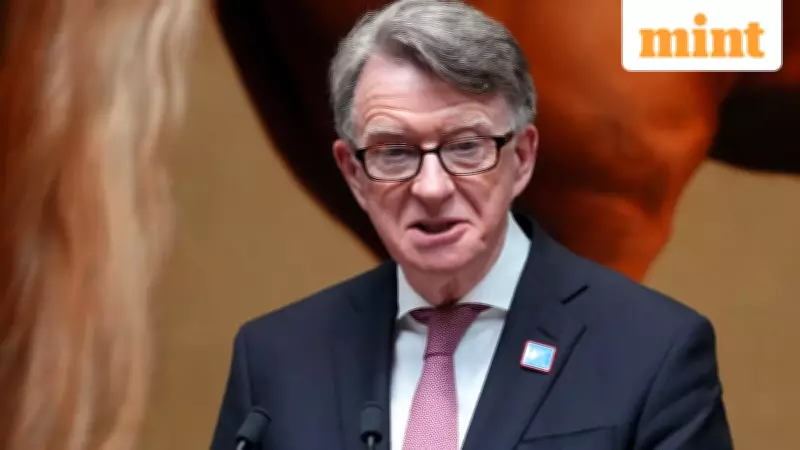
Starmer's Chief of Staff Resigns Amid Mandelson Appointment Crisis
British Prime Minister Keir Starmer's leadership has been plunged into turmoil following the resignation of his chief of staff, Morgan McSweeney. The departure intensifies pressure on the Labour leader over the controversial appointment of Peter Mandelson as the United Kingdom's ambassador to the United States.
McSweeney Takes Responsibility for Controversial Advice
McSweeney announced his decision in a statement on Sunday, February 8, taking full responsibility for advising Starmer to appoint Mandelson. This move is now widely regarded as the most serious crisis of Starmer's 18 months in power.
In a blunt and direct statement, McSweeney declared his resignation was the appropriate course of action. "The decision to appoint Peter Mandelson was wrong. He has damaged our party, our country and trust in politics itself," McSweeney stated unequivocally.

"When asked, I advised the Prime Minister to make that appointment and I take full responsibility for that advice," he added, accepting complete accountability for the political fallout.
Epstein Links Reignite Political Controversy
The crisis was triggered by newly disclosed files detailing the extent of Mandelson's relationship with the late convicted sex offender Jeffrey Epstein. These revelations have reopened a long-simmering issue for the Labour leadership that many believed had been resolved.
The documents, which surfaced over the past ten days, allegedly suggest Mandelson leaked government material to Epstein between 2009 and 2010. The seriousness of these allegations has now prompted a police investigation into potential misconduct in public office, adding legal dimensions to the political scandal.
Mounting Pressure on Starmer's Leadership
Starmer has faced mounting criticism from within his own party, with Labour MPs openly questioning his judgment and demanding accountability over Mandelson's appointment. The timing could not be worse for the prime minister, who already struggles with declining voter popularity in recent polling.
McSweeney's departure has raised fresh doubts about the future direction of the government less than two years after Labour secured one of the largest parliamentary majorities in modern British history. The resignation of such a key figure threatens to destabilize Starmer's administration during a critical period.
Starmer's Tribute Amid Political Fallout
Despite the significant fallout, Starmer paid tribute to his departing chief of staff. "It has been an honour to work with Morgan," the prime minister said in his own statement on Sunday.
Starmer had spent the previous week publicly defending McSweeney, a stance that itself drew criticism and further scrutiny of his leadership capabilities. This defense now appears particularly significant given McSweeney's subsequent resignation.
Questions Over Vetting Process and Background Checks
McSweeney, a longtime protégé and associate of Mandelson, has been accused by Labour lawmakers and political opponents of failing to ensure proper background checks before the appointment was finalized. Critics argue that more thorough vetting would have revealed the potential complications surrounding Mandelson's Epstein connections.
Labour MPs have also blamed McSweeney for the political damage caused by the publication of crude exchanges between Mandelson and Epstein, suggesting these communications should have been identified and addressed during the appointment process.
A Turbulent Tenure Comes to an End
McSweeney had served as chief of staff since October 2024, taking over after the resignation of Sue Gray following a dispute over pay and political donations. His tenure, though relatively brief, was marked by significant political challenges and now concludes amid one of the most serious crises of Starmer's premiership.
The 48-year-old had been one of Starmer's closest allies and was widely credited as the strategic mastermind behind Labour's landslide election victory. His departure represents not just the loss of a key advisor but potentially signals deeper problems within the Labour leadership structure.

As the police investigation into Mandelson's alleged misconduct proceeds and political pressure continues to mount, Starmer faces one of the most challenging periods of his political career, with questions about judgment, accountability, and leadership direction now dominating the political landscape.





