The Historical Roots of State Autonomy Demands in India
In the late 1950s, C N Annadurai, the chief minister and founder of the Dravida Munnetra Kazhagam (DMK), raised a poignant slogan: "North rises, South diminishes … Sindri is there, but no munthri here." This phrase humorously contrasted the north's fertilizer unit at Sindri with the south's lack of even a cashew factory, but it underscored a deeper issue. The slogan was not merely about regional underdevelopment post-Independence; it critiqued the failure of Five-Year Plans to address fiscal matters through decentralized and distributive justice-based approaches.
Early Tensions in Centre-State Dynamics
The issues extended beyond economics to administrative and constitutional power-sharing between the Union and states. The first to experience the brunt were the Communists, whose elected government was dismissed by a fiat from the Centre under Jawaharlal Nehru. This marked the beginning of Article 356's shadow looming over state governments, particularly those led by opposition parties. Even when allowed to govern, states felt the pinch of financial control over levy distributions.
Adding to this was the role of governors appointed by the Union, who often engaged in politics not envisioned by the constitution's framers. After dominating power nationwide from 1952 to 1967, the Indian National Congress faced defeat in eight states for the first time. Accustomed to power at both Centre and state levels, the Congress struggled to accept opposition challenges. One mechanism it "invented" was appointing governors of its choice—typically discredited octogenarians with little relevance to state politics, content to spend their final years in Raj Bhavans.

Rising Calls for Reform and Federalism
It was only when this strategy began causing instability in states like Kerala and Tamil Nadu that governments awoke to what they perceived as new designs by the ruling party at the Centre. In the early 1960s, the DMK questioned the necessity of the governor's post. After gaining power in 1967 and advocating for greater state autonomy, the Tamil Nadu government established a committee led by P V Rajamannar, retired chief justice of the Madras High Court, to propose constitutional changes.
The Rajamannar Committee did not recommend abolishing the governor's position. Instead, it suggested that state governments should have a say in the selection process. Despite this, the office often remained viewed as a tool for the Centre to intimidate or destabilize popular governments.
Emergency Era and Constitutional Shifts
The dictatorial attitude of the Centre peaked during the national emergency from June 1975 to 1977, which curtailed fundamental rights. Through the 42nd Amendment, it assumed greater powers by amending the Seventh Schedule, transferring subjects from the State List to the Union List. This reignited debates over whether India's federal structure was morphing into a more unitary state.
When Kerala and West Bengal had Left Front governments and Tamil Nadu had a DMK administration, discussions on revisiting Centre-state relations gained momentum. In October 1983, at a Srinagar meeting of all political parties and five chief ministers, West Bengal's Jyoti Basu made a significant statement on the issue. The resolution adopted there led the Union government to appoint the Justice Sarkaria Commission to review Union-state relations.
Commissions and Unfulfilled Recommendations
Justice R S Sarkaria, a former Supreme Court judge, circulated detailed questionnaires on topics including governor roles and financial relations. After four years, the Commission submitted a 1,600-page report in 1988, proposing reforms. However, little substantive action followed. The BJP government, in power for the past 11 years, has continued to operate with expanded powers, showing minimal inclination to dismantle this structure.
It has made newer, more serious inroads into Centre-state relations by enacting parliamentary legislation on state-allocated subjects, with or without consent, thereby concentrating power at the Centre. Opposition-ruled states, especially in the south, have again alleged that governors are being used to destabilize elected governments.

Legal Battles and Recent Developments
The DMK government approached the Supreme Court over delays by governors in granting assent to bills under Articles 200 and 201 of the Constitution. In November 2025, a bench led by Justice Pardiwala ruled that the government must function within the Constitution's bounds and remain accountable, stating governors do not possess unfettered powers.
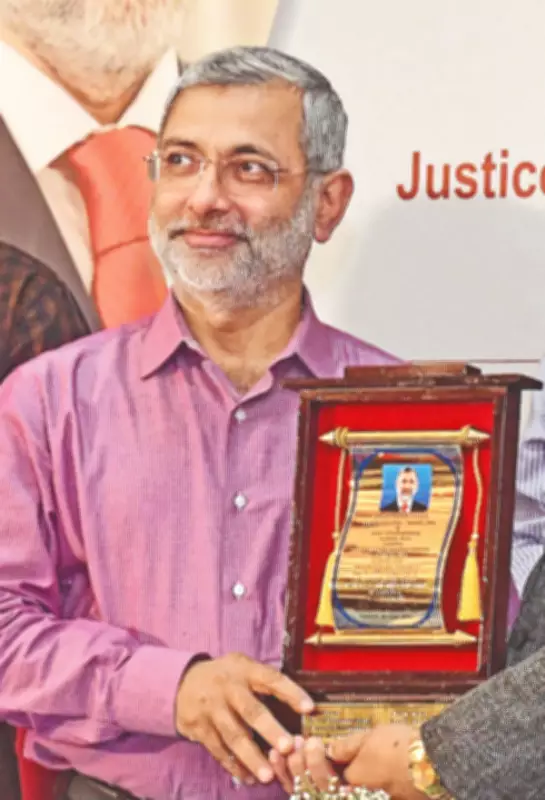
Instead of seeking a review, the Centre invoked Article 143, asking the President to seek the Supreme Court's advisory opinion on 14 questions, including powers of governors and the President in bill assent. A five-judge bench addressed these queries, effectively resetting the issue. This prompted the current DMK government under M K Stalin to form a high-level committee on Union-state relations, chaired by former Supreme Court Justice Kurian Joseph.
The Kurian Joseph Committee Report
Introducing the first report, Stalin expressed hope that it would stimulate informed debate, restore balance to Union-state relations, and contribute to a constitutional settlement where the Union is strong due to focus and states are strong due to trust. Part I of the report tackles contentious issues like decentralization, state autonomy, constitutional amendments, territorial integrity, language, the governor, delimitation, elections, education, health, and GST.
While two more parts are forthcoming, it is worth examining whether the current recommendations on governor appointments represent a radical departure from the 1971 Rajamannar Committee report. The Rajamannar Committee advocated for governor appointments in consultation with the state cabinet or through a high-powered body. In contrast, the new committee proposes selection from a panel of three names approved by the state legislative assembly.
Comparative Recommendations and Political Implications
The Sarkaria Commission in 1988 recommended consultation with the Vice-President of India, Lok Sabha speaker, and chief minister. The 1983 Srinagar resolution suggested appointment by the President based on a state government panel. With legal avenues to curb what they term authoritarian tendencies, opposition parties have taken this issue to the public.
Opposition-led governments in Tamil Nadu, Kerala, and West Bengal, all facing elections and contesting the National Democratic Alliance, are likely to center the Justice Kurian Joseph Committee's recommendations in their electoral platforms. They argue that reforms are essential, and meaningful democracy requires genuine power-sharing between the Union and states.
(The writer is a retired judge of the Madras High Court)