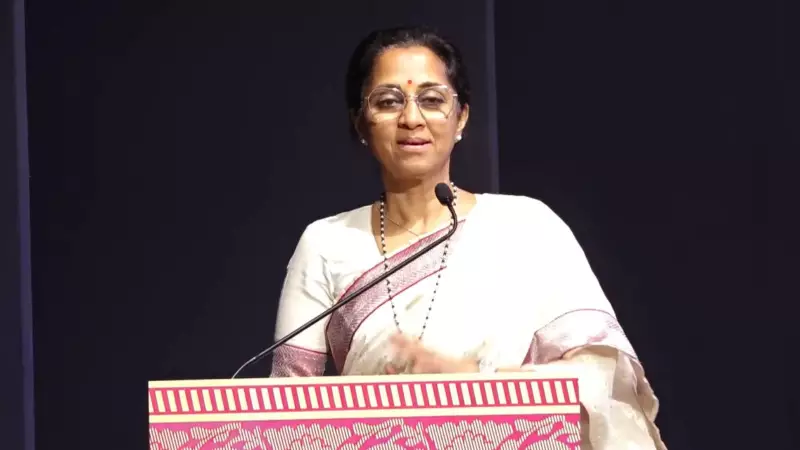
True freedom for women in India will only be realized when they receive genuine respect within their households and educational institutions, asserted Member of Parliament Supriya Sule. She made this powerful statement while inaugurating a significant state-level conference in Mumbai, commemorating five decades of the pioneering Stree Mukti Movement.
A Gathering of Champions for Gender Equality
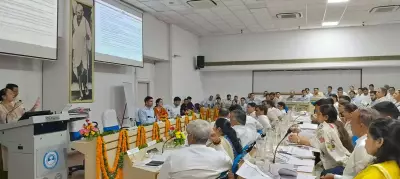
The three-day conference, held on Saturday, was organized by the Maharashtra Stree Mukti Parishad and saw an impressive convergence of activists, legal experts, and thinkers. Supriya Sule, the Lok Sabha MP from Baramati, formally inaugurated the event. The roster of chief guests featured eminent personalities including senior advocate Indira Jaising, former Planning Commission member Dr. Saeeda Hameed, and Sharada Sathe, the president of the organizing parishad.
The event drew a massive participation, reflecting the movement's deep roots. Over 800 women representatives from 31 districts across Maharashtra attended, representing a diverse cross-section of castes, communities, and including transgender groups. The collective strength of around 92 different women's organizations was present, showcasing a united front in the ongoing struggle for gender justice.

In keeping with the movement's rich traditions, the conference commenced with the stirring presentation of songs dedicated to women's liberation. The parishad also presented a detailed overview of its work over the past year, focusing on understanding and addressing women's issues at the divisional level. A critical safety audit report conducted in recent months was shared with the attendees, highlighting ongoing concerns.
MP Supriya Sule Reflects on Progress and Persistent Challenges
Addressing the gathering, Supriya Sule reflected on the long journey of the women's liberation movement. She recalled growing up in an environment that championed gender equality. However, she pointed out the stark contrast that persists in many areas today. "Even today, though many women enter politics and become sarpanches, the actual administration often lies in the hands of their 'SP,' that is, the Sarpanch Pati (husband)," Sule observed, highlighting the gap between representation and real power.
She underscored that material progress alone does not equate to liberation. "Dowry-related suicides among women continue even today. Metro services have begun, but travel is still not safe," she stated. Sule powerfully concluded that "True liberation for women will be achieved only when they receive genuine respect at home and in schools."
Voices from the Forefront: Indira Jaising and Dr. Saeeda Hameed
Chief guest Indira Jaising, in her address, traced the philosophical foundations of the movement to Mahatma Gandhi and Dr. B.R. Ambedkar. "One taught people to take to the streets and protest, while Dr. Babasaheb Ambedkar taught them to fight for their fundamental rights," she said. Jaising expressed concern over the forgotten mothers of the Constitution, noting that while people ask about the 'father,' no one inquires about the 'mother.'
She paid homage to the legacy of grassroots fighters like Mrinaltai Gore and Ahilyabai Rangnekar, who led 'latane morchas' for basic amenities like water, and Pramila Dandavate, who spread the anti-dowry movement. Jaising emphasized that the global recognition of unequal rights for women by the UN in 1975 marked a true beginning for the organized liberation movement. "Women's liberation thrives on democracy, and only when democracy functions effectively can true women's liberation be achieved," she asserted.
Guest of honour Dr. Saeeda Hameed expressed her joy at witnessing the large assembly of women representatives. She shared insights from her work with the Planning Commission, where she studied conditions in areas like Malegaon and Gadchiroli. "Seeing the work of the Maharashtra Stree Mukti Parishad gives a true glimpse of its impact," Dr. Hameed remarked, acknowledging the organization's ground-level efforts.

The conference served as both a celebration of five decades of relentless struggle and a sober reminder of the road ahead. It reinforced that the quest for women's liberation in India remains a multifaceted battle—one fought in legislatures and courtrooms, but equally critically, within the confines of homes and the corridors of schools.