

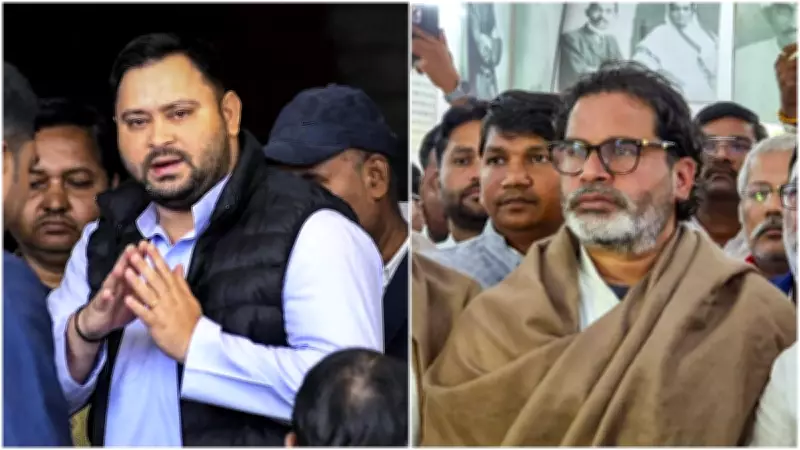
In a scathing critique of the recent Bihar Assembly elections, Rashtriya Janata Dal (RJD) leader and former Deputy Chief Minister Tejashwi Yadav has made explosive allegations against the ruling National Democratic Alliance (NDA). Yadav claimed that the NDA coalition spent a staggering Rs 40,000 crore to secure victory in the 2025 Bihar polls, a figure that has sparked widespread debate and controversy in political circles.
Democracy Reduced to 'Darr-Tantra'
Tejashwi Yadav, known for his fiery rhetoric, did not mince words while addressing the media. He stated, 'In Lok-tantra (democracy), Lok haara, tantra jeeta', which translates to 'the people were defeated, while the machinery won.' Elaborating further, he accused the ruling alliance of reducing the essence of democracy to what he termed as 'darr-tantra' (rule by fear), suggesting that electoral processes were manipulated through excessive financial power and intimidation tactics rather than genuine public mandate.
Prashant Kishor's Legal Move
Adding to the political turmoil, renowned political strategist Prashant Kishor has taken the matter to the highest judicial authority in the country. Kishor has filed a petition in the Supreme Court of India, seeking intervention and scrutiny over the conduct and outcomes of the Bihar Assembly elections. While specific details of his petition remain under wraps, sources indicate it raises serious questions about electoral integrity, funding transparency, and potential violations of model code of conduct.

Context of Bihar's Political Landscape
Bihar, one of India's most politically volatile states, has witnessed intense electoral battles in recent years. The 2025 Assembly elections were particularly crucial, with both NDA and opposition Mahagathbandhan (Grand Alliance) leaving no stone unturned in their campaigns. Tejashwi Yadav's allegations come at a time when post-election analyses are underway, and opposition parties are regrouping to challenge the NDA's governance.
The claim of Rs 40,000 crore expenditure, if substantiated, could have far-reaching implications. It not only questions the financial prudence in election campaigns but also highlights concerns over the influence of money power in Indian democracy. Political analysts note that such high-stakes spending, if true, sets a dangerous precedent for future elections across the country.
Reactions and Implications
While the NDA has yet to issue an official response to these allegations, insiders suggest that the coalition might dismiss them as baseless political rhetoric aimed at discrediting their victory. However, Prashant Kishor's move to the Supreme Court adds a legal dimension to the controversy, potentially paving the way for judicial review of election practices.
Civil society groups and election watchdogs have called for thorough investigations into campaign finances, urging the Election Commission of India to enforce stricter regulations. The developments underscore ongoing debates about electoral reforms, transparency in political funding, and the need to preserve democratic values in India's vibrant but often contentious political arena.
As the story unfolds, all eyes are on the Supreme Court's response to Kishor's petition and whether Tejashwi Yadav's allegations will trigger formal inquiries. The outcome could reshape political strategies and accountability mechanisms in Indian elections, making this a pivotal moment for Bihar and national politics alike.






