Telangana Survey Exposes Urban Debt Disparities Shaped by Caste
The recently released Telangana Socio-Economic, Educational, Employment, Political and Caste (SEEEPC) Survey-2024 has uncovered significant insights into debt patterns across the state. While urban areas in Telangana exhibit less widespread and less visible debt compared to rural regions, the survey highlights that caste continues to play a crucial role in shaping borrowing behaviors and access to safe credit.
Rural vs. Urban Borrowing Patterns
According to the survey, rural households are more likely to take loans for specific purposes such as marriages, medical needs, and emergencies. In contrast, urban data indicates a shift towards business or institutional credit, but this transition is not equally distributed among all social groups.
The survey reveals that only 4.9% of urban households borrowed for marriage or medical expenses, significantly lower than the 8.5% observed in rural Telangana. Additionally, dependence on moneylenders is markedly lower in urban areas at 3.6%, compared to 9% in rural regions.

Underlying Factors and Protective Buffers
The rural-urban chapter of the survey notes that loans are more frequent in rural areas due to weaker access to savings, health insurance, and other protective buffers. Urban households engaged in trade and services generally have better access to bank loans, self-employment schemes, and micro-enterprise finance.
However, the urban landscape is far from uniform. Caste remains a powerful determinant influencing both the purpose of borrowing and access to lenders across Telangana.
Caste-Based Disparities in Borrowing
Statewide data shows that 7% of households reported loans for marriage or medical needs. The burden was highest among Scheduled Castes at 10.9%, followed by Backward Classes at 7.3% and Scheduled Tribes at 6.9%, while Other Castes reported the lowest at 3%.
Overall dependence on moneylenders stood at 6.8%, with the highest rates among Scheduled Tribes (9.7%), Scheduled Castes (8.8%), and Backward Classes (7.1%), while Other Castes showed the lowest at 5.1%.
Urban Debt Distress and Caste Influence
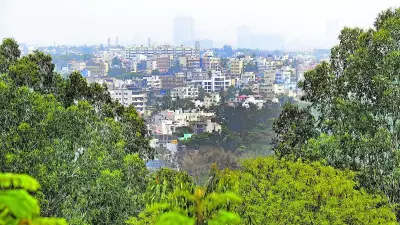
In urban Telangana, debt distress does not disappear but rather changes form. Scheduled Caste households demonstrate significantly higher dependence on loans for essential needs. Approximately 17.3% of urban SC households reported medical loans, compared to just 4.9% among Other Castes.
For marriage-related borrowing, 8.1% of urban SC households took loans, against 3.3% among OCs. Reliance on moneylenders remains particularly high among marginalized groups, with 14.6% of urban SC households and 14% of urban ST households reporting such borrowing, compared to 5.2% among OCs.
Conclusion: Persistent Inequality in Credit Access
The Telangana SEEEPC Survey-2024 underscores that while urban areas may show lower overall debt levels, the distribution of financial stress remains uneven. Marginalized families in cities continue to borrow for illness, weddings, and basic survival, while better-off groups access formal finance more readily.
This comprehensive analysis reveals that caste continues to be a significant factor in determining both the necessity for borrowing and the types of credit available to different communities, highlighting ongoing challenges in achieving equitable financial inclusion across Telangana.