Tharoor Shares Post-Adjournment Conversation with Rijiju, Highlights Women's Representation Debate
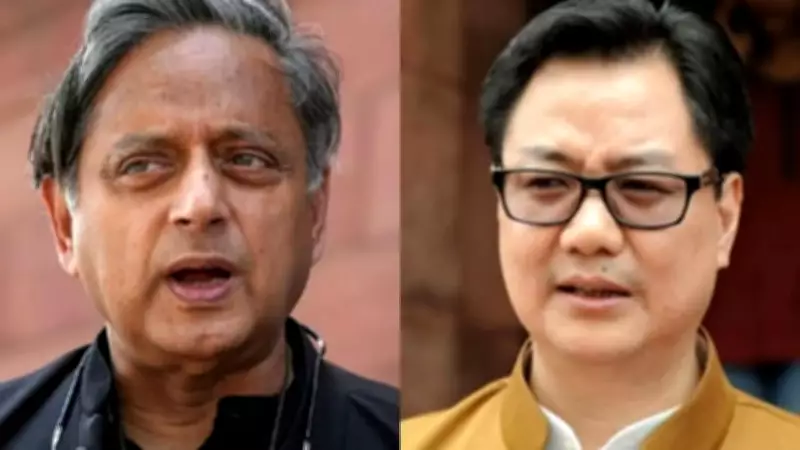
Congress Member of Parliament Shashi Tharoor on Saturday revealed a snippet of his dialogue with Parliamentary Affairs Minister Kiren Rijiju following the adjournment of the Lok Sabha. Tharoor stated that the Bharatiya Janata Party leader acknowledged that no one could label Tharoor as anti-women.
Posting a photograph on social media platform X featuring Rijiju and other opposition MPs, Tharoor elaborated, "A little post-adjournment gathering of opposition MPs in the Lok Sabha with our charming parliamentary affairs minister. When Kiren Rijiju explained why he and his party were calling the opposition 'mahila virodhi', it was pointed out to him that no one could ever call me anti-women! He conceded the point."
Tharoor's Stance on Women's Advancement and Delimitation Concerns
Tharoor further emphasized his perspective on gender equality, asserting that women constitute "by far the better half of the species, 'Humans 2.0', and deserve representation in parliament and in every institution." However, he issued a cautionary note against associating this advancement with delimitation processes.

"Just don't link their advancement to a mischievous and potentially dangerous delimitation that could devastate our democracy," Tharoor warned, highlighting apprehensions about the broader implications of such electoral boundary revisions.
Background: Defeat of the Women's Reservation Bill in Lok Sabha
This exchange occurs in the wake of a significant legislative setback for the government on Friday. The Constitution (131st Amendment) Bill, which proposed a 33 percent reservation for women in legislatures and an expansion of Lok Sabha seats to 816, was defeated.
The voting outcome revealed 298 members in favor and 230 against the bill. With 528 votes cast, the legislation required 352 votes to achieve the two-thirds majority necessary for passage, falling short of this threshold.
Details of the Proposed Legislation and Its Objectives
The bill aimed to increase Lok Sabha seats from the current 543 to 816 to facilitate women's reservation ahead of the 2029 parliamentary elections. This increase was contingent upon a delimitation exercise based on the 2011 Census data.
Additionally, the proposal included plans to expand seats in state and Union Territory assemblies to accommodate the quota, ensuring proportional representation across various legislative bodies.
The discussion between Tharoor and Rijiju underscores ongoing political debates surrounding gender representation and electoral reforms, reflecting broader tensions within India's parliamentary landscape.