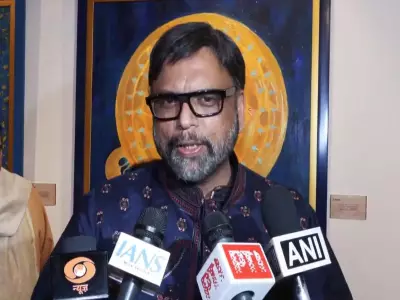
Congress leader and Member of Parliament Shashi Tharoor has issued a stark warning about the state of social harmony in India. He stated that the nation's peace cannot survive if the majority community chooses to remain silent spectators to recurring attacks on Christian groups and institutions.
A Call for Conscience and Action
Tharoor made these powerful remarks during a virtual event organized by the Christian community. The event was specifically convened to address the growing concerns over targeted violence and discrimination. The parliamentarian from Thiruvananthapuram emphasized that the responsibility to uphold the constitutional values of fraternity and secularism lies with every citizen.
He argued that passivity in the face of injustice against any minority group erodes the very foundations of a democratic and pluralistic society. Tharoor's comments come against a backdrop of reported incidents across various states where churches have been vandalized, prayer meetings disrupted, and community members allegedly harassed.

The Context of Rising Concerns
The virtual meeting served as a platform for Christian leaders to voice their anxieties regarding their safety and freedom to practice their faith. Participants highlighted specific instances of intimidation and violence, creating an atmosphere of fear within the community. Tharoor, by directly addressing these grievances, lent his political voice to a call for greater protection and respect for religious rights enshrined in the Indian Constitution.
His speech moved beyond political rhetoric, appealing to the moral conscience of the nation. He stressed that the silence of the majority is often misinterpreted as consent or indifference, which can embolden elements that seek to disrupt social harmony. Tharoor's message was clear: safeguarding the rights of minorities is not solely the duty of the affected community or the government, but a collective societal obligation.
The Path Forward: Vigilance and Unity
In his address, Tharoor outlined what he sees as the necessary path forward. He called for heightened vigilance from both civil society and law enforcement agencies to prevent such attacks and ensure swift justice when they occur. More importantly, he urged citizens from all backgrounds to speak out against bigotry and violence, regardless of the target.
The underlying principle of his argument is that the strength of Indian democracy lies in its diversity and its ability to protect all its constituents equally. By reminding the public that peace is an active condition requiring effort and courage to maintain, Tharoor positioned the issue as central to India's future as a stable, inclusive nation. His intervention adds significant weight to the ongoing debate about religious freedom and social cohesion in contemporary India.