Three Generations of Pawar Family Set to Dominate Parliament After Key Elections
In a remarkable political development, three prominent members of the influential Pawar family are poised to secure positions in India's Parliament following the crucial Rajya Sabha elections scheduled for March 16, 2026. This unprecedented scenario underscores the enduring legacy and strategic prowess of one of Maharashtra's most powerful political dynasties.
A Trio of Political Heavyweights
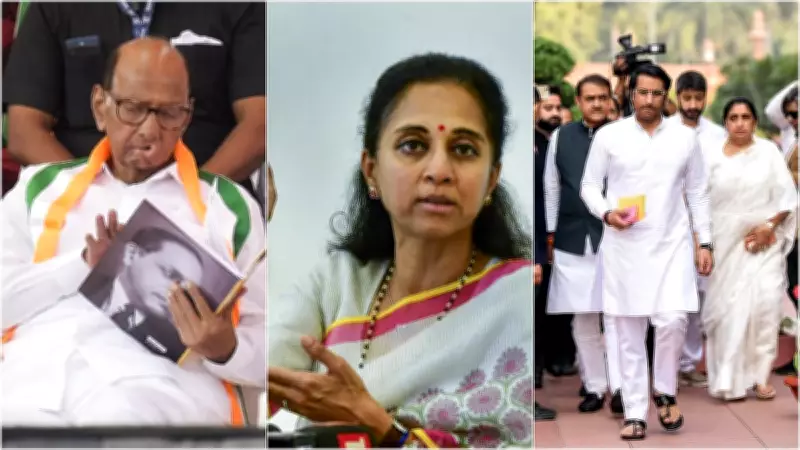
The family members set to represent the Pawar lineage in Parliament include Sharad Pawar, the 85-year-old veteran leader and supremo of the Nationalist Congress Party (Sharadchandra Pawar) faction. Joining him is his daughter, Supriya Sule, aged 56, who currently serves as the Lok Sabha Member of Parliament from the Baramati constituency. Completing this political trifecta is Parth Pawar, the 35-year-old scion and grandson of Sharad Pawar, who is making his entry into the national legislative arena.
Strategic Implications for Maharashtra and National Politics
This consolidation of power within a single family is expected to have profound implications for both state and national politics. Sharad Pawar's extensive experience, spanning decades of leadership, combined with Supriya Sule's established parliamentary presence and Parth Pawar's emerging influence, creates a formidable bloc. Analysts suggest that this move could strengthen the NCP (SP)'s bargaining power in coalition politics and policy-making processes.

The Rajya Sabha elections, a critical event in the Indian political calendar, will determine the upper house's composition. The Pawar family's anticipated success in these polls highlights their strategic alliances and voter base in Maharashtra, a key state in Indian politics. This development also reflects the ongoing trends of political dynasties playing significant roles in India's democratic framework.
Historical Context and Future Prospects
Sharad Pawar, often referred to as the 'Maratha Strongman', has been a central figure in Indian politics since the 1970s, serving multiple terms as Chief Minister of Maharashtra and holding key ministerial portfolios at the national level. Supriya Sule has carved her own niche, advocating for women's empowerment and rural development. Parth Pawar's entry marks a generational shift, potentially bringing younger perspectives to the family's political agenda.
As the March 16 elections approach, political observers are closely monitoring the campaigns and alliances that could influence the outcomes. The Pawar family's simultaneous presence in Parliament is seen as a testament to their enduring relevance and adaptability in the ever-evolving landscape of Indian politics. This event is likely to spark discussions on dynasty politics, representation, and the future trajectory of Maharashtra's political dynamics.